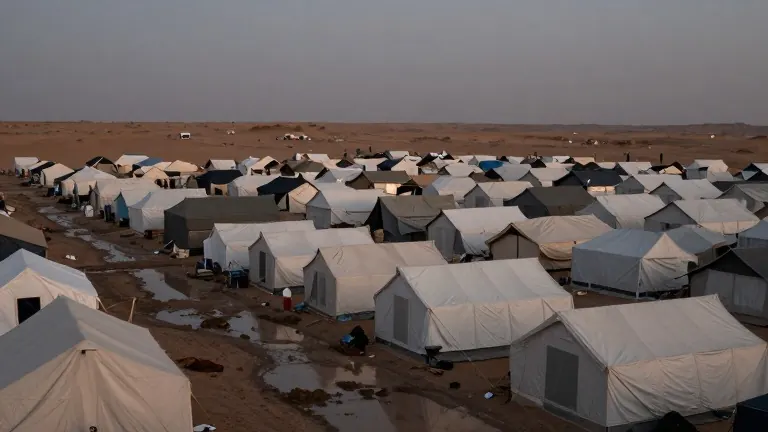
Heavy rains flood over 70,000 tents in Gaza as displaced families face winter hardships
A recent storm in the Gaza Strip has left thousands of displaced Palestinians without shelter, highlighting severe infrastructure damage and the urgent need for humanitarian aid.
By Hassan Ellis ·
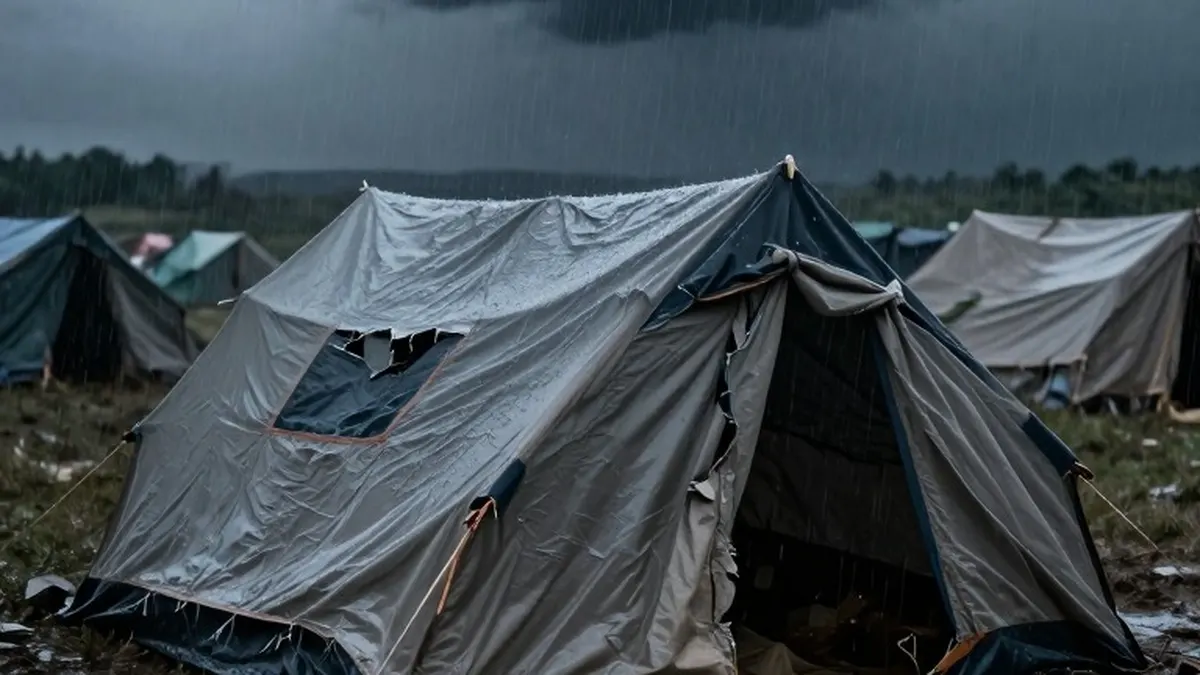
Nahla al-Majdoub, a 48-year-old mother of eight, found herself and her family soaked through after their makeshift tent at the port of Gaza collapsed during a recent storm. The family had been living in the fragile shelter for nearly two years following the destruction of their home in northern Gaza during an Israeli ground invasion. When strong winds and heavy rain swept through the enclave last week, the tarpaulin roof began to tear, allowing water to pour in while the family slept.
Majdoub described waking up to the sound of thunder and water flooding the interior of the tent. She attempted to push the water out, but it continued to seep through holes in the fabric and from underneath. As the wind intensified, she called on neighbors for help, but the structure eventually collapsed while one of her daughters was still inside. The family moved to a neighbor’s stronger tent, but they were left with soaked clothing and mattresses that they have been using for the past four days.
The displacement has compounded Majdoub’s personal health struggles. She was wounded in an Israeli air strike in October 2025, which resulted in shrapnel tearing through her intestines and requiring the installation of artificial intestines. She now requires weekly medication that costs 170 shekels, a sum she struggles to afford. The cold weather exacerbates her constant pain, and she remains worried about her seven-year-old daughter, Aya, who suffers from diabetes.
Similar hardships were faced by Sameh Doghomoush, 33, and his family in the al-Sabra neighborhood east of Gaza City. They reside in a partially destroyed house where Doghomoush had spent two days reinforcing the roof and walls with additional tarpaulins before the storm. He and his wife, Sana, placed basins under the largest holes to catch rainwater, but their efforts failed within hours. The house flooded through the broken windows and roof, leaving the family soaked and unable to sleep in the dark. All three of Doghomoush’s sons caught colds as the rain continued.
Doghomoush lost his car, a fish restaurant, and most of his 180-square-meter home during the three-year war. He has spent his savings on basic necessities, including food, firewood, and shelter materials. He noted that his children, who once enjoyed new clothes and amusement parks, now ask for simple items like books and food that he can no longer afford. He fears that his weakened building could collapse, trapping his family.
According to the Gaza Government Media Office, more than 70,000 tents sheltering hundreds of thousands of displaced Palestinians were flooded during the first 12 hours of the storm. The office reported that five people were killed and dozens more wounded when sand embankments collapsed and cracked walls fell. Two individuals remain missing. Initial financial losses were estimated at over $3 million, with dozens of partially destroyed buildings now at risk of further collapse as rainwater saturates the ground.
The media office stated that Israel had systematically destroyed more than 90 percent of Gaza’s infrastructure, including sewage networks. This destruction, combined with restrictions on the entry of shelter materials, has made the humanitarian situation increasingly difficult. Municipal and civil defense teams are responding to the damage but face severe shortages of equipment and resources. The office called for the opening of crossings to allow the continuous entry of humanitarian supplies.
The office emphasized that Gaza urgently needs more than 100,000 new tents capable of withstanding harsh winter conditions, along with tens of thousands of mobile homes and temporary housing units. It also requested materials and equipment to repair infrastructure, sewage networks, and rainwater drainage systems. The UN aid coordination office reported that approximately 65 percent of Gaza’s population, or about 1.4 million people, currently live in tents or makeshift shelters.
Palestinian political analyst Talal Abu Rokbeh suggested that Israel is exerting pressure on Palestinians by worsening humanitarian conditions and restricting the entry of essential supplies. He argued that the international community shares responsibility for its silence and failure to hold Israel accountable. Abu Rokbeh believes Israel is attempting to frame the Palestinian cause as a humanitarian crisis rather than a political question concerning self-determination and national independence.
Abu Rokbeh stated that the seriousness of any shift in US policy should be measured by concrete developments, such as the deployment of an international stabilization force and the implementation of the humanitarian protocol. He noted that Israel currently occupies areas accounting for 70 percent of the Gaza Strip. He called for an urgent increase in aid deliveries and the entry of basic equipment to help rebuild Gaza and ensure the right to shelter for displaced families.