Gaza infrastructure collapse leaves residents vulnerable to severe flooding
Heavy rains have submerged thousands of tents in Gaza, exposing the critical failure of stormwater and sewage systems damaged by the ongoing conflict.
By Hiroshi Ferrari ·
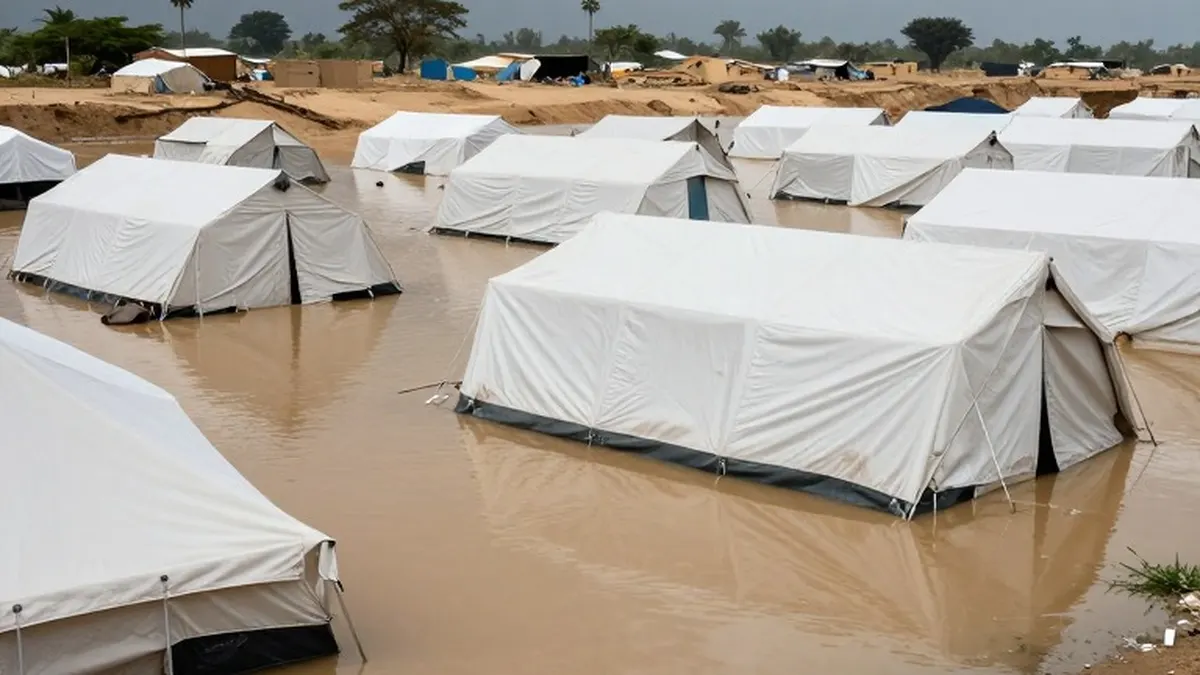
Local officials report that a deep weather depression has triggered widespread flooding across the Gaza Strip, a crisis significantly worsened by the physical destruction of the enclave’s infrastructure. The heavy rains have exposed the catastrophic state of stormwater and sewage networks, which have been severely compromised by air raids and shelling since the war began in October 2023. As a result, large areas of the territory have been submerged, leaving residents with limited means to protect their homes and belongings.
The Government Media Office in Gaza estimates that the recent storms have damaged or submerged 70,000 tents, directly affecting approximately 350,000 people. In some displacement camps, water levels rose to nearly 1.5 metres, turning temporary shelters into hazardous environments. The situation is further complicated by the destruction of more than 700 kilometres of the sewage network, which hinders the proper drainage of wastewater and storm runoff.
Ramadan Rabaa, a shop owner in western Gaza City, witnessed floodwaters sweep through his premises, destroying large quantities of goods and causing significant financial losses to his business and those of his neighbours. When municipal crews arrived to assist, they struggled to provide effective help due to a severe shortage of machinery. Rabaa noted that with adequate resources such as water suction trucks, pumps, and bulldozers, the damage might have been minimized, potentially saving his shop and other inundated structures.
Gaza’s Civil Defence agency received over 2,000 distress calls within 12 hours of the storm but was able to respond to only 218 cases. This limited response capability is attributed to fuel shortages and frequent equipment breakdowns. Husni Muhanna, a spokesman for the Gaza City municipality, stated that the authority has lost about 85 percent of its vehicle and heavy equipment fleet. More than 135 items were destroyed during the war, leaving the municipality with only 15 percent of its previous operational capacity.
The remaining machinery is described as old and worn out, requiring constant maintenance to function. Muhanna explained that the municipality is forced to seek assistance from private sector resources to provide basic services. He added that six out of eight sewage pumps in Gaza City were destroyed, with only two currently operational. This has reduced drainage capacity to approximately 20 percent of its pre-war level.
The stormwater drainage system has also suffered extensive damage. Gaza City has lost about 2,800 of the 4,800 drains that existed before the conflict, significantly increasing the risk of flooding during heavy rainfall. Muhanna warned that the challenges facing the city exceed the capacity of municipal crews. With about one million citizens and displaced people concentrated in less than one third of the city area, and 85 percent of infrastructure damaged, the strain on local services is immense.
To address these issues, the municipality and local institutions have drafted an emergency winter plan requiring $1.3 million worth of materials and field equipment. However, the implementation of this plan depends on the flow of funding and supplies, which remains hampered by restrictions on entry into Gaza. Jibril Kashko, a local businessman specializing in heavy equipment, said his firm was asked for help during the storm but was limited in its ability to assist due to broken equipment and a lack of operational supplies.
Kashko noted that equipment owners face difficulties obtaining basic operating supplies, including spare parts, oil, grease, and batteries. Ismail al-Thawabta, director general of the Government Media Office, stated that the enclave needs between 300,000 and 350,000 tents and reinforced plastic tarps to replace damaged shelters. He also highlighted the need for 1,000 to 1,500 water pumps, 300 to 500 heavy machines, and generators to power essential services.
Mobile homes that were scheduled to enter Gaza as part of a ceasefire agreement in October 2025 have been held up at the border. Al-Thawabta said that repeated displacement and the destruction of homes have left many residents without essential supplies for the winter. The authority estimates a need for 2.2 million winter clothing bags, 5 million heavy blankets, 2 million insulating mattresses, and 400,000 heaters. Despite these needs, aid entering the territory remains a fraction of what the population of 2.3 million requires.
The combination of wartime destruction and severe weather has left residents particularly defenceless against the elements. As the winter months approach, the lack of adequate infrastructure and supplies continues to pose a significant challenge to the daily lives of those living in the Gaza Strip.