Renewed fighting deepens uncertainty for Tigray families waiting to return home
Families displaced for years face worsening uncertainty as renewed conflict strains healthcare and threatens efforts to help former fighters return to civilian life.
By Hiroshi Ferrari ·
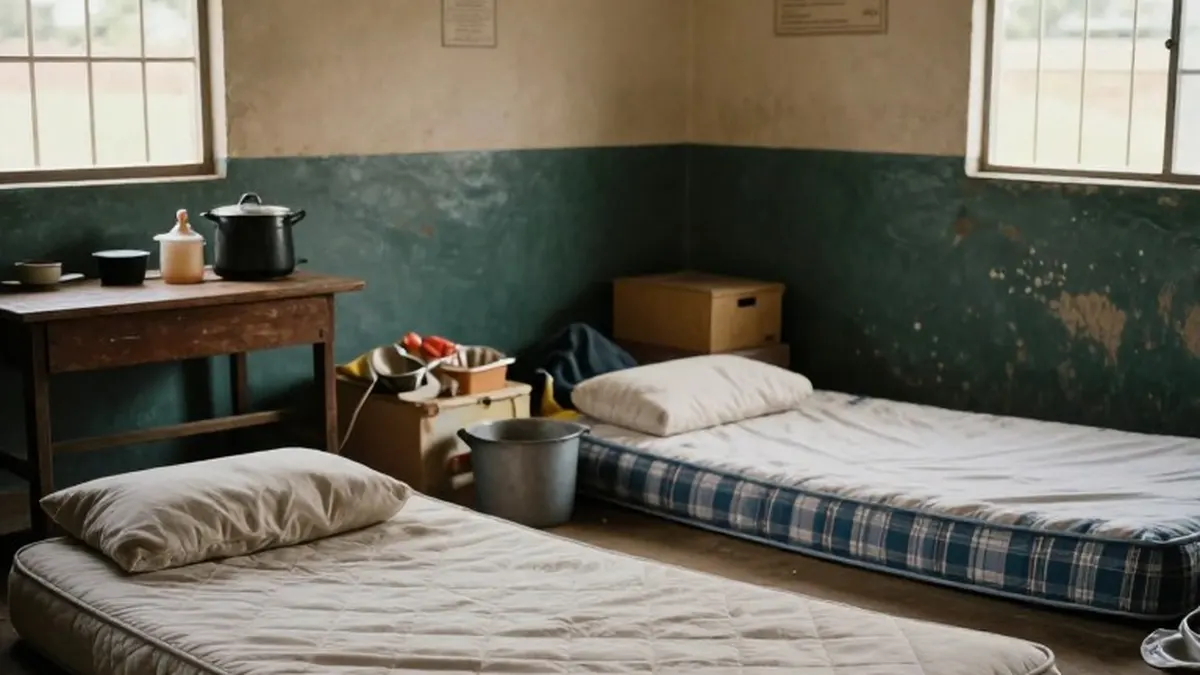
Families sheltering in a former high school in Abi Adi, in Ethiopia’s northern Tigray region, fear renewed fighting will prolong their years of displacement. Classrooms now hold mattresses, cooking equipment and household possessions, while children grow up in rooms intended for lessons. Many residents fled Western Tigray when war began in 2020 and still have no clear prospect of returning.
Tewolde, who fled Setit Humera, said his family had expected to stay only a few months. Years later, their future remains uncertain. Residents report shortages of food, safe water and essential medicines, with crowded conditions placing particular strain on children, older people and those living with chronic illnesses. Selass, a displaced mother of two from Humera, said medicines unavailable at clinics were often unaffordable at private pharmacies.
The renewed hostilities come four years after the federal government and the Tigray People’s Liberation Front, or TPLF, signed the Pretoria agreement in November 2022. That accord ended a two-year war estimated to have killed 500,000 people through violence, famine and the breakdown of healthcare, while displacing millions. It did not settle the status of Western Tigray, which Amhara forces took over during the conflict, leaving the return of displaced Tigrayans deeply contested.
Implementation also faltered over disagreements about disarmament, the departure of non-federal forces and Tigray’s political administration. Fighting intensified on September 22, 2026, followed the next day by a TPLF offensive that captured Mekelle’s airport. Each side disputed responsibility for the escalation. Federal troops and allied fighters recaptured Mekelle on October 4 as Tigrayan forces withdrew, but combat persisted elsewhere. A subsequent six-month caretaker administration was tasked with restoring services and preparing elections.
Human Rights Watch and other organisations warned the United Nations Human Rights Council that the hostilities could unravel the peace agreement. Their October 8 letter, published the following day, cited reports of drone, mortar and artillery attacks in populated areas and near displacement camps. The organisations sought international scrutiny of violations committed by all parties.
Healthcare providers are also struggling. Doctors at Ayder Referral Hospital in Mekelle told Al Jazeera, speaking anonymously because they lacked authorisation to comment publicly, that essential medicines were in short supply. Patients increasingly had to seek prescribed drugs at private pharmacies, often at prices they could not afford. Humanitarian medical assistance and the reopening of some hospitals have not closed the gaps left by damaged infrastructure and depleted supplies.
Efforts to help former combatants rebuild their lives face similar uncertainty. Ethiopia’s National Rehabilitation Commission said on November 5 that about 5,500 former Tigrayan fighters were undergoing rehabilitation training in Mekelle. The programme offers a route towards civilian life through education, vocational preparation and employment opportunities. Alem, a 28-year-old former fighter from Mekelle, hopes to start a family, while Atsbeha, who left university to join the military in 2020, wants work and a chance to rebuild his future.
Reports of recruitment pressures complicate that transition. On September 25, UN human rights chief Volker Turk condemned reported forced recruitment by the TPLF, including children and previously demobilised fighters, and voiced concern about arbitrary conscription by government forces. For families still sheltering in Abi Adi, the fear is that another conflict will push home further out of reach. Selass said: “All we want is to return home and live normally.”