China’s $1.04 trillion trade surplus exposes weak domestic spending
Record exports are supporting China’s economy, but subdued household consumption and mounting trade barriers are raising questions about the durability of its growth model.
By Hassan Ellis ·
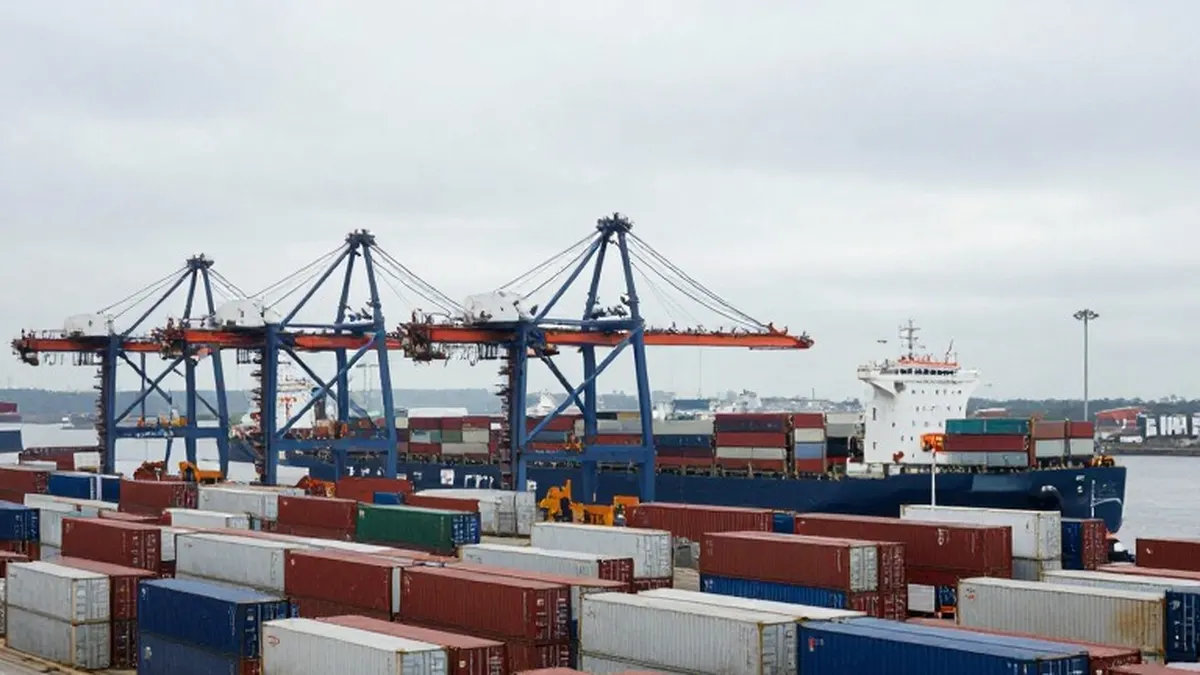
China recorded a trade surplus of $1.04 trillion in the first 10 months of 2026, underscoring the strength of its exporters while revealing persistent weaknesses in domestic demand. The export-driven model that helped transform living standards from the late 1970s faces growing constraints as the country seeks to reach the prosperity levels of the world’s wealthiest economies.
Official figures released on Tuesday showed exports rose 35.2 percent in October compared with a year earlier. Strong demand for semiconductors and automatic data processing machines helped drive the increase, putting China on course to surpass its record $1.2 trillion annual trade surplus from 2025. The artificial intelligence boom has supported overseas sales even as spending at home remains weak.
Chinese households generally save at least a third of their earnings. A relatively limited social safety net, cultural attitudes, an undervalued currency and a struggling property market all help explain that pattern. Government expenditure on healthcare, pensions and welfare amounts to roughly 10 percent of GDP, compared with an OECD average of about 23 percent. Household consumption accounts for around 39 percent of Chinese GDP, against 68 percent in the United States, according to the Singapore-based Hinrich Foundation.
Alicia García Herrero, a senior fellow at the Brussels-based think tank Bruegel, told Al Jazeera that dependence on exports effectively leaves Chinese households subsidising consumers abroad. She linked high precautionary savings to declining property wealth and inadequate social protection, saying families face weaker wage growth, domestic deflationary pressures and a reduced share of economic gains.
Overseas resistance is adding to the risks. Critics argue that China’s subsidised export model undermines fair trade. Earlier this month, the European Union announced an annual limit of 350,000 imports of Chinese hybrid electric vehicles to address what it describes as excess capacity. Carsten Holz, an economics professor at the Hong Kong University of Science and Technology, told Al Jazeera that global markets cannot absorb all of China’s surplus manufacturing output and that other countries would eventually erect further barriers.
The challenge comes as China’s growth slows. Beijing set a 2026 growth target of 4.5 to 5 percent in March, its lowest since 1991 and well below the double-digit expansion often recorded during the 1990s and 2000s. GDP per person remains about one-sixth of the US level and 40 percent of Japan’s. Some economists question whether expected growth will be sufficient to achieve President Xi Jinping’s ambition to double the economy’s size by 2035.
Beijing has recognised the need for stronger consumption. In July, it introduced its first five-year plan specifically focused on that goal, aiming for consumer goods sales of 60 trillion yuan, or $9 trillion, by 2030. That compares with a record 50.12 trillion yuan, or $7.5 trillion, last year. Progress has been limited: retail sales rose just 1.1 percent year-on-year in September, following 0.6 percent growth in August.
Gary Ng, a senior Asia Pacific economist at Natixis Corporate & Investment Banking in Hong Kong, told Al Jazeera that an economy of China’s size needs stronger consumption to sustain long-term growth. ING’s chief economist for Greater China, Lynn Song, expects additional policy support but said the immediate emphasis could remain on technological self-reliance and industrial upgrading. García Herrero argued that stronger household incomes and social welfare are necessary to make growth sustainable as trading partners impose tariffs and other restrictions.