Kenya braces for El Niño as residents fear repeat of deadly floods
Kenya is preparing for a potentially severe El Niño weather event, with officials warning of extreme rainfall and displacement risks in vulnerable urban areas.
By Larissa Bell ·
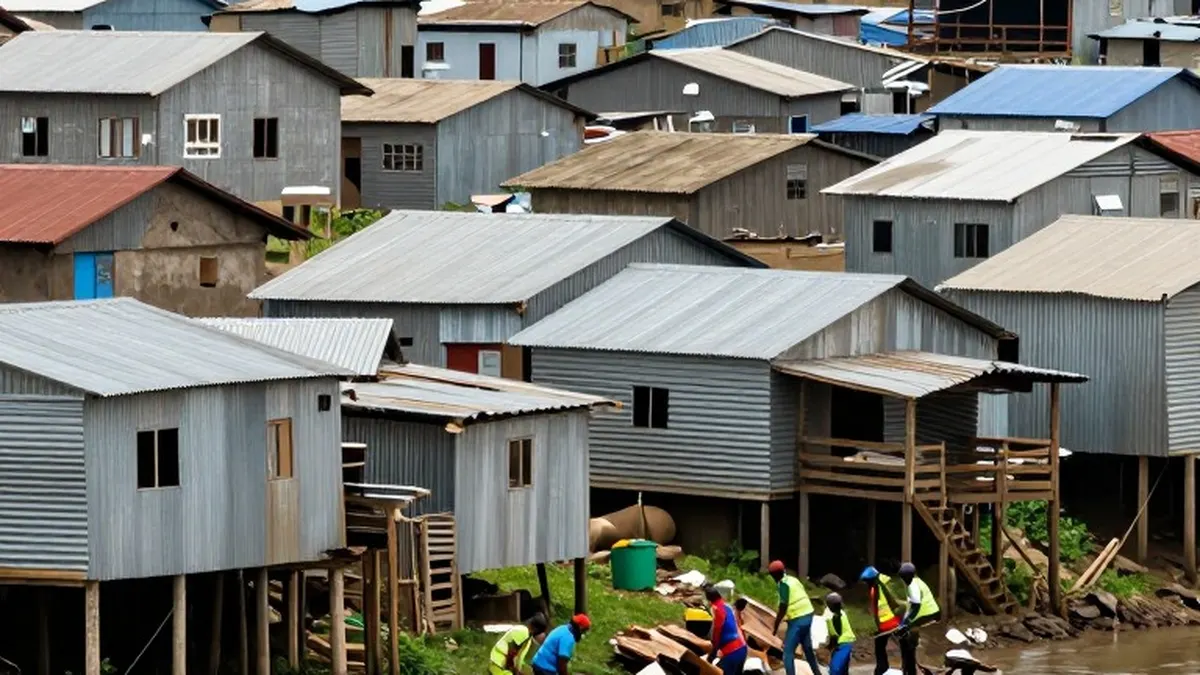
Residents of Kibera, one of Nairobi’s largest informal settlements, are bracing for the short rainy season amid fears that a powerful El Niño phenomenon could trigger catastrophic flooding. Agnes Shikoli, a 62-year-old resident, points to a mark halfway up the wall of her corrugated iron home, indicating the water level from floods earlier this year. Her home is located just a few meters from the Ngong River, where the scars of previous destruction remain visible.
Shikoli’s fear is rooted in personal loss. Her sister, Beatrice Khalayi, died in March after being electrocuted when intense rains flooded their area. Khalayi was one of more than 60 people across Kenya who lost their lives during the long rainy season. Shikoli keeps a photo of her sister tucked away, stating that the memory makes her uneasy and that the current weather warnings suggest the danger could kill them again.
Forecasters have warned that the current El Niño could be one of the strongest on record. The Intergovernmental Authority on Development issued a forecast in September predicting an 81% probability of a very strong El Niño from October to December 2026. This weather pattern is expected to bring extreme rainfall to southern Kenya, an area already vulnerable to heavy downpours.
To mitigate the risks, the Kenyan government has intensified its Climate Worx program under President William Ruto’s office. Since August, workers have been actively clearing garbage from riverbeds and unclogging drainage systems across Nairobi. These efforts aim to rehabilitate the city's rivers, which have been obstructed by waste for years. However, officials acknowledge that the task is massive given the city’s rapid growth.
Bramwell Simiyu, the Nairobi County disaster management chief, notes that the existing drainage infrastructure was designed three decades ago for a population of 2.5 million. Today, the city handles around 7 million residents during the day and 5.5 million at night. Simiyu estimates that upgrading the sewerage and drainage systems entirely would require an investment of up to $192 million, a sum that the cash-strapped national and city councils may struggle to raise.
Informal settlements near rivers, such as Kibera and Mathare, are disproportionately affected by floods. Many residents live on the slopes of the rivers due to the constant expansion of these communities. In the worst-case scenario, Simiyu estimates that up to 100,000 people in low-income settlements could be at risk, while moderate projections suggest around 20,000 people may face danger. Those forced to leave their homes are to be relocated to 167 designated holding grounds with stockpiled relief supplies.
Weather experts are drawing comparisons between the current climate conditions and the severe El Niño event of 1997 and 1998, which caused widespread destruction in East Africa. Jemima Gacheru, a weather forecaster, explains that similar temperature conditions in the Indian Ocean, combined with a strong El Niño in the Pacific and a positive Indian Ocean dipole, are likely to result in enhanced rainfall over several parts of the country.
The potential impact extends beyond Kenya. The International Organization for Migration has warned that nearly 900,000 people in Kenya could be displaced this year due to predicted floods. In neighboring Somalia, 1.2 million people are at risk of displacement from extreme weather, including both floods and drought. The United Nations’ famine warning system has also highlighted increased food insecurity risks in the region due to supply chain issues exacerbated by the weather event.
Back in Kibera, Shikoli and her family are preparing for the worst despite the uncertainty. Council officials have advised them to leave their riverbank home until the rainy season ends, but Shikoli, who earns about $2 a day selling groundnuts and fruit, feels she lacks the means to move. She remains hopeful, stating that her family must persevere and leave the outcome to God.
While national governments are doing their best to prepare, the exact timing and intensity of the rains remain unpredictable. The combination of poor housing, rampant poverty, and the powerful El Niño weather system creates a fragile situation for communities across the continent as they face the peak of the short rainy season.