TAPI Gas Pipeline Reaches Herat as Regional Energy Dynamics Shift
The TAPI gas pipeline has reached the outskirts of Herat, reviving hopes for a major regional energy project after years of delays.
By Larissa Bell ·
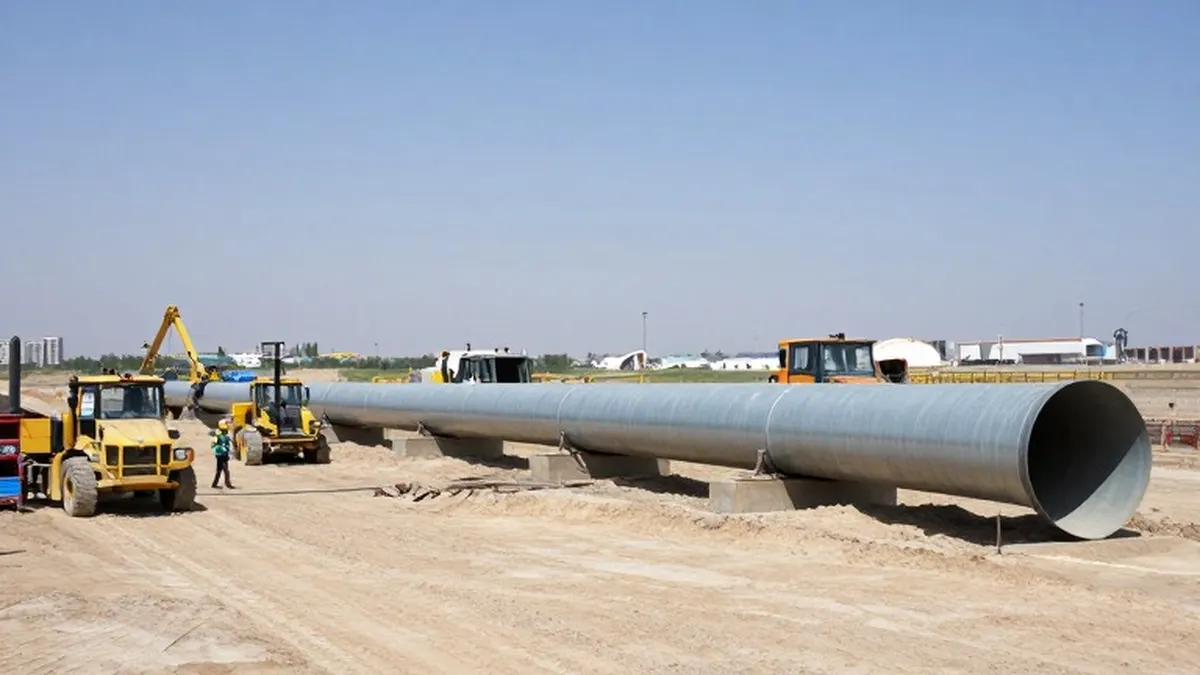
Turkmenistan recently announced that the long-delayed Turkmenistan-Afghanistan-Pakistan-India gas pipeline has reached the outskirts of Herat. The news was delivered to an audience at an energy forum in Ashgabat in late October. Officials stated that the infrastructure would be commissioned by the end of 2026. Satellite imagery captured on November 7 supports this claim. The images show the pipeline extending from the southern border of Turkmenistan to a construction zone approximately 22 kilometers west of Herat's industrial district.
The TAPI project is a planned 1,800-kilometer route designed to connect Turkmenistan's Galkynysh gas fields with consumers in Afghanistan, Pakistan, and India. Although the concept was first proposed in the 1990s, progress was hampered by local conflicts and geopolitical tensions. By 2024, interest from both India and Pakistan had waned. Analysts questioned the project's viability given the high cost, estimated at up to $10 billion, and the significant delays.
John M. Roberts, a senior fellow at the Atlantic Council, noted that the project serves as a source of national pride for Turkmenistan. He suggested that the government became so focused on TAPI that it felt compelled to demonstrate tangible progress. The section of pipeline leading to Herat reportedly cost Ashgabat $600 million. Roberts observed that this financial commitment may encourage the development of a partnership to extend the line further south toward Kandahar and Pakistan.
The energy crisis triggered by the Iran war has added new relevance to the project. Tehran's closure of the Strait of Hormuz disrupted energy supplies from the Persian Gulf. This situation appears to have restored Pakistan's interest in the pipeline. At the same conference in Ashgabat, Faryal Leghari, Pakistan's ambassador to Turkmenistan, affirmed that Islamabad was now committed to advancing the project.
Afghanistan stands to gain significantly if the pipeline is extended. The country would receive hundreds of millions of dollars in annual transit fees. Local residents in Herat have expressed excitement over the construction, which has helped alleviate recent gas price spikes and electricity shortages. One local, Abu Ali, described the project as a real sign of hope. However, a 27-year-old software engineer, Abdul Saboor Rahmani, urged for transparent access to the gas at fair market prices rather than exorbitant rates.
Construction in Afghanistan has presented several challenges, including the presence of unexploded ordnance along the route. Insiders told RFE/RL's Radio Azadi that the work is being carried out exclusively by Turkmen engineers using Turkmen-owned equipment. Afghan involvement has been limited to providing armed security. Workers are reportedly transported to and from the sites daily by buses crossing the Torghundi border.
Despite the local enthusiasm, questions remain about the project's broader future. Roberts highlighted the need for Chinese financial support, as the project is too large for Turkmenistan to handle alone. Afghanistan has also proposed Russian investment for the onward route. While the pipeline has large physical capacity, it currently serves a local market. Afghanistan is scheduled to receive only 5 percent of the gas flow, with Pakistan and India splitting the remainder. The ultimate success of TAPI depends on navigating regional uncertainties and securing outside investors.
The situation illustrates the complex nature of regional energy infrastructure. While Turkmenistan possesses vast resources, harnessing them for export remains a difficult task. The recent progress toward Herat marks a significant milestone, but the path to full commissioning and regional integration is still fraught with challenges.