U.S. mediators drive four-hour peace session in Abu Dhabi
The first day of trilateral talks between Russia, Ukraine, and the United States in the United Arab Emirates concluded with discussions on security and humanitarian issues, despite ongoing aerial strikes.
By Larissa Bell ·
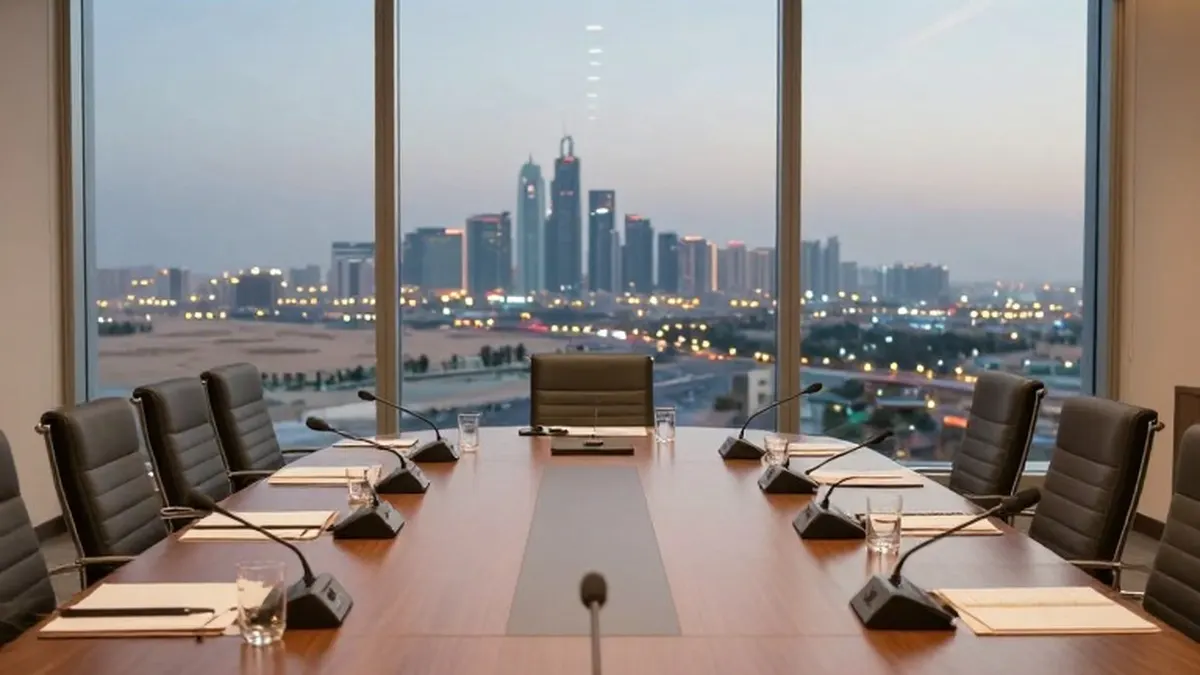
Three-way negotiations involving Russia, Ukraine, and the United States opened Tuesday in the United Arab Emirates, marking a renewed effort by Washington to end the conflict that began with Moscow's full-scale invasion in February 2022. The initial session in Abu Dhabi lasted nearly four hours before concluding, according to the RIA Novosti news agency. The press office of Ukraine's Foreign Intelligence Service indicated that the discussions are scheduled to resume on Wednesday.
Ukrainian President Volodymyr Zelenskyy described the opening day as constructive and substantive. He noted that the agenda covered humanitarian matters and security guarantees, with a specific focus on the release of prisoners of war. Zelenskyy stated that the parties discussed the long-term foundations necessary to ensure these guarantees remain effective.
The talks proceed against a backdrop of continued military engagement, with both sides reporting significant long-range strikes overnight. Ukraine's air force reported that Russia launched 162 drones of various types along with a ballistic missile at the country. Ukrainian Prime Minister Sergii Koretskyi announced that the attacks affected 10 regions, damaging five major energy substations responsible for transmitting electricity between areas.
In response, Russia's Ministry of Defence stated that its forces shot down 155 Ukrainian drones above eight Russian regions and the Crimean Peninsula. Crimea was annexed by Russia from Ukraine in 2014. The ongoing exchanges highlight the intensity of the conflict even as diplomatic channels open.
U.S. envoy Jared Kushner, who is working alongside Steve Witkoff to broker a settlement, expressed optimism that there are viable ideas to bridge the differences between the two sides. However, German Chancellor Friedrich Merz offered a more cautious outlook, stating in a Monday night interview with ZDF television that he did not have overly high expectations for the outcome of the talks.
NATO commander U.S. General Alexus Grynkewich, who was present during the session, pointed to previous progress made in military-to-military dialogue within a trilateral format. Rustem Umerov, the head of Ukraine's Foreign Intelligence Service and leader of the Ukrainian delegation, thanked the United States for its mediation efforts. He emphasized that the Ukrainian people are waiting for the end of the war and hope to achieve lasting peace.
The first day began with a meeting between the Ukrainian team, U.S. envoys, and representatives from the United Kingdom, France, Germany, Italy, NATO, and the European Commission. While Russia has objected to European involvement in the core three-way talks, it stated that EU representatives could join at a later stage. Vladimir Medinsky, the head of the Russian delegation, expressed hope that the meeting would help advance the path toward peace for both nations.
Despite diplomatic engagement, the two governments remain distant on key terms for a prospective deal. Russian President Vladimir Putin demands that Ukraine withdraw troops from the Donetsk, Luhansk, Zaporizhzhia, and Kherson regions, which Moscow annexed in September 2022 but did not fully capture. He also seeks for Ukraine to abandon its bid to join NATO, accept strict military limits, and remove restrictions on the Russian language and the Moscow-affiliated Orthodox Church.
Putin prefers a comprehensive peace deal over a general ceasefire, arguing that a halt in hostilities would only allow Ukrainian forces to rest and replenish stockpiles. He has warned that Russia will achieve its goals by force if Kyiv refuses these conditions. Conversely, Zelenskyy rejects voluntary cession of territory that Russia has not taken on the battlefield and opposes limits on Ukraine's military or its Western partnerships, which Kyiv views as essential security guarantees.
Ukraine argues that an immediate ceasefire is the necessary first step toward a wider settlement and that a direct meeting between Putin and Zelenskyy is required to resolve territorial issues. Russian Foreign Minister Sergey Lavrov, however, suggested it would be wiser to first discuss the outlines of Europe's future security architecture before agreeing to a ceasefire. As the war nears its five-year mark, the front line has largely deadlocked into a war of attrition, while both sides have intensified long-range strikes on strategic infrastructure.