Israel's New Parliament Focuses on October 7 Probe and Coalition Formation
Israel's new parliament has sworn in with a focus on investigating the October 7 attack, while President Herzog urges coalition builders to compromise amid political uncertainty.
By Larissa Bell ·
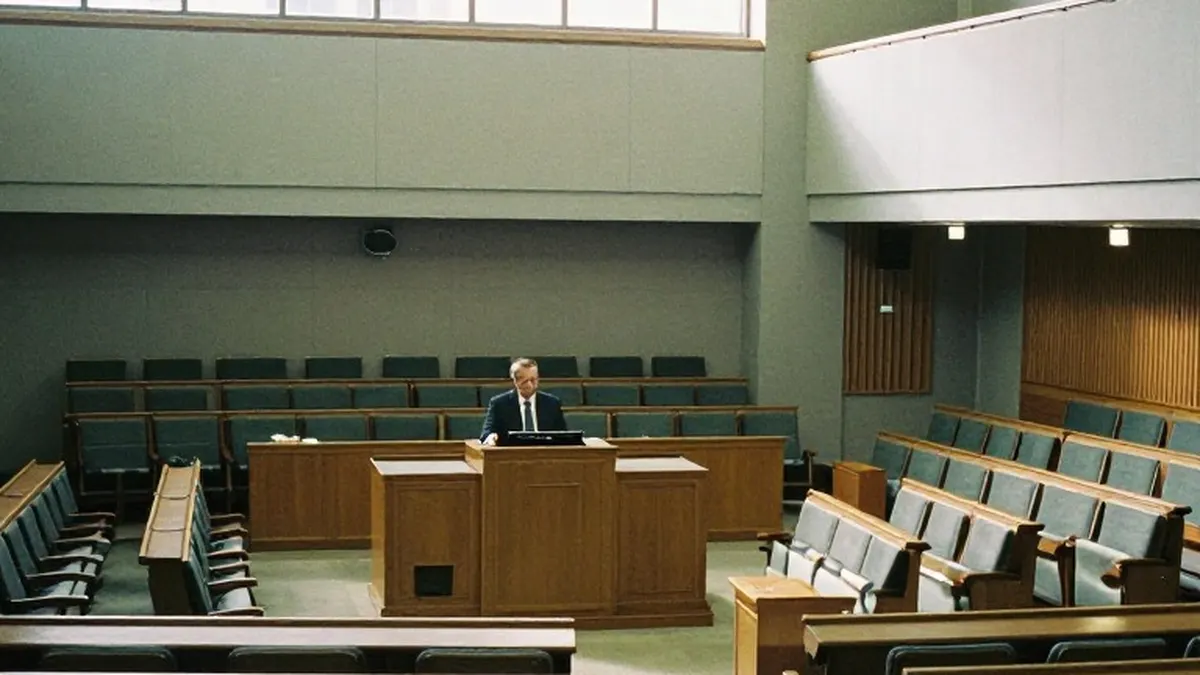
Israel’s new parliament was sworn in on Tuesday, marking the beginning of a turbulent political chapter following an inconclusive election two weeks prior. The 26th Knesset opened its first session with President Isaac Herzog addressing the 120 newly elected members. Herzog urged the party leaders to make concessions and extend a hand to rivals, emphasizing the need for compromise in a period of uncertainty regarding the formation of a new government.
Opposition leader Gadi Eisenkot, who has been tasked with building a ruling coalition, moved swiftly to set the legislative agenda. His Yashar party submitted a bill to establish a commission investigating the security failures that allowed Hamas to carry out its attack on October 7, 2023. This initiative had been long resisted by caretaker Prime Minister Benjamin Netanyahu. Additionally, Eisenkot’s party proposed a mass repeal of Netanyahu’s controversial judicial overhaul, a change that had previously triggered some of Israel’s largest protests.
Caretaker Prime Minister Netanyahu responded by warning Jewish political parties against working with Arab lawmakers. He described the Arab parties as enemies within and questioned whether leaders were willing to entrust the fate of the country to those whose goal he claimed was the destruction of the Jewish state. Netanyahu also called for a national unity government, citing the nuclear threat from Iran and acknowledging an international shift following the recent US elections. He warned that Israel would soon face pressure to accept a nuclear-armed Iran and the preservation of a hostile regime.
The election of the new parliament speaker became a focal point for both sides. Eisenkot’s bloc claimed it had sufficient votes to install Matan Kahana, a former senior military figure, as the new speaker, replacing Likud’s Amir Ohana. Arab-Israeli lawmakers indicated they would support Kahana, all but guaranteeing his appointment. Avigdor Liberman, a right-wing member of Eisenkot’s bloc who plays a key role in coalition decisions, is expected to be nominated as the chair of the foreign affairs and defense committee.
Tensions flared during the swearing-in ceremony when National Security Minister Itamar Ben-Gvir heckled the head of the Arab-majority Joint List alliance. Ben-Gvir shouted, asking who the lawmaker was pledging allegiance to, specifically mentioning Hamas. This incident underscored the friction between the parties as they navigate the new legislative landscape.
President Herzog used his opening speech to condemn what he called moral blemishes that wound Israeli society. He stated that there is no place for racism or violence, whether in the streets, schools, or the hilltops of Judea and Samaria. Herzog stressed that addressing these issues must begin in the Knesset, which he noted projects outward onto the Israeli street.
Outside the parliament, approximately 200 right-wing protesters gathered to express their anger at the recent election results. The pro-Netanyahu crowd warned parties against making deals with Arab lists and raged at the decision to nominate a new speaker. A poster featuring Netanyahu with the slogan 'Many politicians, one leader' was visible among the demonstrators.
Political analysts suggest that the opposition faces a significant contradiction. Dahlia Scheindlin, an Israeli political analyst, noted that while the opposition is determined to unseat Netanyahu, its leading figures remain reluctant to cooperate with Arab parties that could provide a majority. She described this reluctance as a self-imposed constraint, questioning why those seeking change rule out partnerships that might make it possible. Scheindlin suggested that the immediate outcome could be either a parliamentary stalemate or a fragile minority government.
The new Knesset is expected to move quickly on key priorities, including the investigation into security failures under the previous government. The opposition hopes to use its legislative power to hold the caretaker government accountable as it works to form a stable administration.