Israel to swear in parliament as Eisenkot seeks governing majority
Gadi Eisenkot faces competing coalition options as Israel’s new parliament convenes with neither his opposition camp nor Benjamin Netanyahu’s bloc holding a majority.
By Larissa Bell ·
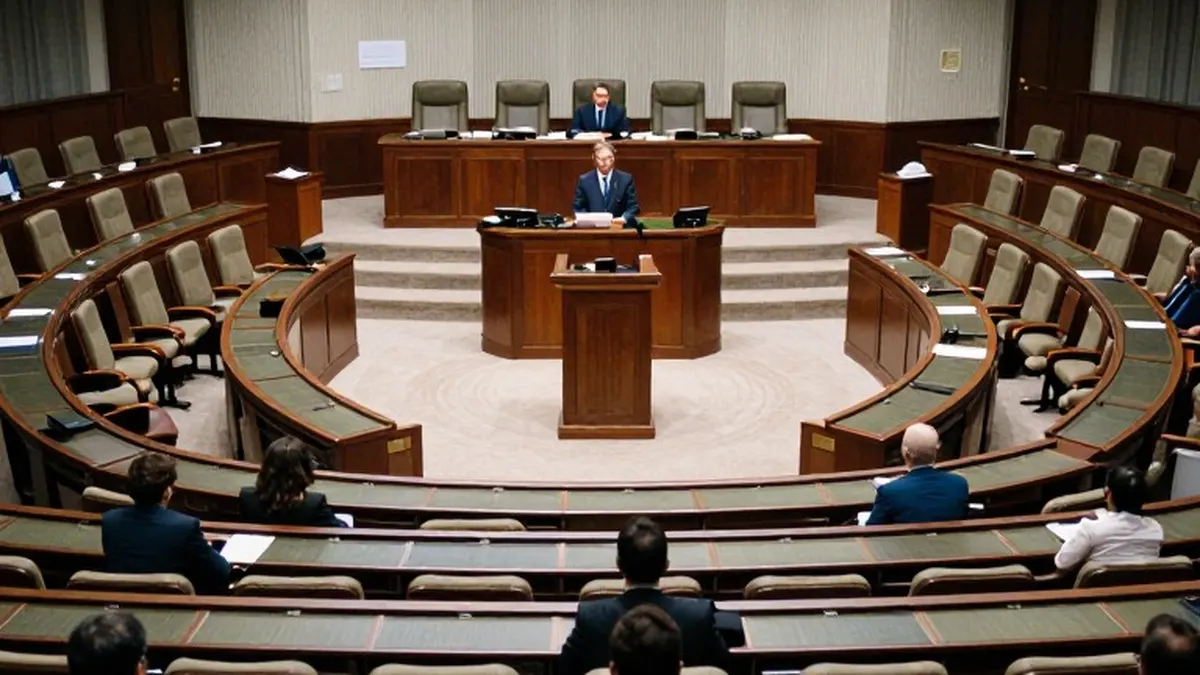
Israel’s new parliament is due to be sworn in on Tuesday, November 10, as opposition leader Gadi Eisenkot attempts to assemble a government following an election that left neither his camp nor Prime Minister Benjamin Netanyahu’s right-wing bloc with a majority. President Isaac Herzog is scheduled to address the inauguration of the 120-seat legislature at 4pm, or 14:00 GMT.
Herzog gave Eisenkot the first opportunity to form a government on Sunday. He has 28 days to secure a coalition, with a possible extension of another 14 days. Taking office requires the approval of 61 lawmakers, a threshold Eisenkot cannot reach with his core opposition bloc’s 48 seats, which leave it smaller than Netanyahu’s bloc.
Ahead of the opening session, Eisenkot’s Yashar party announced its candidates for prominent parliamentary posts. Matan Kahana, a former senior military figure like Eisenkot, will be proposed as speaker. Avigdor Lieberman, a right-wing opposition leader whose support has been pivotal in determining government membership, will be nominated to chair the foreign affairs and defence committee.
To win the speakership, the opposition candidate must attract more votes than any candidate supported by Netanyahu’s bloc, which has sought to delay the vote. Opposition lawmakers also hope to use their increased parliamentary influence to advance priorities including a commission examining the security failures under Netanyahu that enabled Hamas’s October 7, 2023 attack, the deadliest day in Israel’s history.
One route to a majority would involve the 19 Arab-Israeli lawmakers, whose record representation followed anger among the minority community over Netanyahu’s hard-right government. Their support would give Eisenkot the numbers needed, either through participation in a coalition or, more likely, by voting to approve a government without joining it.
Lieberman, however, has said he would not permit Eisenkot to take power through reliance on Arab-Israeli support. Instead, he has advocated an arrangement with ultra-Orthodox parties, despite years of strongly criticising that community over its overriding commitment to preserving an exemption from compulsory military service.
The two ultra-Orthodox parties hold 13 seats, enough to bring Eisenkot’s bloc to the required majority if they abandon their longstanding alliance with Netanyahu. Netanyahu supported the military service exemption but did not fully establish it in law. An arrangement involving either the ultra-Orthodox parties or Arab-Israeli lawmakers would probably be fragile.
Arab-Israeli lawmakers would be likely to oppose another major Gaza offensive under Eisenkot. He has generally supported Netanyahu’s wartime decisions, while pledging action against extremist settlers in the West Bank who have attacked Palestinians and stolen from them with near impunity.