G7 Ministers Press for New Security Framework in Lebanon After UNIFIL Withdrawal
French officials report that G7 foreign ministers have aligned on the necessity of a robust security replacement for UN peacekeepers in Lebanon, though specific mechanisms remain under debate.
By Larissa Bell ·
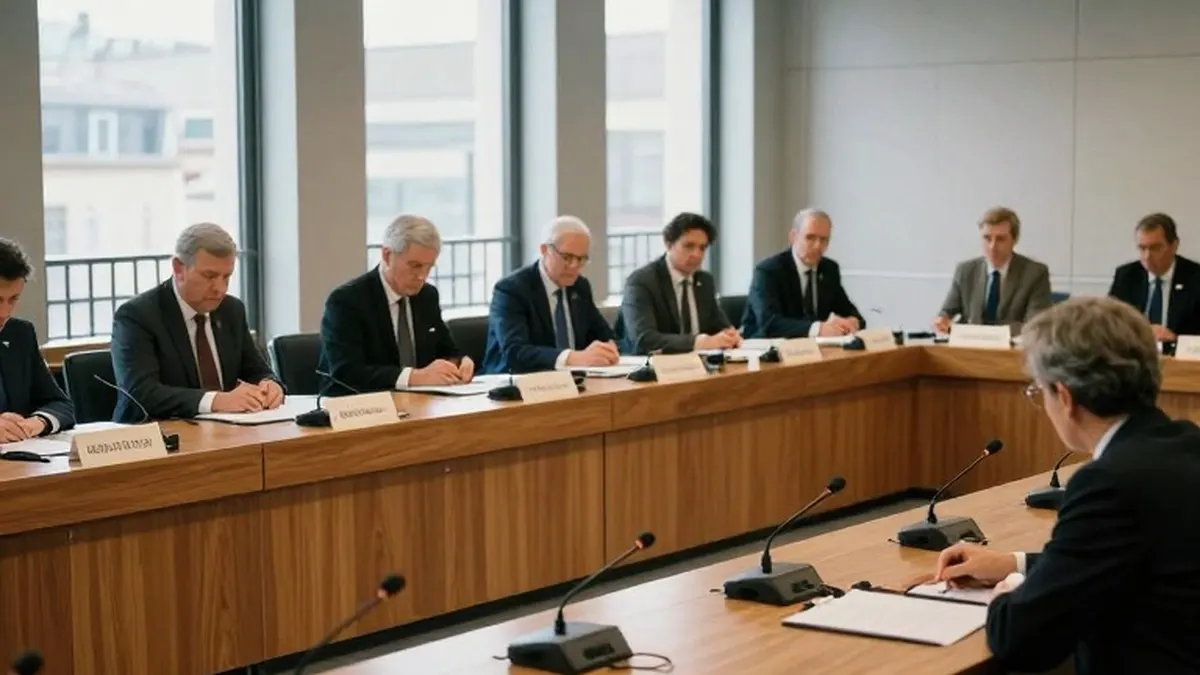
G7 foreign ministers met in Paris on Tuesday to address the impending expiration of the United Nations Interim Force in Lebanon (UNIFIL) mandate. French Foreign Minister Jean-Noel Barrot stated that the group agreed on the critical need to prevent a security vacuum in Lebanon once the current peacekeeping mission concludes at the end of the year.
While the ministers emphasized the urgency of establishing a new security architecture, Barrot acknowledged that a final consensus on the specific replacement mechanism has not yet been reached. UNIFIL, which was deployed following Israel's invasion in 1978, currently comprises approximately 7,500 personnel from nearly 50 countries. The force's mandate was expanded after the 2006 war to prevent the Iran-backed group Hezbollah from establishing military infrastructure in southern Lebanon.
The UN Security Council voted last year, under pressure from the United States and criticism from Israel, to terminate the UNIFIL mandate on December 31, 2026. Israel has frequently argued that the force failed in its mission, citing Hezbollah's extensive construction of border infrastructure that facilitated attacks on October 8, 2023, the day after the Hamas-led offensive in Gaza.
US Secretary of State Marco Rubio discussed the issue with French President Emmanuel Macron on Monday. Rubio suggested that the successor to UNIFIL could be a civilian mission rather than a military one. He emphasized the need for a verification system that is trusted by both parties to ensure compliance with existing agreements.
Barrot expressed hope for reaching a consensus, outlining shared objectives that include the withdrawal of Israeli troops from southern Lebanon, the disarmament of Hezbollah, and the restoration of a strong Lebanese state with a monopoly on the use of force. The ministers' final communique underscored the need for a long-lasting security architecture to support the Lebanese Armed Forces.
European diplomats indicated that several options are being considered, including a transitional mechanism utilizing existing UNIFIL forces. However, this approach would likely require a new UN Security Council resolution, which could face a potential American veto. Another proposal involves an international military coalition to assist the Lebanese military in disarming Hezbollah. Italy, a key participant, appears reluctant to join an ad hoc coalition due to cost concerns, as such missions are not funded by the UN.
Amid these diplomatic discussions, UNIFIL reported that its forces came under fire during a routine patrol on Tuesday evening near Wadi Jilou, east of Tyre. The patrol, located outside the Israeli military buffer zone, was fired upon with about a dozen rounds. After identifying the source of the muzzle flash, the peacekeepers returned fire, and the unidentified shooter stopped. No UNIFIL observers were injured, and the force has called on the Lebanese government to initiate a swift investigation.
In a separate incident earlier in the day, an Israeli civilian illegally crossed the border near the Rosh Hanikra Crossing. UNIFIL forces located the man and handed him over to Israeli Defense Forces troops, who escorted him back to Israel for police questioning. Illegal border crossing is punishable by up to four years in jail, and the IDF has opened an investigation into the event.
The current diplomatic efforts follow a series of border skirmishes and military actions that began after the October 7, 2023 attacks. A ceasefire brokered by the US in November 2024 required Israeli withdrawal from most of Lebanon, leaving only five strategic posts, and tasked the Lebanese military with dismantling Hezbollah infrastructure. Although a new Lebanese government pledged to fulfill this mandate in early 2025, Israel has accused Beirut of falling short. Recent US-brokered talks have established a framework for gradual Israeli withdrawal as Lebanon disarms Hezbollah, a process that has stalled in recent months despite progress in certain pilot zones.