Egypt Moved Forces to Saudi Arabia Before Public Military Pledge
Egyptian military sources reveal that troops and aircraft were deployed to Saudi Arabia months before President Sisi formally announced the country's support for Riyadh.
By Hassan Ellis ·
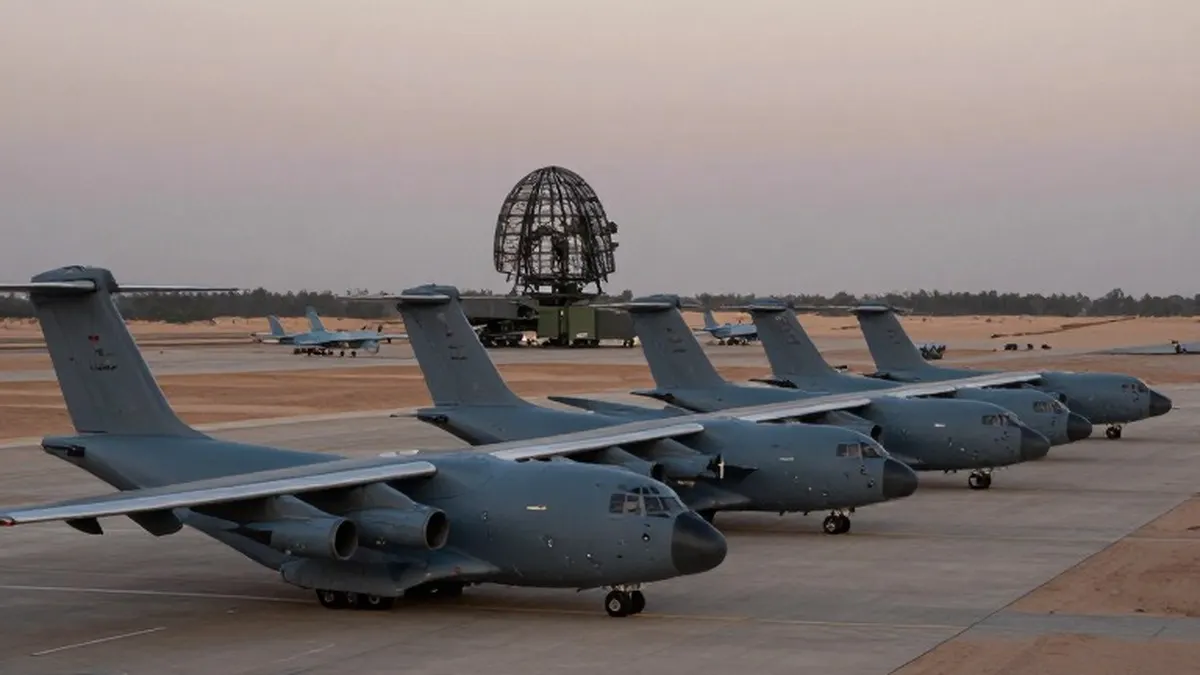
Egyptian military sources have disclosed that Cairo deployed significant forces to Saudi Arabia well before President Abdel Fattah el-Sisi publicly pledged military support. The movement included a squadron of Rafale fighter jets, eight helicopters, and four large transport aircraft. Additionally, Egyptian naval warships were repositioned toward the southern Red Sea, near the strategic Bab al-Mandab Strait. These actions were taken amid growing concerns over the security of Red Sea shipping lanes and the persistent threat of Houthi attacks from Yemen.
Open-source investigations by Al Jazeera Arabic previously identified two Egyptian C-130 Hercules transport aircraft operating in Saudi airspace last month. The aircraft, tracked by their registration numbers, were seen over western Saudi Arabia before their signals disappeared. One was later detected near the Red Sea coast at Al Wajh. A military source told Middle East Eye that Egypt also repositioned Skyguard-Amoun air defence systems to strategic locations in the east and south of the country to bolster its defensive posture.
Foreign Minister Badr Abdelatty confirmed on Monday that the Egyptian military had been present in Saudi Arabia for several months. He stated that the deployment began after attacks on Saudi Arabia during the escalation with Iran. The minister noted that Cairo was currently in the process of strengthening this presence. This confirmation came shortly after the foreign ministry received a request for comment from Middle East Eye.
The formal political process for the deployment concluded in October. On October 17, Sisi called for parliamentary authorization to deploy forces to defend Saudi Arabia if requested. The following day, the National Defence Council announced that Egypt would provide all possible support to protect the kingdom's security. Under Article 152 of the Egyptian constitution, the president must consult the council and secure a two-thirds majority in the House of Representatives before sending armed forces on a combat mission abroad. Lawmakers approved the request on October 26.
Despite the parliamentary approval, the precise nature of Egypt's military commitment has not been fully clarified. The disclosures arrive as Saudi Arabia faces renewed missile and drone attacks by Yemen's Houthi movement. On Sunday, a building linked to state oil giant Aramco in Riyadh sustained minor damage from falling debris during an intercepted attack, with no casualties reported. These incidents have prompted Riyadh to seek additional support from regional allies while escalating strikes against Houthi-controlled areas in Yemen.
Senior Egyptian military officials described sharp internal disagreements regarding the scope of the intervention. A second official noted that meetings involving Sisi, military commanders, and National Defence Council members featured disputes over whether to send ground troops into northern Yemen. Sisi argued for participation in Saudi operations, citing the need to safeguard water security and protect the Red Sea and Suez Canal. He also highlighted the importance of Saudi economic support for Egypt, referencing a recent $5.3 billion deposit renewal at the Central Bank of Egypt.
The debate over ground troops reflects wider regional efforts to strengthen Saudi defenses. In August, Saudi Arabia, Turkey, and Pakistan signed the Mecca Joint Defence Agreement, which commits the three nations to treat an attack on one as an attack on all. While Turkey ratified this agreement in November, the specific nature of any Turkish or Pakistani military contribution has not been publicly established. Egypt's own history of military intervention in Yemen, particularly the costly campaign under President Gamal Abdel Nasser in the 1960s and 1970s, influences current strategic calculations.
For now, Egypt's declared commitment focuses on supporting Saudi Arabia's defense, though the possibility of ground forces entering Yemen remains unclear. One source suggested that Egyptian troops might join a multinational ground force in the final phase of the conflict, similar to the 1991 Gulf War. However, a ground war is not currently considered an option. The priority is to neutralize Houthi command centers, launch platforms, and air defenses first.
Military officials estimate that fighting could last between four and six months before the outcome becomes clear. This timeline depends on the scale of air and naval campaigns and the ability to neutralize Houthi air defenses. If air and naval operations achieve major successes, a ground offensive could potentially be carried out by Yemeni forces supporting the internationally recognized government, avoiding the need for foreign ground troops. The conflict's duration may extend if key targets are not effectively struck.
The disagreement within Egypt's leadership highlights the complex strategic environment. While Sisi pushes for active participation to justify the deployment and protect national security interests, other commanders remain cautious. The decision to involve ground forces will likely depend on the progress of ongoing air and naval operations and the evolving security situation in the region.