Rwanda receives former medical student deported by US over genocide claims
Jean Leonard Teganya has arrived in Kigali to face 2014 indictments for genocide and crimes against humanity after serving a US prison sentence for immigration fraud.
By Hiroshi Ferrari ·
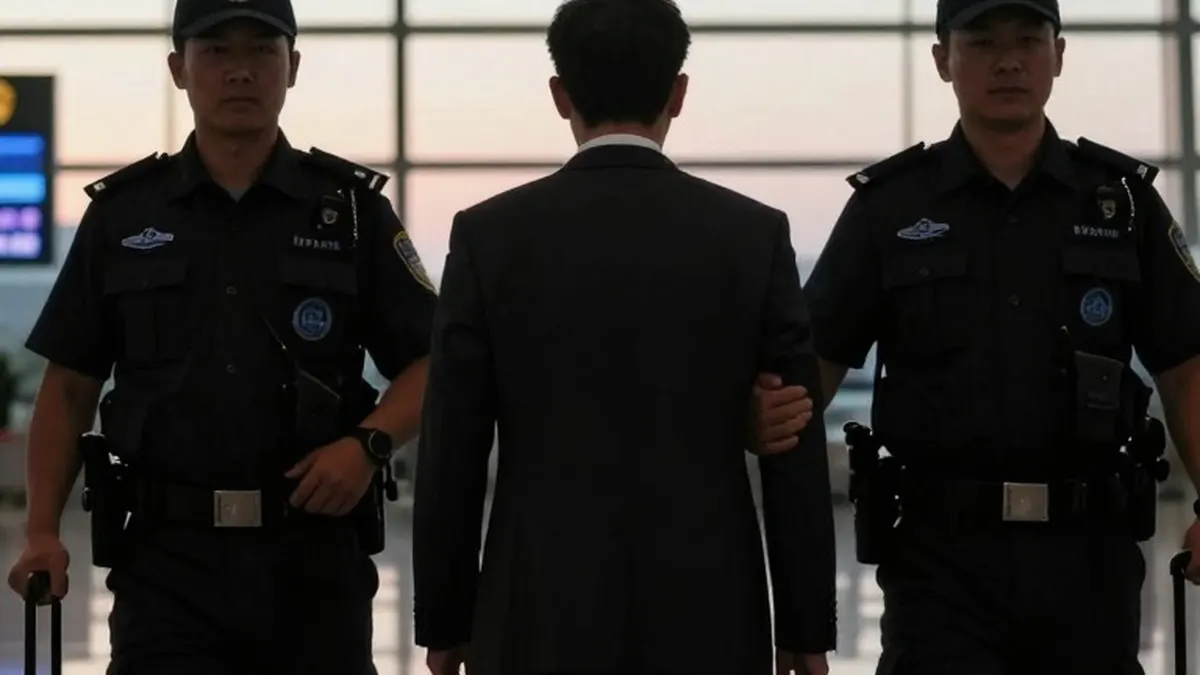
Jean Leonard Teganya, a former medical student, has been deported from the United States to Rwanda. He faces separate legal proceedings in his home country regarding his alleged role in the 1994 genocide. Rwandan authorities confirmed that Teganya arrived at Kigali International Airport on the evening of November 9, 2026, escorted by US security officers. He was immediately transferred to the custody of local prosecutors.
The National Public Prosecution Authority in Rwanda stated that Teganya was indicted in 2014. The charges relate to genocide and crimes against humanity committed in the former Butare prefecture in southern Rwanda. The authority has not yet provided detailed specifics regarding the individual allegations in this case. His return allows Rwandan officials to pursue the matter in the jurisdiction where the alleged crimes occurred.
Born in 1971, Teganya was enrolled in the medicine program at the National University of Rwanda in Butare during the genocide. He was also completing practical training at the University Teaching Hospital in the same city. He departed Rwanda in July 1994 as the conflict was drawing to a close. US court records indicate that he traveled through Zaire, now the Democratic Republic of the Congo, as well as Kenya and India, before finally reaching Canada in 1999.
Teganya applied for asylum in Canada, but his request was denied in both 2002 and 2012. Canadian authorities concluded that his survival in Rwanda in 1994 suggested he was perceived as sharing the intent to kill Tutsi and moderate Hutu populations. After approximately 15 years of legal proceedings in Canada, he evaded a deportation order. On August 3, 2014, he crossed into the United States on foot near Houlton, Maine, where he was taken into custody and filed for asylum.
In the United States, Teganya was not tried for genocide. Instead, the criminal case focused on statements he made to immigration authorities. Prosecutors alleged that he concealed his political affiliations and activities during the genocide. In September 2017, he was indicted on two counts of immigration fraud and three counts of perjury. A federal jury found him guilty on all five counts on April 5, 2019.
Evidence presented during the US trial detailed Teganya’s conduct at the University Teaching Hospital of Butare. Prosecutors argued that he was affiliated with the then ruling party, the National Republican Movement for Democracy and Development, and the Interahamwe militia. They claimed he led groups of soldiers and militia members through the hospital to search for Tutsi patients and refugees. Those found were reportedly taken behind the maternity ward and killed.
The US Department of Justice stated that trial evidence linked Teganya to the killings of three Tutsi individuals at the hospital and Tutsi students in university housing. It also alleged his participation in five rapes involving two Tutsi women who had sought shelter at the medical facility. Although these allegations formed part of the trial evidence, they are distinct from the specific charges in the ongoing Rwandan case.
Following his conviction, Teganya was sentenced to 97 months in prison on July 1, 2019. The sentence included an enhancement for obstruction of justice due to false testimony during the trial. He appealed the decision, but the US Court of Appeals for the First Circuit upheld his convictions and sentence in May 2021. It is important to note that his US convictions were for immigration fraud and perjury, not genocide.
Teganya’s case has now traversed three different legal systems: Canada, the United States, and Rwanda. His return to Kigali brings him back to face allegations that have been pending in the local judicial system since 2014. While his arrival marks a significant step, it does not constitute a conviction in Rwanda. He will have the opportunity to present his defense in court as prosecutors work to establish his individual responsibility for the crimes accused.
The National Public Prosecution Authority has not specified when Teganya will appear in court or listed the individual allegations in the 2014 indictment. Therefore, it remains to be seen whether all the evidence presented during his US trial will form part of the Rwandan case. More than three decades after the 1994 genocide, the legal process in Rwanda will determine the final outcome of his separate prosecution.