UK leads ten nations in new maritime drone and warship network
The UK has launched a new defense framework with nine allied nations to integrate maritime drones and warships, aiming to counter growing Russian naval threats in the North Atlantic.
By Hiroshi Ferrari ·
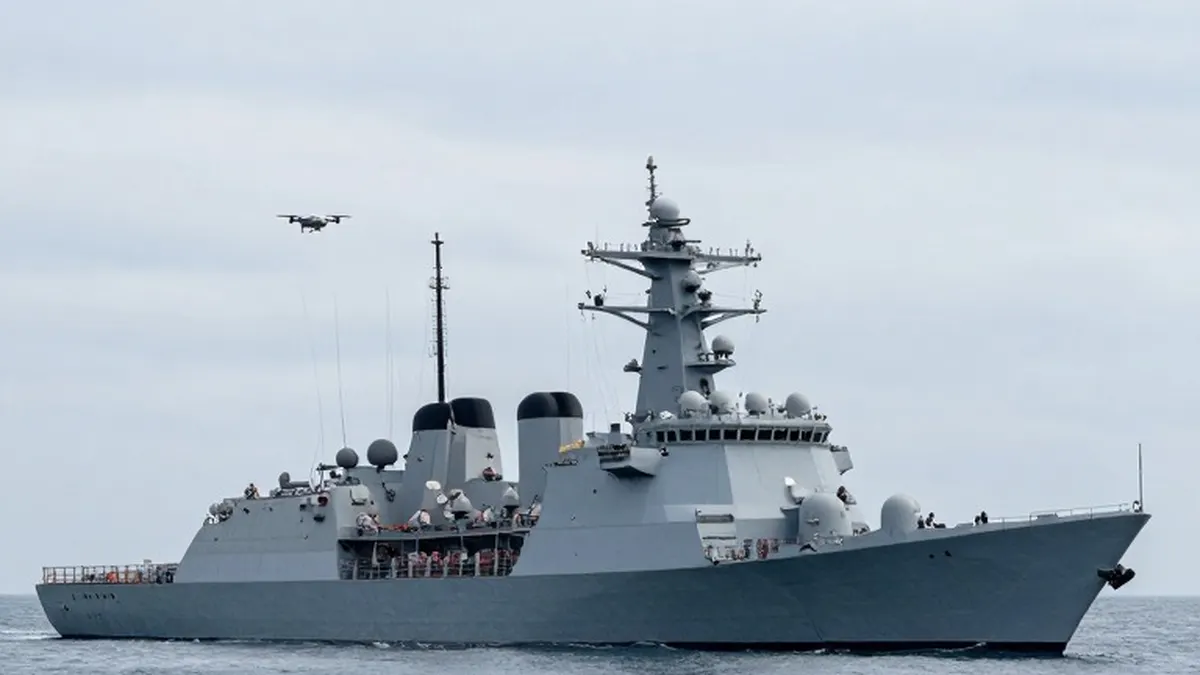
The United Kingdom has announced a new defense framework designed to integrate the maritime capabilities of ten allied nations. This initiative, known as the Northern Navies Initiative, aims to create a unified surveillance system by sharing autonomous sea drones and warships. The move is a direct response to what European leaders describe as an escalating threat from Russia in the North Atlantic and Baltic Sea regions.
First Sea Lord General Gwyn Jenkins signed the agreement on Tuesday, stating that the threats facing the region are multiplying. He emphasized that allied nations must rise to the challenge together. Jenkins noted that this cooperation demonstrates what is possible when like-minded countries unite under a common purpose.
To support this new structure, the UK government plans to invest 90 million pounds, or approximately 121 million dollars, in drones, sensors, and artificial intelligence systems. These funds will help the Royal Navy counter Russian undersea threats and protect critical infrastructure. Guntram Wolff, a senior fellow at the European think tank Bruegel, described the alliance as a very important initiative. He argued that no single Western European nation can credibly defend itself alone.
Luke Pollard, the UK minister for defense readiness, introduced the plan at the International Sea Power conference held in Oslo. He cited a 41 percent increase in Russian naval activity around the UK in the first nine months of the year as justification for the new framework. Pollard explained that the model allows British autonomous drones to operate with warships from the UK, Denmark, or Norway. These systems can then hand over operational control to an allied nation's vessel.
The initiative brings together the Royal Navy and the navies of the Joint Expeditionary Force nations. These partners include Denmark, Estonia, Finland, Iceland, Latvia, Lithuania, the Netherlands, Norway, and Sweden. The goal is to improve the detection and monitoring of submarine activity through advanced sensors and autonomous systems. The Royal Navy stated that this network will allow member states to act early and combine quickly if NATO needs to mobilize.
In practical terms, greater interoperability means a Royal Navy frigate could transfer operational responsibility to another member without losing momentum. One nation's task group could direct allied sensors and uncrewed vessels, while warships could refuel and resupply in allied ports rather than returning home. Future autonomous platforms will be able to integrate into each other's command and control systems, effectively creating one large maritime force instead of ten separate ones.
Wolff stressed that deepening interoperability among national navies is critical for credible deterrence. He added that stronger cooperation is necessary to avert hybrid attacks, including those targeting deep-sea cables and renewable energy infrastructure. While NATO provides the foundation for collective defense, this initiative focuses on a smaller group of closely aligned navies working at a higher state of readiness.
Western officials have warned of increased Russian activity around subsea infrastructure. The Royal Navy noted that the initiative responds to hostile activity below the threshold of armed conflict. This includes risks to critical undersea cables and malicious seabed activity. In April, Britain deployed military vessels to deter Russian submarines that had spent more than a month in British waters.
Pollard claimed that Russian spy ships, such as the Yantar, are mapping undersea cables and gathering intelligence on critical national infrastructure. Russian frigates have also been seen escorting oil tankers in UK waters. In June, one frigate fired shots at a yacht south of the Isle of Wight, leading to the seizure of a Russia-linked tanker. As a result, many Russian-linked oil tankers are now sailing around the UK to avoid the English Channel.
The launch of this initiative also highlights concerns over the dwindling number of British frigates. Officials noted that the fleet is expected to drop from 12 vessels in 2021 to just three by 2030. Pollard blamed previous decisions made a decade ago for these shortfalls. Russia has largely denied posing a maritime threat, with its embassy in London recently rejecting British claims about submarines targeting undersea cables. Moscow has also accused NATO of using fabricated threats to increase its military presence in the Baltic.