October US Inflation Rises 0.4% Amidst Cooling Gas Prices and Political Shifts
Consumer price increases slowed in October as gasoline costs dropped, though annual data remains unavailable due to a prior government shutdown.
By Hassan Ellis ·
Inflation in the United States increased by 0.4 percent from September to October, a figure that slightly exceeded market expectations but still represented a cooling trend in price increases. This moderation was largely driven by a decline in the cost of gasoline during the month. The Bureau of Labor Statistics did not provide the standard year-over-year inflation rate in its latest consumer price index report. This omission occurred because data was not collected in October 2025 due to a government shutdown, leaving the focus on the month-over-month changes.
The primary driver of elevated inflation over the past year has been higher energy costs stemming from the Iran war. Since the conflict began in late February, the annualized inflation rate has remained above 3 percent. The peak occurred in May when inflation hit 4.2 percent, marking a three-year high. Following that peak, rates fluctuated between 3.4 percent and 3.7 percent. While energy prices continued to rise in October, the pace of increase was lower than the 0.6 percent monthly jump seen in September.
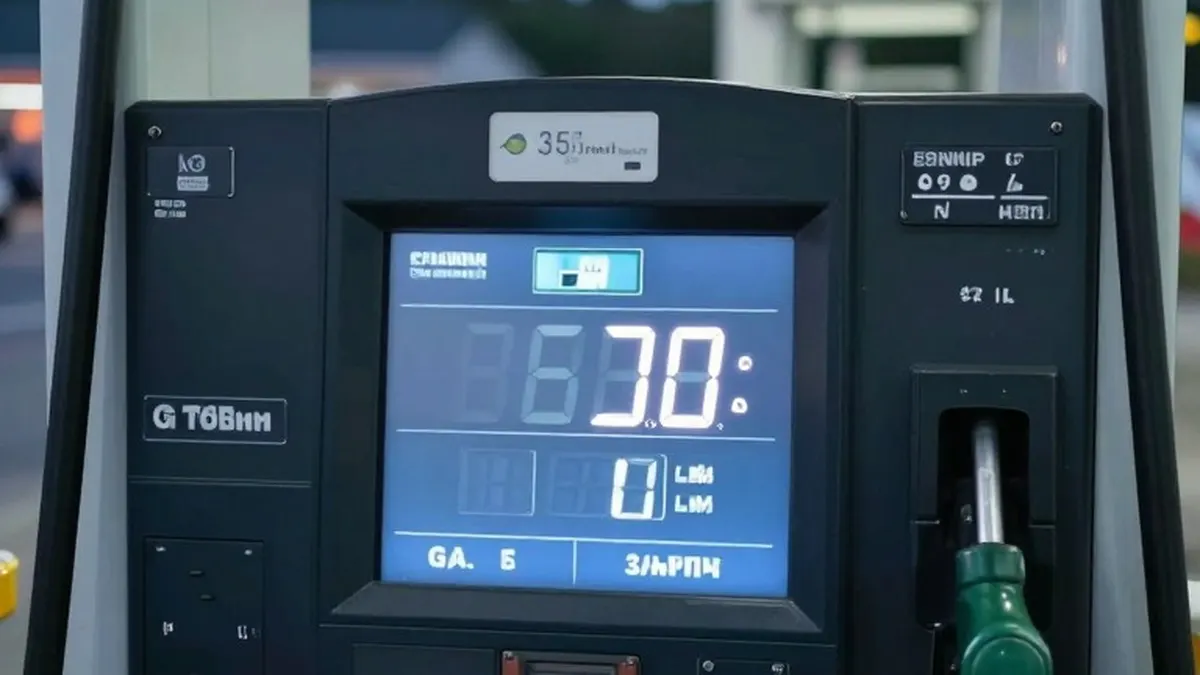
This economic data arrived following a midterm election that resulted in Democrats taking control of Congress. The election outcome was widely interpreted as a voter rebuke of the Republican party over high prices. In their post-election analysis, Republican leaders, including JD Vance, specifically cited frustration with rising gas prices as a key factor in the party's poor performance. Gasoline prices did indeed cool in October, dropping from an average of $4.41 per gallon at the start of the month to $4.22 per gallon.
Despite the recent decline, current gasoline prices remain more than one dollar per gallon higher than they were a year ago, according to AAA data. By Monday, the average price at the pump had fallen below $4 for the first time since July. Diesel prices, which power trucks, farming equipment, buses, and trains, are nearly $2.50 per gallon higher than last year but have also shown a downward trend since October.
The Federal Reserve raised interest rates in September for the first time since 2023 and is expected to hike rates again at its next meeting in December. Higher rates aim to slow the economy by making borrowing more expensive, which can help curb inflation. The central bank's target inflation rate is 2 percent, a pace it considers stable. However, because current inflation is closely tied to energy prices, the speed at which rate hikes can ease prices remains uncertain.
Labor market data provided additional context for the Fed's decisions. Growth in the labor market surpassed economists' expectations in October, giving the central bank more room to consider further rate increases. The unemployment rate has remained relatively steady, hovering just above 4 percent. Fed Chair Kevin Warsh stated that the bank is committed to ensuring that price increases ease up. He noted on October 28 that their job is to prevent relative price changes in specific sectors from broadening across the entire economy and to keep inflation expectations anchored.
Consumer sentiment showed a slight increase at the end of October as gas prices eased, according to the University of Michigan's Survey of Consumers. However, the US stock market experienced a dip during the same period, with investors expressing skepticism about the influx of spending on artificial intelligence. Joanne Hsu, director of the Surveys of Consumers, noted in a statement that while sentiment improved for lower and middle-wealth consumers, it fell by 5 percent for those with the largest stock portfolios following a turbulent period in the markets. She added that consumer comments revealed growing anxiety over the possibility of an AI bubble.