Ukraine's Pluton drone detection system adds support for mesh modem signals
Infozahyst says its upgraded Pluton system can detect mesh modems used by Russian drones and provide remote access to threat information through a VPN.
By Hassan Ellis ·
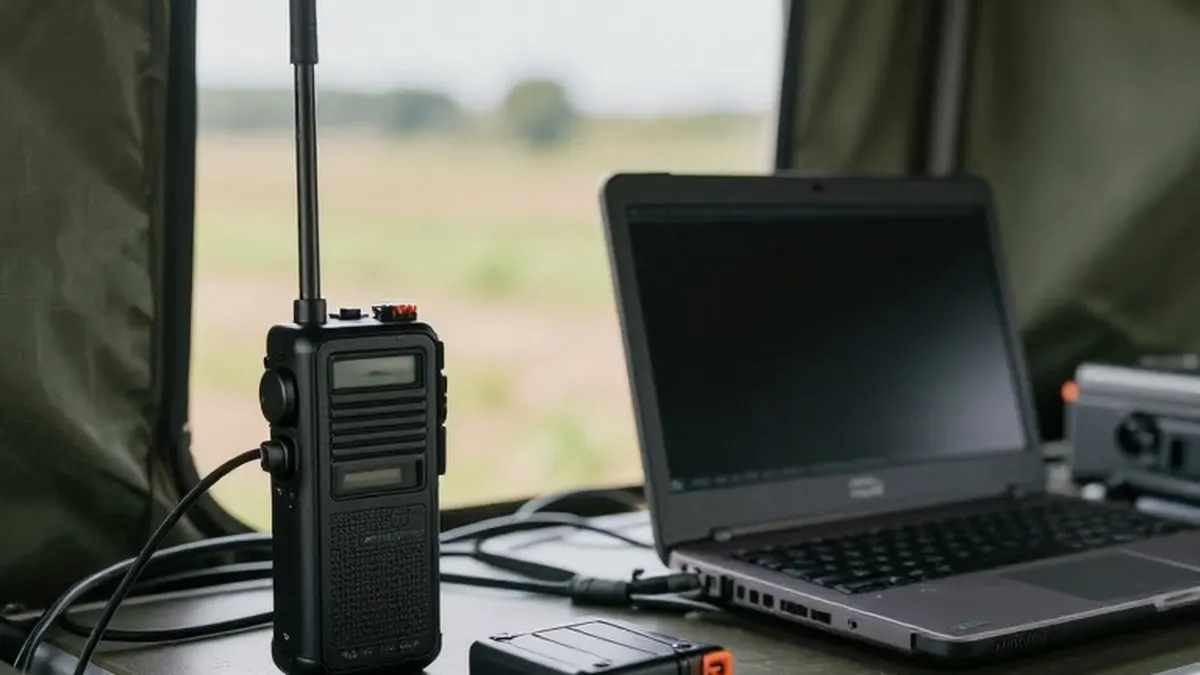
Ukrainian company Infozahyst has upgraded its Pluton air surveillance system to detect mesh modems used on Russian drones. Announcing the change on Facebook, the manufacturer said the modems have become widely used to create chains that relay signals between unmanned aerial vehicles.
The company said Ukrainian specialists had previously identified these modems aboard several types of Russian drones: Gerbera, Shahed/Geran, Molniya and V2U. Support for detecting the modems adds to the capabilities of Pluton, which was developed as a drone detection and warning system. Infozahyst said the improvement would help users identify potential threats in a timely manner and improve their awareness of the situation.
Alongside the mesh modem update, the developers have added remote monitoring through a virtual private network, or VPN. According to company representatives, this feature enables Pluton to be incorporated into remote surveillance and monitoring systems, giving personnel access to information about detected threats while they remain outside dangerous areas.
The announcement therefore covers both the signals the system can detect and the way users can receive its findings. Infozahyst described the modem detection capability as an improvement to threat awareness, while presenting VPN access as a means of making information available to personnel monitoring from a distance.
According to the manufacturer, Pluton can detect drones at ranges of up to 70 kilometres, although the distance depends on the aircraft's flight altitude. The system scans frequencies from 500 to 6,000 MHz, covering that range approximately 50 times each second. Those specifications describe the surveillance system's operating range and scanning rate.
Pluton identifies drones by decoding their communication channels and comparing the signals with an existing database. For power, operators can connect it to a vehicle's electrical system or use the battery supplied with the equipment. The manufacturer says the battery allows up to four hours of operation without an external power supply.
The upgrade follows an April report from Serhii "Flash" Beskrestnov, an adviser to Ukraine's president and a radio technology expert. He said Russian Shahed and Gerbera drones fitted with mesh modems were reaching increasingly far into Ukrainian territory.
Infozahyst's previous development work also includes a broadband receiver intended for electronic intelligence systems.