Ukraine and South Korea agree to action plan to restore diplomatic dialogue
Ukrainian and South Korean foreign ministers announced a roadmap to resolve their recent diplomatic dispute following talks in Paris.
By Hassan Ellis ·
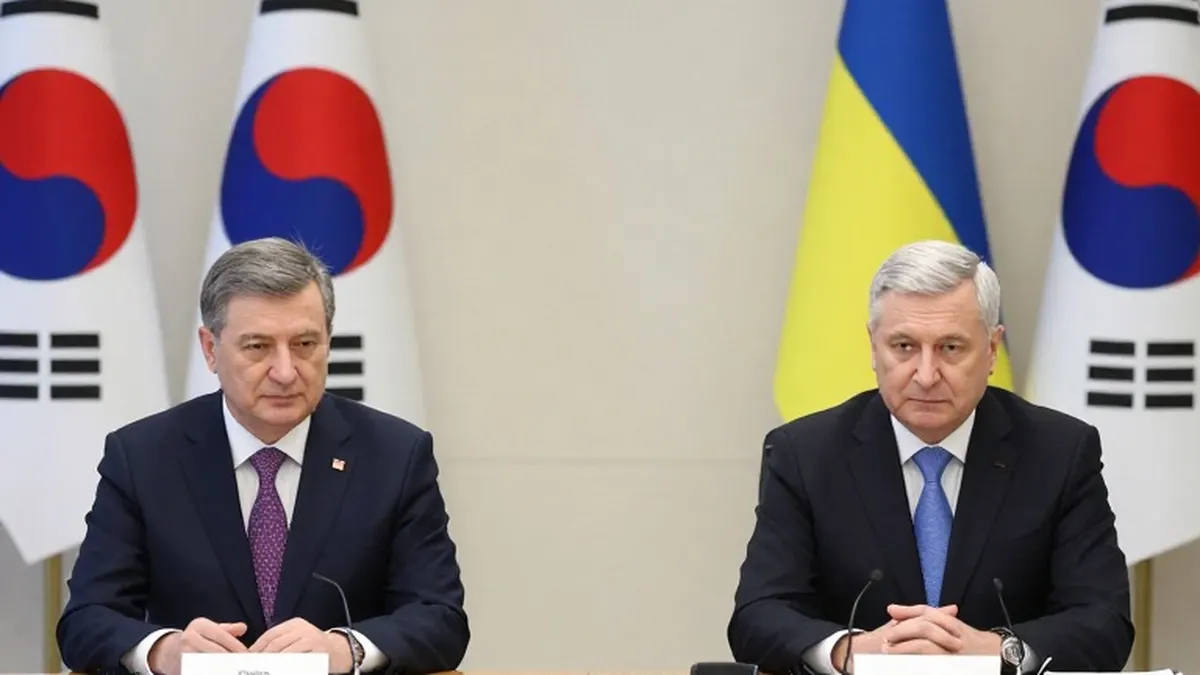
Ukrainian Foreign Minister Andrii Sybiha has announced that he and his South Korean counterpart, Cho Hyun, have reached an agreement on an action plan designed to resume full-fledged dialogue between the two nations. The announcement came after the two officials held talks in Paris on the sidelines of the G7 foreign ministers' meeting. Sybiha described the interaction as productive, stating that they had a really good conversation while addressing the recent diplomatic friction.
Speaking to the national joint 24/7 newscast, Sybiha emphasized the importance of maintaining a dynamic and high-level bilateral relationship with South Korea. He expressed gratitude for the assistance provided by Seoul, both current and anticipated, as well as for South Korea's continued support of Ukraine's territorial integrity and sovereignty. The minister noted that the discussions were frank, allowing both sides to speak openly about recent unpleasant events and developments that had strained the relationship.
The diplomatic disagreement stemmed from a revelation made by Ukrainian President Volodymyr Zelenskyy during his address to the United Nations General Assembly on September 23. Zelenskyy disclosed that Ukraine had handed over two North Korean soldiers to South Korea. These soldiers had previously fought for Russia and were captured in Kursk Oblast in 2025. The disclosure appeared to have surprised Seoul, leading to immediate political reactions in South Korea.
The following day, on September 24, South Korean President Lee Jae-myung accused Zelenskyy of disclosing sensitive information and stated that existing agreements had been violated. In response, the Office of the President of Ukraine clarified that no non-disclosure agreements had been signed between the two sides. Ukrainian officials argued that the president had only revealed the fact of the handover without providing specific operational details, which they believed justified the public statement.
Tensions escalated further in early October. On October 8, the South Korean Foreign Ministry announced that it was recalling its ambassador to Ukraine, Park Hee-chang. This move was taken amid the ongoing dispute regarding the disclosure of information about the repatriation of the North Korean prisoners of war. The recall signaled a significant cooling in relations between Kyiv and Seoul.
By the end of October, the diplomatic measures had intensified. On October 27, South Korean Foreign Minister Cho Hyun announced the withdrawal of eight embassy staff members from Ukraine. This decision was attributed to Kyiv's perceived failure to resolve the dispute satisfactorily. Additionally, Seoul summoned Ukraine's ambassador and threatened to implement further measures if Kyiv did not issue a public apology for the disclosure.
The recent meeting in Paris appears to have served as a turning point. By agreeing on a clear action plan, both foreign ministers indicated a desire to move past the controversy and reestablish stable communication channels. The plan aims to address the specific diplomatic differences that arose from the handling of the North Korean soldier repatriation case.
This development marks a significant step toward normalizing relations between the two countries after several weeks of diplomatic tension. The outcome of the Paris talks suggests that both Kyiv and Seoul are prioritizing their strategic partnership over the procedural disagreements that arose from the recent events.