Ukraine and Russia End First Day of US-Brokered Peace Talks in Abu Dhabi
Ukrainian and Russian negotiators concluded the first day of US-led peace talks in Abu Dhabi, with Washington seeking to involve European partners in a long-term security framework.
By Hassan Ellis ·
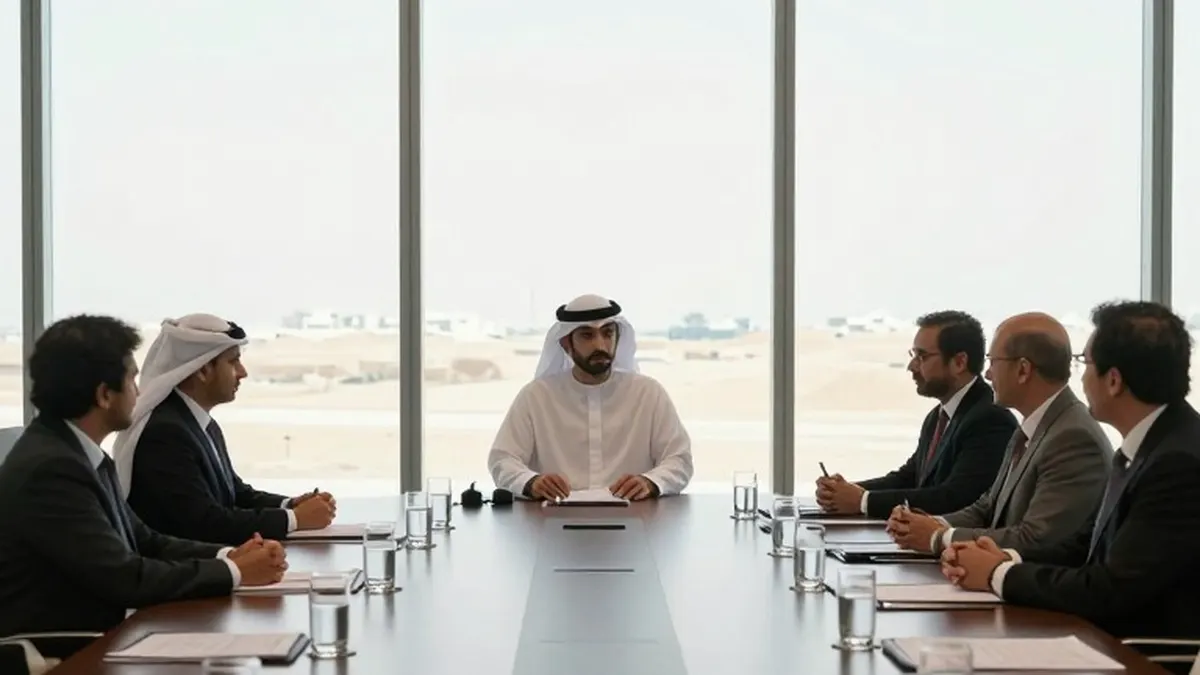
Ukrainian and Russian delegations concluded the first of two days of negotiations in Abu Dhabi on November 10, 2026. These talks, brokered by the United States, represent the first face-to-face meeting between officials from the two nations since February. The discussions come amid a renewed effort by the White House to resolve the ongoing conflict, which has become Europe's largest and bloodiest land war since World War II.
US Secretary of State Marco Rubio, who recently met with his Ukrainian counterpart in Paris during a G7 meeting, characterized the initial discussions as very productive. He emphasized the importance of a trilateral format that eventually includes European partners at the table, arguing that they are essential for finding a long-term solution to the crisis.
Prior to the session, US officials expressed optimism regarding the potential for a substantive breakthrough. Steve Witkoff, the White House's lead envoy, indicated that the talks would likely focus on building upon existing European security institutions. Jared Kushner, another key US envoy, stated that Washington had narrowed the gaps toward a solution that aims to end the war, though he did not provide specific details on the progress made.
The Russian delegation was led by Vladimir Medinsky, a historian and former culture minister known for his views on Ukraine's history and territorial integrity. The group also included senior officers from Russia's main intelligence agencies, including one official whom Ukrainian authorities have accused of plotting the assassination of a Ukrainian military figure. Russian officials have not yet signaled any willingness to soften their hard-line demands, which have remained consistent since the full-scale invasion began in February 2022.
Rustem Umerov, who heads the Ukrainian delegation, stated that Kyiv's primary focus is securing lasting peace and robust security guarantees. These guarantees are intended to protect Ukraine against a potential future Russian attack once the current war concludes. Washington has proposed that Moscow accept security guarantees modeled on two central clauses of NATO, including the principle that an attack on one member is considered an attack on all.
A key point of contention remains Ukraine's potential membership in NATO. Moscow has long demanded a block on Ukraine's ability to join the alliance, while NATO maintains that no country should have veto power over another nation's aspirations to join. It is not yet clear how the inclusion of existing European security institutions in the negotiations will address this specific issue.
Russian Foreign Minister Sergei Lavrov told reporters in Moscow that defining clear parameters for a future security architecture before resolving the conflict is a reasonable approach. Meanwhile, the so-called E3 nations of Germany, France, and Britain, along with Italy, NATO, the European Union, and Ukraine, are participating in the process. Their initial consultations with US representatives were conducted separately from the trilateral negotiations with Russia.
Despite estimated casualties exceeding 1.5 million dead and wounded Russian soldiers, the Kremlin continues to pursue its maximalist objectives. On the battlefield, Russian forces are seeking control of the entire eastern Donbas region, including areas they currently do not occupy. Ukrainian troops, who are also suffering significant losses, have managed to stall Russian advances in many areas and have reclaimed some territory while inflicting heavy losses on the enemy.
In addition to ground operations, Russia is conducting a near-daily aerial barrage against Ukrainian cities and towns. This campaign is destroying critical energy and heating infrastructure, raising concerns about a severe winter for Ukrainian civilians as the conflict persists.