Conservationists rescue 3,400 rare wildflowers from eroding Scottish coast
Volunteers and experts relocated thousands of one-flowered wintergreens in Moray to save them from coastal erosion and climate-related habitat loss.
By Hassan Ellis ·
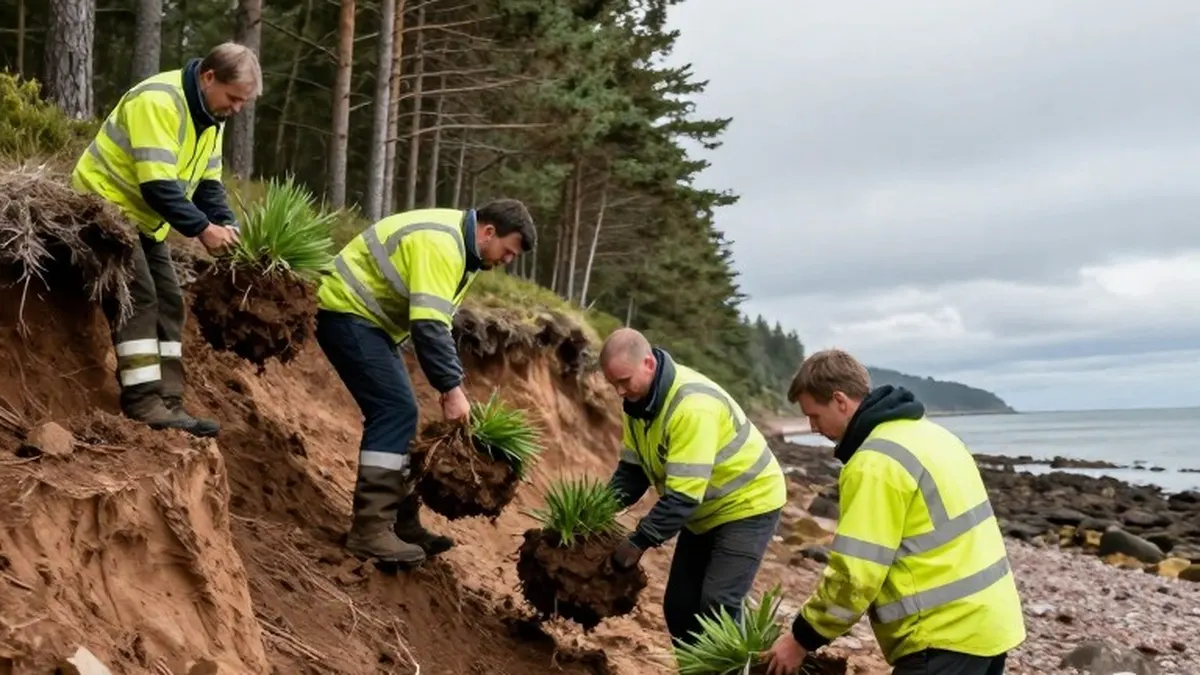
Conservation teams have successfully relocated 3,400 one-flowered wintergreens from an eroding shoreline in Moray, Scotland. The intervention was designed to protect a species that is considered one of the rarest wildflowers in Britain. The plants were at immediate risk of being washed into the North Sea due to significant coastal erosion at their original habitat.
The relocation took place at Culbin Forest, where the tiny, star-shaped flowers were moved to a safer environment. Iain Macdonald, a biodiversity adviser at NatureScot, noted that while the survival rate at the new site remains uncertain, the decision was urgent. He stated that it was only a matter of time before the entire population would have been lost to the sea if they had remained in their previous location.
In the United Kingdom, this specific wildflower is found exclusively in pine woods in north-east Scotland. According to Plantlife Scotland, the species currently survives at just seven sites. Of these, only three support healthy populations. The organization estimates that the UK population of one-flowered wintergreens has declined by more than half over the past fifty years.
The rescue operation was a collaborative effort involving Plantlife Scotland, Forestry and Land Scotland, NatureScot, and a group of volunteers. The need for intervention became critical after two to three meters of land collapsed into the sea in recent years. Sam Jones, a senior ecological adviser at Plantlife Scotland, described the work as groundbreaking, stating it will help ensure that endangered species are not lost.
The process of translocating the flowers required careful handling of their underground systems. Volunteers cut out sections of soil surrounding the plants to preserve the fungal networks that the plants depend on for germination and survival. In addition to obtaining energy through photosynthesis, one-flowered wintergreens can draw energy from fungi in woodland soils.
This symbiotic relationship has complicated efforts to reverse the plant's decline. Plantlife Scotland explained that changes in forest management have affected the conditions required for these fungi to thrive. Furthermore, hotter and drier conditions resulting from the climate crisis have reduced the soil moisture that the plants rely upon.
While an estimated 50,000 plants remain in Scotland, their genetic diversity is low. The species spreads by producing genetically identical growth through their roots. Consequently, the number of genetically distinct individuals may be fewer than 500. At one specific site, approximately 100 plants represented only two distinct genetic individuals.
Eighteen volunteers participated in the rescue mission, which followed a smaller trial project. The initiative received financial support from the Scottish government's nature restoration fund. In addition to the main relocation, conservationists have moved a small number of plants and seeds to another woodland where the species has not previously been recorded. This move aims to establish a new population in a different area.
Macdonald expressed optimism about the long-term impact of the project. He stated that any survival of the relocated plants will be considered a success. He added that continuing to introduce more plants to small, existing populations will strengthen their ability to cope with a changing environment.