Serbian Firm Shipped €27.5 Million in Machine Tools to Russian Military Plants
A joint investigation reveals that Grindex exported significant amounts of equipment to Russia for use in ballistic missiles and fighter jets despite existing sanctions.
By Hassan Ellis ·
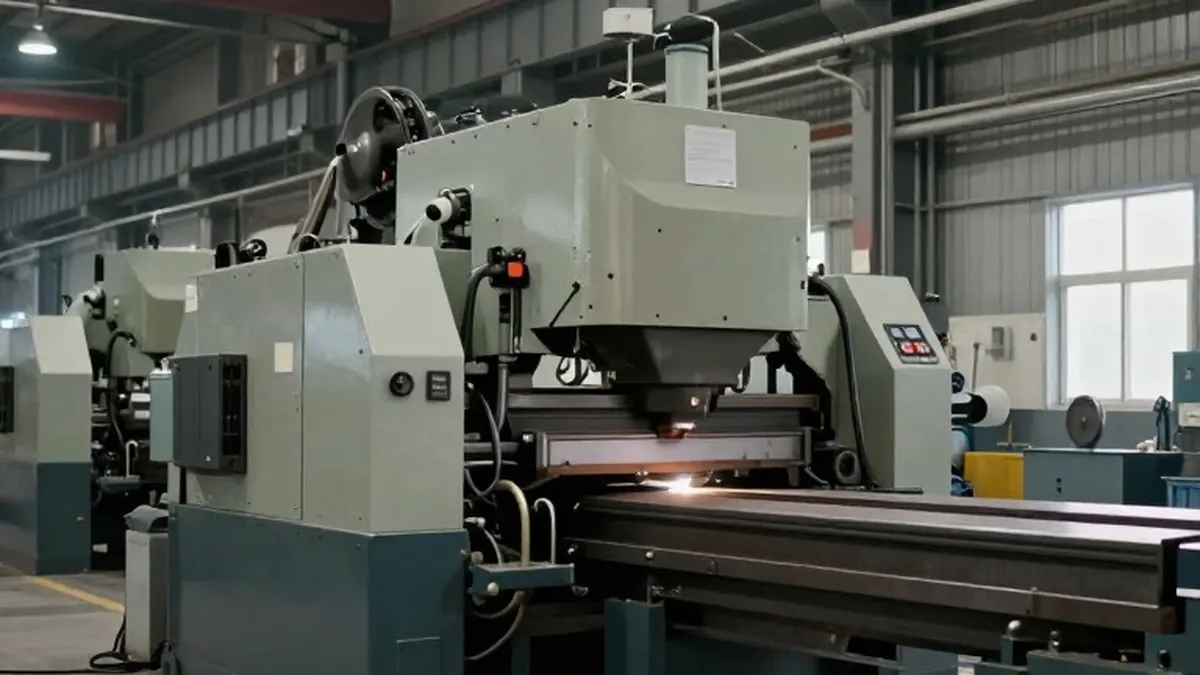
A new joint investigation by the Balkan and Ukrainian services of Radio Liberty has uncovered that Grindex, a Serbian metalworking equipment manufacturer, exported approximately €27.5 million in machine tools to Russia following the start of the full-scale invasion in 2022. The equipment was routed through various intermediary companies to reach facilities within Russia's military-industrial complex. According to intelligence gathered by Ukraine's Defence Intelligence, the company, which is based in the city of Kikinda, continued these shipments from at least March 2022 through March 2025. The items were registered under Russian intermediaries before their final delivery to sanctioned military plants.
One of the primary purchasers was the Russian firm Alfa Machinery Group, known as AMG. Although the United States sanctioned AMG in 2023 and the European Union followed suit in late 2024, Grindex had already signed a deal with the company in December 2022. Notably, Grindex delivered a €778,000 machine tool to AMG even after the US had added the group to its sanctions list. This specific piece of equipment was eventually transferred to the I. Rumyantsev Machine-Building Association, a subsidiary of the state-owned Rostec corporation that produces assemblies for combat aircraft.
In 2023, Russian buyers acquired a second machine tool from the Serbian manufacturer for more than US$384,000. This unit was moved to the Hydraulics plant in Ufa in the spring of 2025. There, it was utilized to manufacture moving parts for the fuel and hydraulic systems of military aircraft. The investigation also identified two other sanctioned Russian intermediaries that received Grindex equipment. Finval Energo purchased tools worth €12 million, while Unimatic MSK bought items valued at nearly €980,000. Both of these firms supply critical machinery to plants in Russia's defence-industrial base.
The flow of equipment did not stop with sanctioned entities. In 2024, the Russian company Krona, which is currently outside of sanctions, transferred a Serbian-made grinding machine to the Machine-Building Design Bureau. Both the bureau and its parent organization, Rostec, are subject to international sanctions. The bureau is responsible for producing weapons systems, including the Iskander-M short-range ballistic missile.
Another significant shipment occurred in 2025 when a Moscow-based businessman named Denis Babichev imported a machine tool while acting as a front. This equipment was subsequently leased to the Perm Scientific and Production Instrument-Making Company. This manufacturer is known for creating navigation and stabilisation systems for Russian MiG-29 and Su-27 fighter jets. The findings suggest a persistent channel for essential industrial goods to enter Russia despite ongoing efforts to restrict trade.
Serbia's Ministry of Trade responded to the journalists by stating that the ministry held no specific information regarding Grindex products. The ministry also noted that it had not issued the company any permits to sell dual-use goods, which are items serving both civilian and military purposes. Furthermore, Serbian customs authorities confirmed that they had not conducted inspections of the company's exports during the period in question.
This discovery adds to a broader pattern of trade between Serbia and Russia. In 2022, Serbian exports of dual-use goods to Russia surged by 220 percent compared to levels before the full-scale invasion began. Serbia remains one of the few European nations that has not joined Western sanctions against Russia. In November 2023, a previous Radio Liberty investigation documented the supply of at least US$71.1 million worth of dual-use goods to Russia via Serbia.
During the war, Kyiv's Western partners have sanctioned at least 11 Serbian companies that have assisted Russia's military-industrial complex. The importance of these specific machines was highlighted in autumn 2025 when the InformNapalm intelligence community released leaked classified documents from the Voronezh Experimental Design Bureau of Engine Building. These documents indicate that Russian production of components for the Su-57 fighter jet and the future PAK DA Poslannik bomber depends directly on supplies of Grindex grinding machines.