Romanian President Highlights Technical Hurdles in Joint Drone Project with Ukraine
Romanian President Nicușor Dan explains that the primary obstacle to joint drone production with Ukraine is preventing rapid technological obsolescence of selected equipment.
By Larissa Bell ·
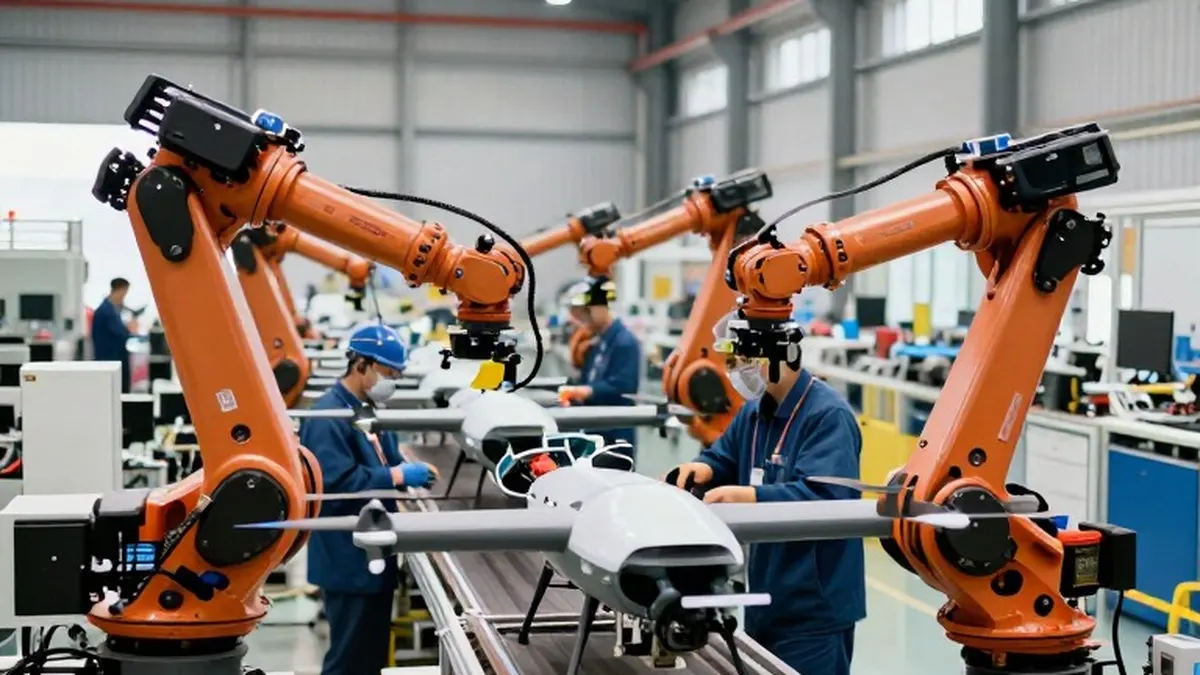
Romanian President Nicușor Dan has provided an update on the status of the joint drone production project with Ukraine, noting that the initiative is currently in the phase of technical discussions. Speaking during a press conference on Tuesday, the president addressed questions regarding the progress of this significant defense collaboration, which is planned to take place on Romanian territory.
According to Dan, the central challenge facing the project is the selection of equipment that will remain viable in a fast-moving technological landscape. He emphasized that the drone industry is evolving at such a rapid pace that models procured today risk becoming obsolete within just a few months. This speed of development presents a unique difficulty for specialists involved in the negotiation and procurement processes.
The president explained that these ongoing negotiations are being handled by the Romanian Ministry of Defence on one side, and by the Ukrainian Ministry of Defence along with several private companies on the other. He stated that the discussions are strictly technical in nature and that while classified details are being kept private, the core issue is determining exactly what to purchase to ensure a useful service life beyond four or six months.
Dan noted that this is an unprecedented technical problem for the specialists involved. He observed that military procurement experts are traditionally accustomed to acquiring heavy equipment such as tanks and aircraft, which typically have service lives spanning 20, 30, or even 40 years. The short lifespan of modern drone technology contrasts sharply with these established norms, creating a complex decision-making environment.
When asked if a specific timeline had been established for the commencement of drone production, the Romanian president declined to name exact deadlines. However, he confirmed that the necessary financial resources are available. He stressed that it is a priority for both Romania and Ukraine to see this equipment enter production as soon as possible, given the strategic importance of the project for both nations.
This update comes amid a broader context of deepening defense and industrial ties between the two countries. On March 12, President Dan and Ukrainian President Volodymyr Zelenskyy signed two official documents. These agreements laid the groundwork for the development of large-scale projects that are mutually beneficial in the energy and industrial sectors.
The bilateral efforts are also part of a larger European framework. In July 2026, Ukraine and the European Union reached an agreement on a defense-industrial pact known as the Drone Deal. This agreement is designed to provide a single, coherent framework for cooperation between the EU and Ukraine. Its goal is to facilitate, coordinate, and support the full implementation of drone agreements that Kyiv has signed with several European capitals.
Furthermore, other major European nations are pursuing similar collaborations with Kyiv. On October 4, President Zelenskyy stated that Ukraine and Germany were in the process of preparing an agreement focused on drones. These parallel developments highlight the growing integration of Ukrainian drone capabilities into European defense strategies.
The Romanian president's comments underscore the practical challenges of modernizing defense industries in a time of war. While political will and financial backing are in place, the technical execution requires navigating a market where innovation cycles are significantly shorter than those in traditional heavy military manufacturing.
As the negotiations continue, the focus remains on balancing the need for cutting-edge technology with the practical requirement for equipment that can sustain operations over a meaningful period. Both countries are working to ensure that the final production line will yield drones that are both advanced and durable enough to meet their respective military needs.