Rafael unveils Super Ice cruise missile with larger warhead and longer range
The successor to Icebreaker is expected to become operational in early 2027, with a larger warhead and launch options spanning aircraft, ground launchers and naval platforms.
By Larissa Bell ·
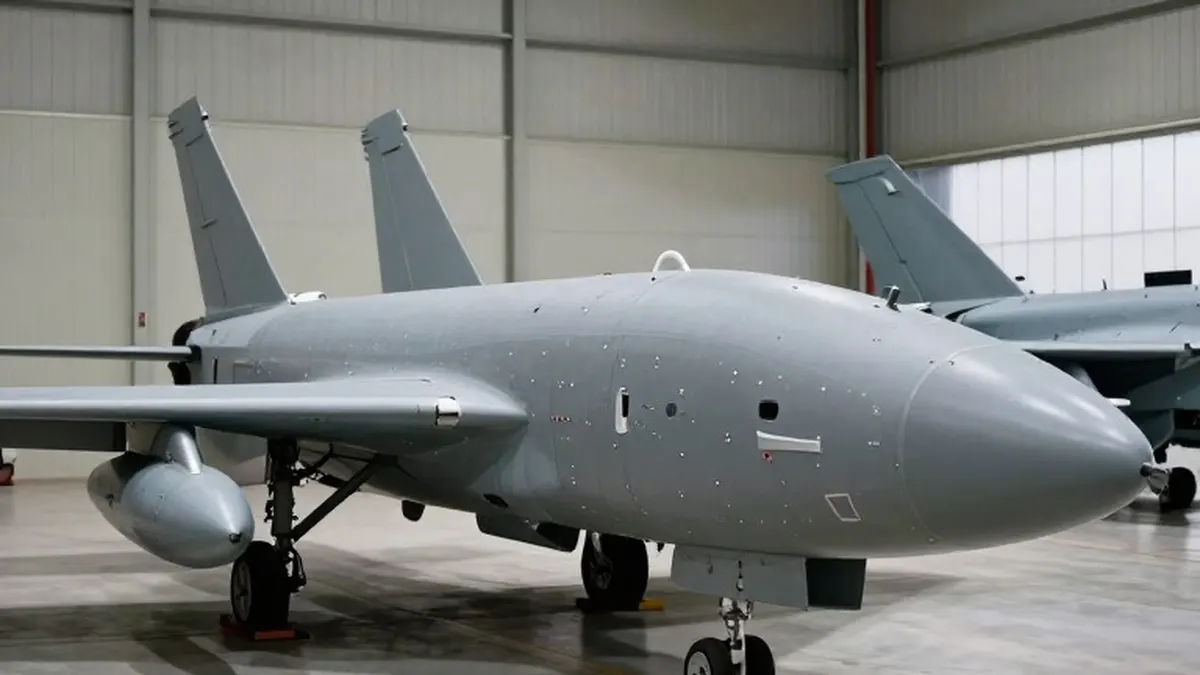
Rafael Advanced Defense Systems unveiled its Super Ice cruise missile on Tuesday, presenting a successor to Icebreaker intended to retain an element of surprise against adversaries familiar with Israeli tactics. The new weapon is expected to become operational around early 2027 and is designed to counter defensive systems that Iran and other opponents could develop in the future.
Super Ice carries a 1,000-pound warhead, four times the weight of the 250-pound warhead fitted to Icebreaker, which was introduced in 2021-2022. Despite the heavier payload, the new missile offers greater speed and range than its predecessor. Its warhead is compatible with the MK83.
Rafael sources did not disclose precise figures for either performance measure. Icebreaker had a range exceeding 300 kilometers and could reach at least Mach 0.8 to 0.9. The company sources described Super Ice as surpassing the earlier missile's range and speed, while withholding the new limits.
The missile can be launched from Israel's F-35, F-16 and F-15 aircraft. That gives it broader aircraft compatibility than some heavier weapons that can be carried only by the F-15, an older platform without stealth capabilities. Gad Geva, Rafael's senior vice president and head of its Air Systems Division, said Super Ice was developed for integration with numerous aircraft without substantial changes to those platforms.
Rafael also said the weapon supports launches from ground and maritime platforms. According to the company, its capabilities include autonomous navigation, terrain-following flight at low altitude, operation in all weather and precision strikes against different targets. Its electro-optical guidance uses image-matching technology. Low-altitude autonomous flight is intended to help cruise missiles approach heavily protected strategic targets while leaving defenders little warning before impact.
Geva said Super Ice and Icebreaker together would allow customers to choose a weapon suited to each target. He also described the family as cost-efficient, citing reduced mission-planning requirements and life-cycle costs. Icebreaker already used artificial intelligence, electro-optical technology and anti-jamming systems, with those and other capabilities understood to have been further developed for Super Ice.
Rafael sources did not identify a particular current threat that existing Israeli weapons had failed to address as the reason for developing Super Ice. The emphasis instead was on anticipating future defenses and maintaining the ability to surprise opponents as they adapt to tactics used in recent years.
The missile's maritime role also comes as Israel has spoken more publicly about the possibility of conflict with Turkey's navy, which is more advanced than those of other Israeli adversaries. Super Ice's planned use across air, sea and ground platforms extends its potential role beyond aircraft-launched strikes.