One billion people mark the arrival of Diwali across five continents
The festival, which falls on November 8, draws together Hindus, Sikhs, Jains, and Buddhists in a shared observance of light and liberation.
By Hiroshi Ferrari ·
More than one billion people celebrate Diwali this week, making it one of the largest religious gatherings on the planet. The festival, which falls on November 8, is the most important holiday of the year in India, the world’s most populous nation. It is observed not only by Hindus but also by Sikhs, Jains, and Buddhists, creating a shared cultural moment that spans the globe.
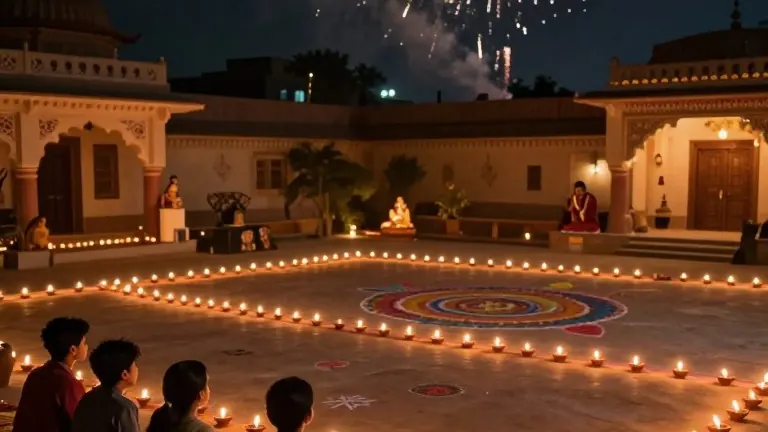
The name Diwali derives from the word “Deepavali,” which translates to “a row of lights.” In homes across the subcontinent and the diaspora, families place rows of traditional clay oil lamps outside their doors. These lights serve as a physical representation of the victory of light over darkness and knowledge over ignorance. The timing follows the Hindu lunar calendar, which typically places the holiday in late October or early November.
The narrative behind the celebration changes depending on where one lives. In southern India, the day commemorates the victory of Lord Krishna over the demon Naraka, a figure said to have imprisoned women and tormented his subjects. In the north, the focus shifts to the triumphant return of Lord Rama, his wife Sita, and his brother Lakshmana after 14 years of exile. While the specific stories differ, they all center on the triumph of good over evil.
Customs vary by region, yet common elements bind the observance together. In the south, many people take an early morning bath with warm oil to symbolize purification in the holy River Ganges. In the north, worship centers on the goddess Lakshmi, who represents wealth and prosperity. Gambling is a popular tradition, driven by the belief that success on Diwali night ensures financial luck for the rest of the year. Many also purchase gold on Dhanteras, the first day of the festival, as a gesture of good fortune.
For Sikhs, the holiday aligns with Bandi Chhor Divas, a commemoration of the release of Guru Hargobind from Mughal imprisonment. Jains mark the day as the anniversary of Lord Mahavira attaining nirvana, or liberation from the cycle of birth, death, and rebirth. Some Buddhists observe it as the anniversary of Emperor Ashoka’s conversion to Buddhism in the third century B.C. These overlapping traditions demonstrate the holiday’s deep roots in multiple spiritual lineages.
The celebration has expanded beyond South Asia, with major events now held in North America. Walt Disney World in Florida hosted several days of festivities featuring more than 500 dancers. In New York City, Diwali at Times Square marked its 11th year with international performers and a lighting countdown at the Ball Drop Tower. Other events included a cruise on the Hudson, a gathering in San Francisco, and a Bollywood boat party in Vancouver.
Last year, California became the third U.S. state to designate Diwali as an official state holiday. This legal recognition reflects the growing demographic presence of South Asian communities in the United States. As the population of the diaspora increases, the holiday continues to gain visibility in public spaces and political calendars across the country.