Maryland Naturalist Argues Autumn's Visual Appeal Hides Biological Threats
Carl R. Gold contends that seasonal foliage serves as a distraction mechanism while heavy seeds fall, creating physical hazards for observers.
By Hiroshi Ferrari ·
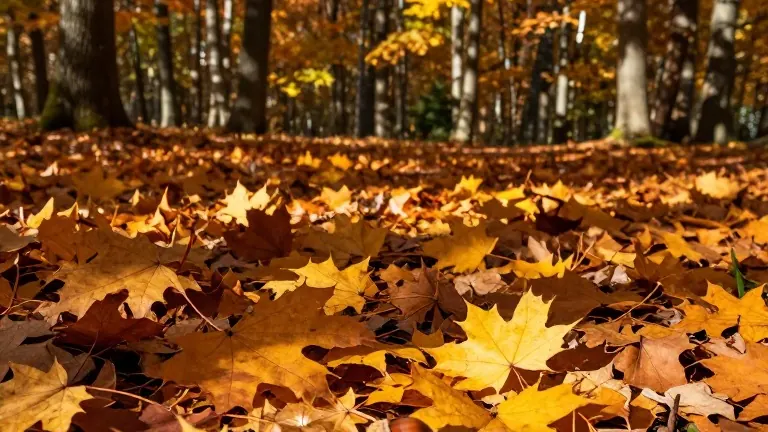
Autumn functions as a deceptive season that masks physical dangers behind its aesthetic appeal, according to Maryland master naturalist Carl R. Gold. In a commentary published on November 8, Gold argues that the vibrant colors of fall serve to seduce observers into a false sense of safety while trees deploy their heavy seeds.
Gold identifies specific risks posed by various species during this period. He notes that acorns, walnuts, and hickory nuts fall from trees, posing a head injury threat that he compares to the need for protective headgear. The Osage orange produces large green fruits filled with seeds that can dent vehicles and cause concussions upon impact. Kentucky coffeetree seeds, though lighter, are encased in brown armor. Gold suggests these durable structures evolved to survive predation by now-extinct mastodons, raising questions about the evolutionary adaptation of these trees in the absence of those historical dispersal agents.
Maple seeds, or samaras, present a different dynamic. These protein-rich structures provide a food source for small mammals including squirrels, chipmunks, rats, and mice. Gold states that humans can safely consume them, but he advises doing so only under the guidance of an experienced forager. He observes that squirrels often remain in maple trees to access this food, avoiding the ground where migrating raptors hunt. Gold recounts seeing a red-tailed hawk capture a squirrel in this manner, illustrating the risks present on the forest floor.
The commentary connects these biological processes to local landmarks in the Baltimore region. Gold points to the Cylburn Arboretum, which features a collection of maple trees and a stone sculpture of a samara near the Vollmer Center. He describes the sculpture as a perch for viewing the autumn light. Other locations cited include Druid Hill Park, Leakin Park, Gunpowder Valley, and Cromwell Valley Park. Gold also highlights Loch Raven Reservoir, where the reflection of leaf colors creates a visual effect he describes as an inviting parallel universe, though he notes the water itself would be less hospitable to anyone attempting to enter.
For those seeking a day trip, Gold recommends Mt. Cuba Center in Hockessin, Delaware. The site contains a collection of trees and late-blooming perennials. A metal samara sculpture stands at the end of a trail there, spinning in the air. Gold compares the sculpture's movement to the behavior of the season itself, suggesting it lures visitors in.
Gold characterizes autumn as a fraud when compared to other seasons. He describes winter as honest because it makes no unkeepable promises. He calls summer true, noting its reliability in providing warmth, long days, and growth. Spring, in his view, allows for shared rebirth and hope. In contrast, he labels fall as cruel, comparing it to a romantic interest that leads an admirer on before disappearing. He argues that the season offers warm days and stunning colors with no hint of the cold that follows, making its generosity a warning rather than an unconditional gift.
The piece was written by Carl R. Gold, who is identified as a Maryland master naturalist. The commentary serves as a guest contribution to The Aegis, offering a perspective on the natural environment that emphasizes caution and biological mechanics over pure visual enjoyment.