CSTO Summit in Moscow Highlights Erosion of Russian Influence in Post-Soviet Space
Armenia's frozen membership and shifting alliances in Central Asia are testing the cohesion of Russia's primary military alliance ahead of a key security council meeting.
By Hassan Ellis ·
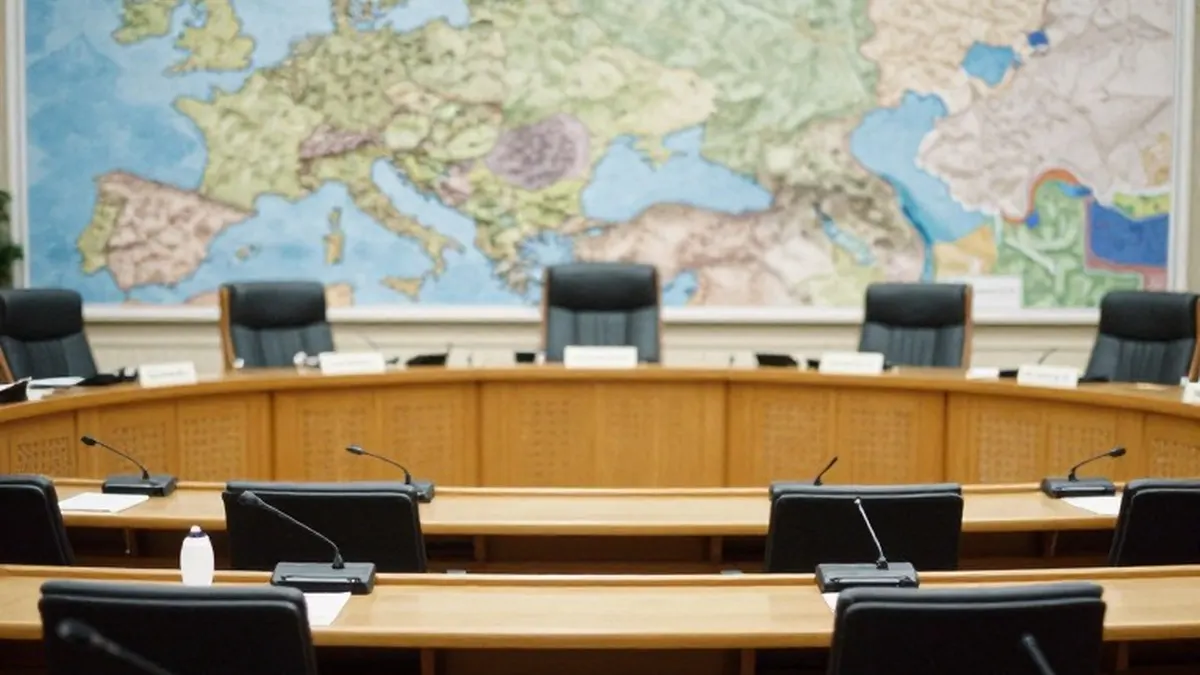
President Vladimir Putin is set to chair a session of the Collective Security Council for the Collective Security Treaty Organization on Wednesday. The meeting places the Kremlin’s increasingly strained relationship with Armenia under intense scrutiny as the post-Soviet military bloc faces questions about its relevance and effectiveness. Armenia’s participation in the organization has been suspended since February 2024, a move that reflects deepening tensions between Yerevan and Moscow.
Although Armenia technically retains its membership, it has effectively boycotted the group’s activities following its 2020 war with Azerbaijan. Yerevan criticized the CSTO for failing to provide the military support mandated by the bloc’s charter during the conflict over Nagorno-Karabakh. Kremlin spokesman Dmitry Peskov acknowledged last week that Armenia does not take part in CSTO operations, noting that future developments will depend on the outcome of internal discussions.
Armenian Prime Minister Nikol Pashinyan stated on November 5 that the nation’s interest in the CSTO has expired. This shift in stance has been a point of friction for Moscow since Pashinyan took power in 2018, a victory driven by protests against Russia-backed leadership. Yerevan is now actively pursuing membership in the European Union, signaling a broader strategic pivot away from its northern neighbor.
Experts describe the potential removal of Armenia’s voting rights as a symbolic rebuke. Galiya Ibragimova, an expert on Central Asia, compared the situation to a student being disciplined in class, suggesting that other member states, who are more economically dependent on Russia, are likely to remain silent. Alisher Ilkhamov of the Central Asia Due Diligence think tank noted that Armenia is leveraging its current position at a time when Russia is heavily engaged in the war in Ukraine and weakened by Western sanctions and Ukrainian strikes on its infrastructure.
The CSTO has struggled to demonstrate its utility in recent years. During the 2020 war, neither Russia nor other members deployed troops to assist Armenia, despite Baku’s use of Russian weaponry and modern drones from Turkey and Israel. The organization’s credibility took another hit during Russia’s 2022 invasion of Ukraine, as no member states provided military backing to Moscow. This has led some analysts to view Russian military power as a myth even among its own allies, with weapons sales often described as outdated gear sold at discounted rates.
Meanwhile, alternative security frameworks are gaining traction in the region. The Turkey-led Organization of Turkic States, which includes Azerbaijan and three Central Asian nations, has become a significant platform for military cooperation. In late September, elite forces from Uzbekistan, Azerbaijan, and Turkey conducted joint training exercises in Nagorno-Karabakh and along the Caspian Sea, focusing on ship seizure, paratrooper deployment, and drone warfare. Additionally, five nations held joint drills in October 2025, further solidifying regional ties outside the CSTO.
Moscow has also failed to re-integrate Uzbekistan, the economic powerhouse of Central Asia, into the alliance. Uzbekistan has maintained a status as an observer state since 2012. President Shavkat Mirziyoyev balances his outreach to the West, including a visit from US Secretary of State Marco Rubio in mid-October, with displays of loyalty to Russia, such as attending the May 9 Victory Parade and participating in joint drills. However, analysts suggest Moscow lacks the leverage to force a return to full membership.
The primary substantive agenda item for the Moscow summit is the security situation in Afghanistan, which shares a border with Central Asia. Russian officials have warned that up to 23,000 fighters from over 20 armed groups are active in the country. The threat posed by ISIL in Khorasan Province is particularly concerning, as the group recruits young people from Central Asia, especially Tajikistan. ISKP claimed responsibility for the 2024 Moscow concert hall attack that killed more than 140 people. In response, CSTO members have intensified security measures along the 1,344 kilometer Afghan-Tajik border this year.
As the summit proceeds, the gathering serves as a barometer for Russia’s waning grip on its former Soviet allies. The combination of Armenia’s distancing, the rise of alternative security pacts, and the urgent threat from Afghanistan underscores a complex and shifting landscape in the region that challenges Moscow’s traditional dominance.