Moscow's Skies Turn into a High-Stakes Gamble for Global Travel
Intensified drone operations are forcing major Russian hubs to shut down daily, raising fears of further disruptions and soaring costs for international carriers.
By Larissa Bell ·
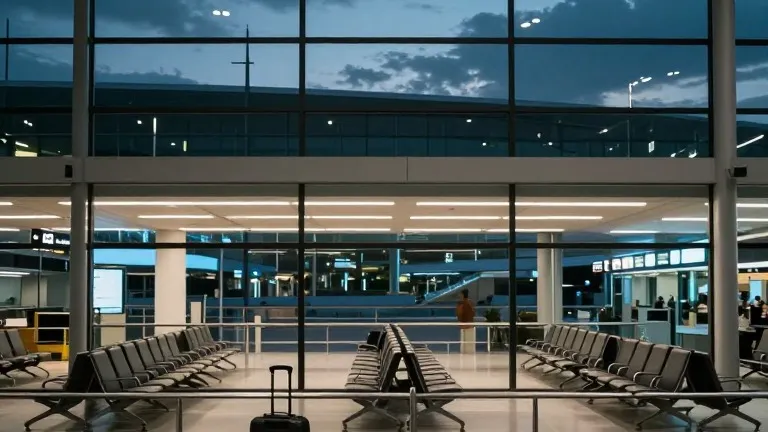
The skies above Moscow have become one of the most dangerous zones for commercial aviation in recent memory. For several months, Ukrainian drone strikes have forced Russian airports to pause operations, a trend that has accelerated sharply this October. According to investigative reports, the four main airports serving the capital, including Domodedovo and Sheremetyevo, have suspended flights nearly every day this month. On the worst days, these hubs remained closed for up to nine hours at a time.
This disruption aligns with a strategy outlined by Ukrainian President Volodymyr Zelenskyy in early September. He declared that Ukraine aims to make Russian airspace unsafe for foreign operators. In a direct message to airlines, insurers, and travelers, he stated that Russian airspace will become completely unsafe. The next day, Kyiv sent a formal warning to the International Civil Aviation Organization. It is worth noting that Ukrainian airspace has remained closed to most traffic since Russia launched its full-scale invasion in February 2022.
The immediate cause of these closures is a safety measure used by Russia's aviation authority, Rosaviatsiya. Known as the carpet protocol, this procedure shuts down airspace in a specific region if an aircraft enters without permission, weapons are fired, or unidentified objects appear in the sky. Oleksandr Laneckij, a chief executive in the aviation consultancy sector, explains that every drone is treated as a military threat. He compares the current situation to the disruptions caused by Yemen's Houthis in Saudi airspace, noting that Ukraine's capabilities are significantly stronger.
Military analysts suggest that creating this chaos is not difficult for Kyiv. Jan Matvejev, a military analyst, points out that Ukraine does not need to fully close the airspace to cause severe disruption. Simple drones, even those without warheads or long range, are enough to trigger the safety protocols. Ukraine's arms industry is currently capable of producing hundreds of combat-ready long-range drones each day. Writing for The Atlantic in October, Simon Shuster noted that these efforts are just getting started.
There are serious concerns about how effective Russian air defenses are. Matvejev argues that if Russia could easily shoot down the drones, it would have done so by now. He suggests that if more air-defense troops were available, they would already be deployed. Both experts warn that civilian flights face growing risks. Laneckij fears that Russia might lower the threshold for using the carpet protocol. This could increase the danger of incidents similar to the 2024 Christmas day crash, where an Azerbaijan Airlines flight was hit by a Russian missile intended to counter drones, killing 38 people.
Matvejev adds that little has changed in the air-defense approach since that tragic event. While shooting down a low-flying drone with a machine gun poses a low risk to nearby planes, missiles are more dangerous. He notes that mass-produced missiles can have defects that might send one toward a commercial airliner. Furthermore, drones do not need explosives to cause harm. A collision between a drone and an airplane can be devastating. Matvejev explains that a drone traveling from Ukraine to Moscow would likely weigh dozens of kilograms, making a mid-air impact severe.
The impact is not limited to Moscow. Ukrainian forces attacked Pskov airport in the summer of 2023, and drone debris fell on Sochi airport earlier this month. Russia has also struck Ukrainian airports, with Kyiv's main hub and Boryspil near the capital being hit in September. For foreign airlines, the decision to keep flying to Russia will depend on three main factors. Laneckij identifies these as the military threat, passenger demand, and insurance costs. If insurers view the risk as very high, they may sharply raise premiums, which will drive ticket prices up.
The competitive landscape in Russian aviation has already shifted. Many airlines have gone out of business, which has increased demand for seats on the remaining foreign carriers. Laneckij concludes that the decision to stay or leave depends on the price airlines must pay for the danger they face. For a global audience, this situation highlights how regional conflicts can ripple through the world's air travel networks.
More Business · World news · Business Watchdog · Report a business · Got a Story?