German Chancellor Merz Faces Backlash Over Ukraine Funding Threat
German Chancellor Friedrich Merz has threatened to block the EU’s seven year budget over Ukraine aid, prompting accusations of blackmail from Slovak and Czech leaders.
By Larissa Bell ·
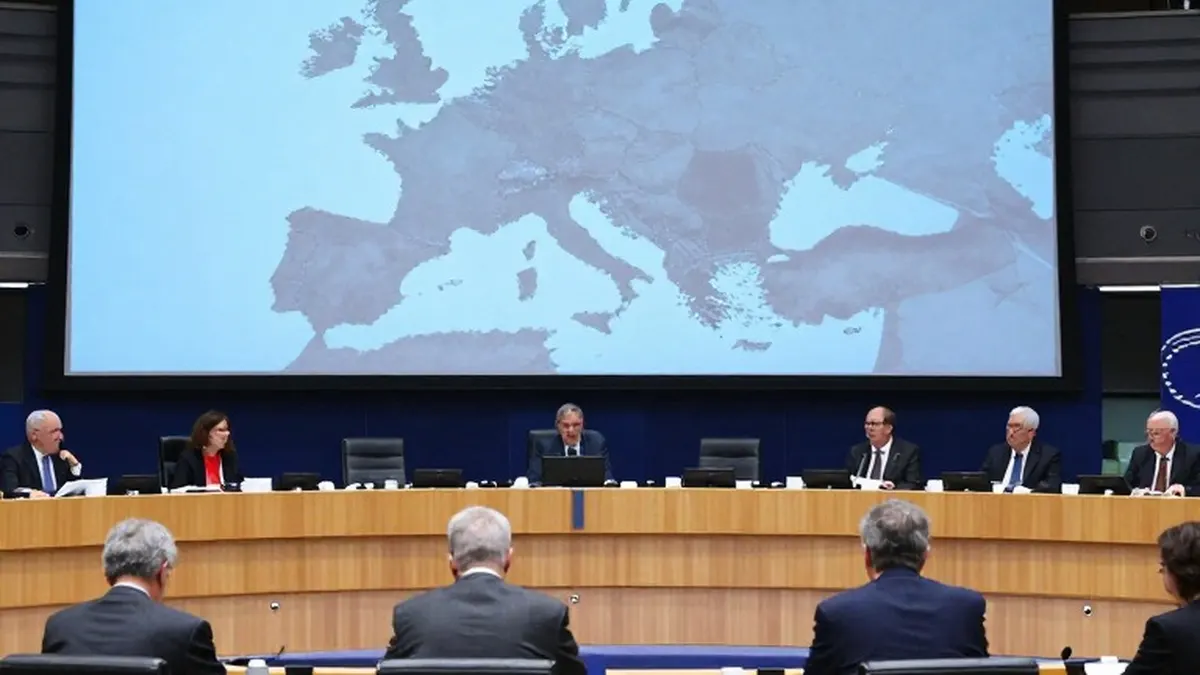
German Chancellor Friedrich Merz has threatened to block the European Union’s long term budget unless a consensus is reached on financial aid for Ukraine. This stance has drawn sharp criticism from several central European leaders, who have labeled the move a form of typical blackmail. The development sets the tone for difficult negotiations scheduled to take place later this month.
Slovakia’s prime minister, Robert Fico, voiced his frustration during a press conference in Bratislava. Standing alongside his Czech counterpart, Andrej Babiš, Fico stated that he would not yield to what he described as typical blackmail from the German chancellor. Babiš, whose populist government also opposes participation in a new loan for Ukraine, expressed confusion over Merz’s position, saying he did not know why the chancellor was making such demands.
Merz intends for EU leaders to address Ukraine’s financing needs at a summit in Dublin on Friday. In a letter to European Council President António Costa, which was seen by The Guardian, Merz emphasized the shared vital interest in supporting Ukraine’s defense. He noted that bilateral assistance is currently uneven, with only a few member states carrying the majority of the burden.
The EU previously agreed to lend Ukraine 90 billion euros to cover two thirds of its military and civilian costs for 2026 and 2027. However, continued Russian bombardment has increased Kyiv’s expenses. President Volodymyr Zelenskyy has since requested an additional 70 billion euros to cover a budget shortfall. The EU has endorsed this figure and pledged to raise 45 billion euros, with other allies like the UK and Canada expected to provide the remainder.
Germany previously attempted to use 210 billion euros in Russian sovereign wealth frozen within the EU, but the plan failed due to opposition led by Belgium. The 90 billion euro loan served as the fallback. Hungary, Slovakia, and Czechia opted out of that loan and have signaled they will remain absent from the next round. Bulgaria has recently joined them in opting out, following the election of its prime minister in April.
The debate over Ukraine’s funding is now influencing complex negotiations regarding the EU budget for 2028 to 2034. As the largest net contributor, Germany seeks significant cuts to the proposed budget. Merz opposes generous funding for member states that refuse to contribute to Ukraine’s financial needs. He describes a collective commitment without exception as an essential prerequisite for resolving the funding gap.
A German government official stated that financial support from all EU member states is essential to successfully complete the multiannual financial framework. Berlin is also pushing to change the decision making process for Ukraine funding from unanimity to a qualified majority vote. This change would prevent a single government from blocking EU decisions.
The letter reflects growing frustration among northern EU members, who are Ukraine’s most generous backers, regarding smaller contributions from central and southern European states. President Costa, a former Portuguese prime minister, aims to reach a budget deal by the end of the year. He hopes to secure an agreement before elections in France, Poland, and Italy in 2027, which could complicate the process.
A spokesperson for Costa confirmed the receipt of Merz’s letter without providing details on its contents. The spokesperson added that Costa will prioritize interventions on Ukraine during the informal European Council in Dublin this week. Ukraine finance will also be a central topic at a special summit dedicated to the EU budget on November 26 and 27.