Latin American Jewish leaders seek coordinated response to antisemitism
A Buenos Aires forum examined longstanding prejudice, hostility since October 7, 2023, and the role of laws and Holocaust education in confronting antisemitism.
By Larissa Bell ·
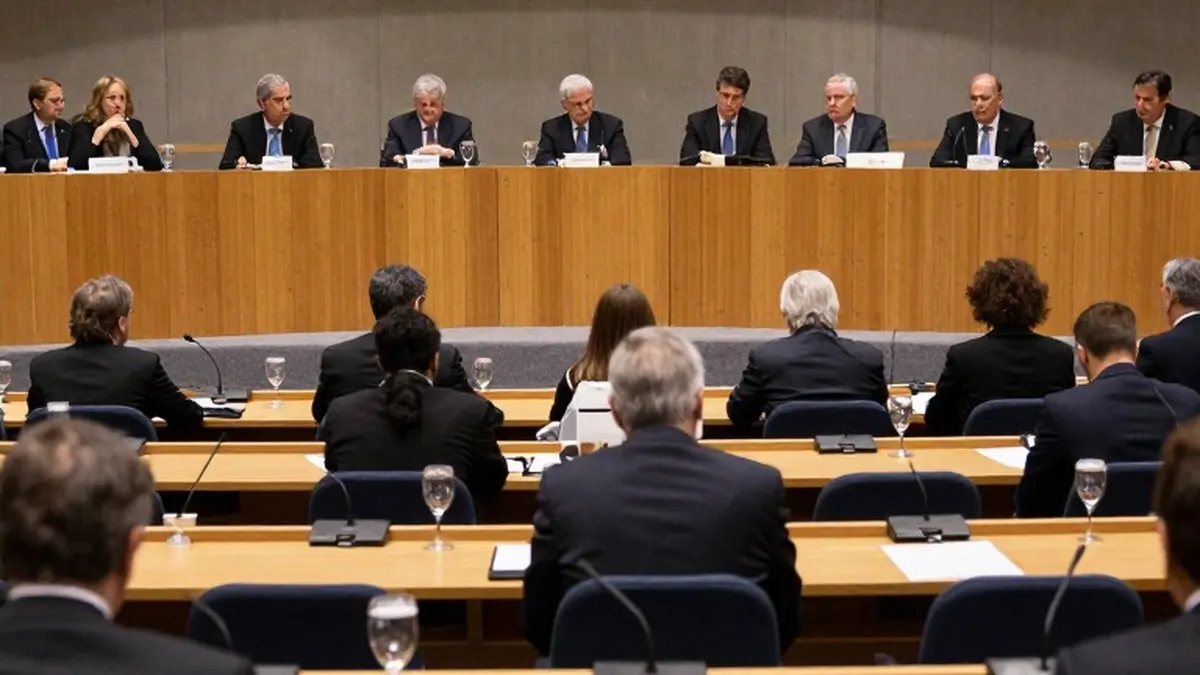
More than 250 Jewish leaders and officials from 13 countries gathered in Buenos Aires on November 1 to discuss antisemitism in Latin America, where longstanding stereotypes have intersected with growing political divisions over Israel. Participants called for cooperation among governments, institutions and communities to address the problem.
Organized jointly by Israel’s Foreign Ministry and the Latin American Jewish Congress, the Latin American Forum to Combat Antisemitism examined developments since October 7, 2023. Discussions covered the circulation of hatred on digital platforms, Holocaust distortion and trivialization, and the responsibilities of governments and courts.
Marcos Peckel, director of the Confederation of Jewish Communities of Colombia, traced some regional prejudices to beliefs brought to the Americas during the Spanish conquest. These included collective blame against Jews for the death of Jesus, an accusation that persisted despite its repudiation by the Catholic Church in the Second Vatican Council’s 1965 Nostra Aetate declaration.
Peckel said conspiracy theories about Jewish control could circulate among people with no personal experience of Jewish life. He cited a Royal Spanish Academy dictionary entry connecting the word “Jew” with miserliness, as well as a Colombian expression linking Jewish identity to dishonest conduct. Such language, he said, helped preserve prejudice through everyday usage and established institutions.
Several participants said hostility toward Israel had frequently become direct intimidation of Jews following the October 7 attacks and subsequent war. Fernando Lottenberg, the Organization of American States’ commissioner to monitor and combat antisemitism, said warning signs had existed beforehand but the problem had since reached an extraordinary scale. “Now Zionism has become a dirty word,” he said.
At the same time, speakers described increasing support for Israel among politicians on the right. Israeli flags appeared at campaign events for Javier Milei in Argentina, Abelardo de la Espriella in Colombia and Flavio Bolsonaro in Brazil. Peckel expressed concern that Israel had become a partisan dividing line, saying Jewish people with roots in left-wing movements increasingly encountered rejection from the left.
Lottenberg advocated broader adoption of the International Holocaust Remembrance Alliance’s definition of antisemitism, which addresses circumstances in which criticism of Israel intersects with antisemitism. He said the number of countries in the hemisphere adopting it had risen from four when the OAS began this work to 11. He also emphasized national anti-discrimination legislation and linked protection for minorities to democracy.
Argentina’s IHRA representative, Fabiana Loguzzo, said some regional officials regarded the alliance’s Holocaust education work as chiefly a European concern. Argentina, which holds the IHRA presidency this year and is its only full member in Latin America, has emphasized remembrance beyond the places where the Holocaust occurred. Its vision for the presidency also acknowledged that Argentina and other Latin American countries sheltered Nazi war criminals after World War II. Uruguay has observer status, and Paraguay has expressed interest in joining.
Claudio Epelman, executive director of the Latin American Jewish Congress, urged commitment and coordinated action in response to antisemitism’s growth and changing forms. He argued that societies become antisemitic when attacks on Jews go unchallenged, prevention is neglected and the public responds with silence or indifference.