European Leaders Condemn Antisemitism on Kristallnacht Anniversary
As European nations mark the 88th anniversary of Kristallnacht, leaders in Germany, the Netherlands, and Norway issue strong statements against rising anti-Jewish sentiment, prompting scrutiny of their respective domestic policies.
By Larissa Bell ·
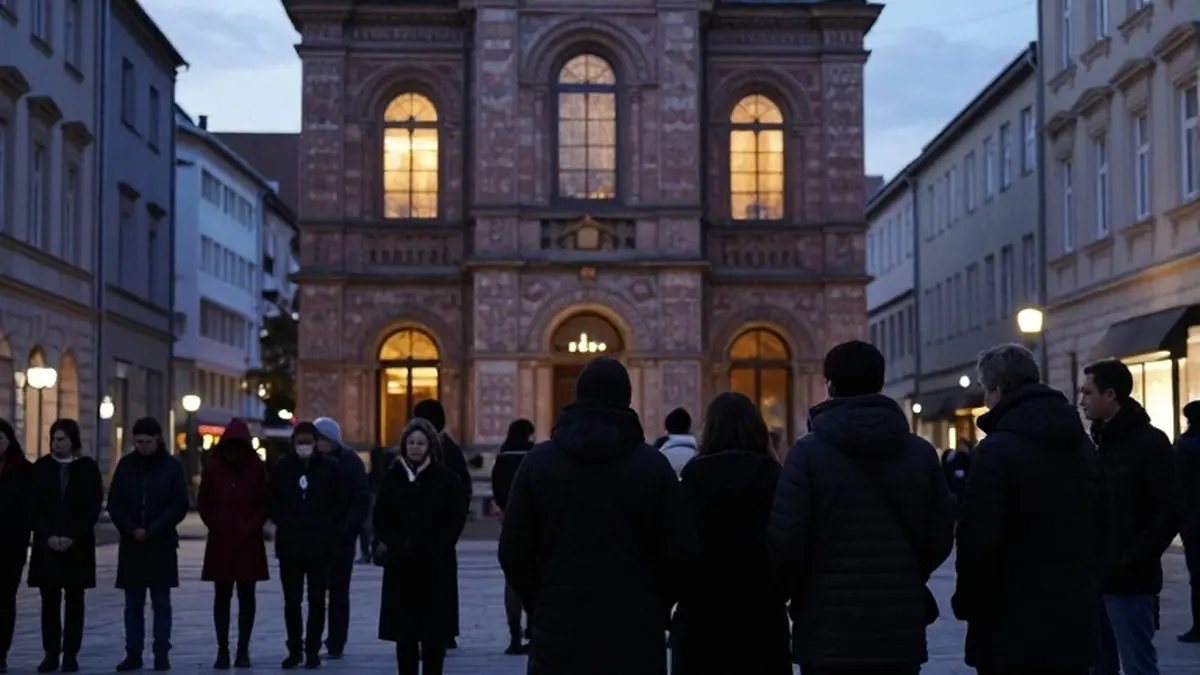
On November 9, 2026, European political leaders gathered to mark the anniversary of Kristallnacht, using the occasion to denounce the resurgence of antisemitism across the continent. The event served as a reminder of the 1938 pogroms, with officials in Germany, the Netherlands, and Norway reaffirming the commitment to the principle of Never Again. However, the speeches have sparked debate regarding whether these political promises align with the lived experiences of Jewish communities in these countries.
In the Netherlands, Prime Minister Rob Jetten delivered a speech in Amsterdam that drew parallels between the violence of 1938 and the events of October 7. He warned that social divisions are once again fueling anti-Jewish feelings. Jetten emphasized that there is no excuse for threats against synagogues, schools, or Jewish individuals who wish to remain visible in public life. Addressing those considering emigration, he urged them to stay, stating that the Netherlands is their home. To demonstrate his commitment, Jetten noted that he installed a Mezuzah on his own door.
Despite these assurances, statistical data highlights persistent challenges. Dutch police recorded 867 antisemitic incidents in 2025, a slight decrease from the previous year, with more than 400 cases targeting specific Jewish institutions or individuals. Eddo Verdoner, the national coordinator for antisemitism, pointed out that while Jews make up less than 0.3% of the Dutch population, they account for 26% of specific discrimination cases registered by prosecutors. Jigal Markuszower, president of the Jewish Communities in the Netherlands, recently commented that the country often acts to complicate life for Jewish residents and Israeli tourists.
The Dutch government’s stance on Israel has added complexity to this narrative. In July 2026, the Netherlands banned trade in goods from West Bank settlements, including items for personal use. Jetten defended this measure in November and suggested that other nations should follow suit. While such policies are not inherently antisemitic, critics argue they may affect Jewish citizens' sense of belonging. Additionally, several Dutch universities, including the University of Amsterdam and TU Delft, have restricted or halted new academic partnerships with Israeli institutions.
In Norway, Prime Minister Jonas Gahr Støre warned that antisemitism is increasing, citing specific instances of harassment against Jewish children. He noted that modern forms of bullying, including those occurring online and in schools, represent a new frontier for anti-Jewish sentiment. Støre recalled that Norwegian Jews in 1938 recognized the danger earlier than many others, having lived through previous pogroms. He emphasized that when Jews are affected, the entire society feels the impact.
However, the Norwegian Jewish community has expressed concern that their warnings have often been overlooked. Last year, Støre attended an anti-Zionist Kristallnacht event organized in part by a local branch of Jewish Voices for Peace, despite objections from the main Jewish community organization. Norway has also proposed bans on settlement-related trade and services, and its sovereign wealth fund made divestment decisions regarding Israel in 2025. A recent survey cited in the government's action plan found that 30% of Norwegians said the Gaza war worsened their attitudes toward Jews, illustrating how geopolitical conflicts can spill over into local prejudice.
Germany has taken a somewhat different approach. Chancellor Friedrich Merz has generally opposed broad sanctions against Israel and has defended academic cooperation between German and Israeli universities. Speaking at a synagogue in Munich, Merz acknowledged the need for heightened security at Jewish institutions and described Israel as a refuge for persecuted Jews. He declared that Germany stands unwaveringly by Israel's side. President Frank-Walter Steinmeier, speaking at the Buchenwald memorial, expressed shame that Jews are once again facing threats in Germany.
Germany recorded 8,725 antisemitic incidents in 2025, averaging nearly 24 cases per day. Despite extensive Holocaust education and memorial efforts, the country continues to struggle with elevated levels of hostility. German universities have largely resisted boycotts, with Freie Universität Berlin reaffirming its opposition to academic boycotts in April 2026. The government allocated an additional 10 million euros to memorial institutions in August 2026, though some argue that commemoration efforts have outpaced the practical measures needed to prevent daily hostility.
The varying approaches of these three nations highlight a broader challenge for Europe. While condemning antisemitism is a necessary step, leaders must also examine how their domestic policies and institutional actions impact Jewish communities. The contrast between Germany's resistance to sweeping boycotts and the more restrictive measures in the Netherlands and Norway suggests that governments must carefully balance their foreign policy positions with the need to ensure the security and integration of their Jewish citizens.
As the anniversary of Kristallnacht passes, the focus now shifts from rhetoric to action. The leaders of these major European powers have acknowledged the problem, but the effectiveness of their responses will be measured by whether Jewish communities feel safe and welcome in their daily lives. The coming months will test whether these nations can translate their historical commitments into concrete protections against the rising tide of antisemitism.