Japan monitors potential shifts in US foreign policy after midterm results
Tokyo is watching for signs of a US policy shift toward China and the Indo-Pacific as leaders prepare to meet at the APEC summit following the US midterm elections.
By Larissa Bell ·
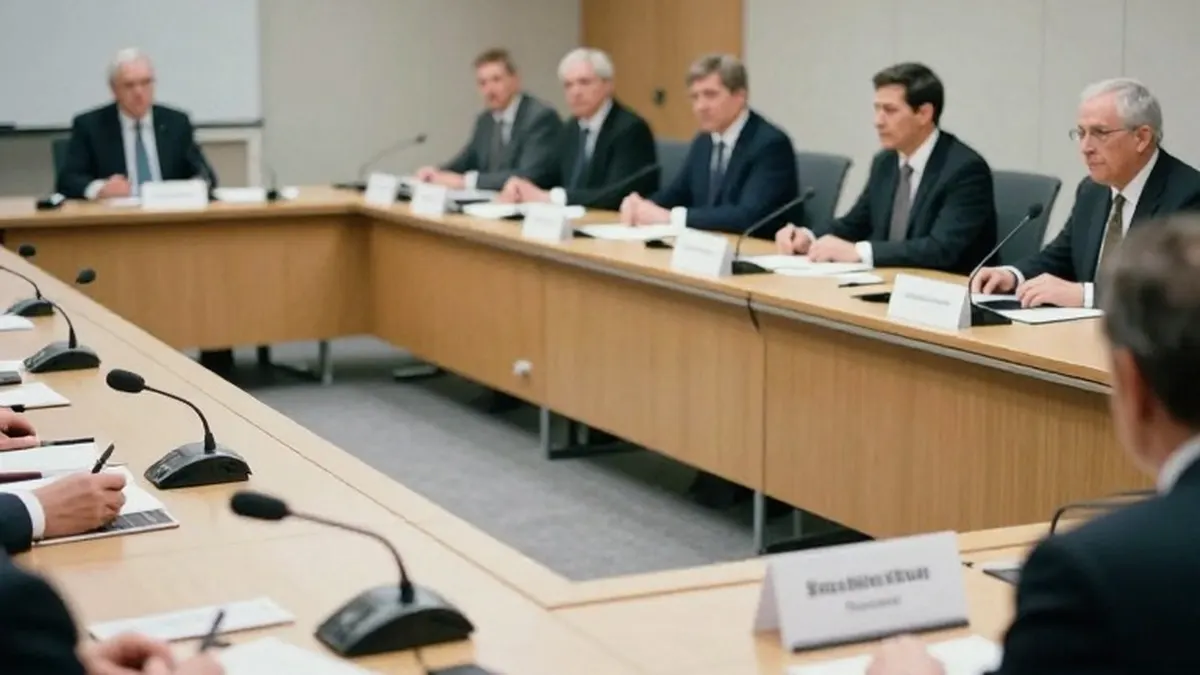
Japan is closely observing Washington for indications of a strategic pivot in its foreign policy priorities following the recent United States midterm elections. With the Asia-Pacific Economic Cooperation summit scheduled for November 18 and 19 in Shenzhen, China, leaders from the US, China, and Russia are expected to convene. Tokyo views this gathering as a critical moment to gauge how the White House will navigate its relationships in the Indo-Pacific region.
The urgency in Tokyo stems from fears that President Donald Trump may seek a diplomatic victory to offset his domestic political setbacks. The midterm elections on November 3 resulted in significant losses for the president’s party, leaving the administration reeling. Japanese officials worry that a desire to demonstrate statesmanship could lead to a deal that prioritizes American interests while overlooking the needs of regional allies.
In a swift response to the election outcome, Japanese Foreign Minister Toshimitsu Motegi engaged in talks with US Secretary of State Marco Rubio on Monday. These discussions took place on the sidelines of the G7 foreign ministers' meeting in Paris. Following their conversation, the Japanese Foreign Ministry issued a statement confirming that both nations agreed to further advance security cooperation. The goal is to strengthen the deterrence and response capabilities of the Japan-U.S. Alliance. The two sides also pledged to maintain close communication regarding the broader situation in the Indo-Pacific.
Experts suggest that Japan's anxiety is rooted in the changing dynamic of the American presidency. Sebastian Maslow, a professor of politics at The University of Tokyo, noted that Trump may use his remaining presidential authority to shift focus toward foreign policy. He warned that a US deal with China could empower President Xi Jinping to increase pressure on Japan. With Sino-Japanese relations already strained, this development would place Prime Minister Sanae Takaichi in a challenging position, forcing a reassessment of how to manage relations between the two Asian giants.
Margarita Estevez-Abe, an associate professor at Syracuse University, highlighted a specific fear regarding the treatment of Taiwan. She described a concern that Trump may act as a transactional leader who views Taiwan as a bargaining chip. This perspective aligns with previous comments by Trump, who after a summit with Xi in May, referred to US arms sales to Taiwan as a good negotiating tool with China. Tokyo is also frustrated by the Trump administration's decision not to support Japan during China's recent rare earth export restrictions, effectively treating the dispute as a bilateral issue between Tokyo and Beijing.
Beyond China, Japan is monitoring US interactions with North Korea and Russia. Although the US-Japan alliance has not suffered the same strain as NATO, Trump's outreach to Moscow and Pyongyang worries Tokyo. The United States relies heavily on Japan as its primary military base in the Indo-Pacific. Estevez-Abe argued that it is not in Washington's interest to embolden Russia and North Korea against Japan. However, if American policy appears too lenient, Japanese trust in the alliance could erode significantly.
Japan's fundamental objective is to preserve the geopolitical balance in the region and prevent the escalation of existing tensions. The country has relied on its security and trade partnership with the United States since 1945. Maslow explained that Japan's security strategy focuses on defending the liberal international order and containing China's role in the Indo-Pacific. The US alliance remains a cornerstone of this strategy, yet Japan currently lacks a viable alternative plan if the partnership were to weaken.
Efforts to bolster Japan's military capabilities are currently embedded within the framework of the US-Japan alliance. While there are calls for Japan to develop a more autonomous defense capability, experts say achieving this in the short term is unrealistic due to limitations in the defense industry and a lack of key resources, including critical intelligence. To mitigate these risks, Tokyo has proactively diversified its security partnerships over the past decade. This includes stepping up defense cooperation with European Union member states and NATO, forging a quasi-alliance with Australia, and joining minilateral frameworks with countries like the Philippines.
These moves reflect Japan's desire to play a more proactive role in shaping regional and global security. Tokyo hopes that no major clashes will erupt in the region for the remaining two years of the current US term. The goal is for Washington's resolve to remain untested until a new administration, potentially more aligned with Japanese interests, takes office. However, Maslow cautioned that hope is not a strategy. He emphasized that Tokyo must continue to protect the alliance while demonstrating its own commitments to security through increased defense spending and the safeguarding of economic security.