New Knesset sworn in as opposition moves to limit Netanyahu
Following the swearing in of Israel's new parliament, opposition parties have quickly initiated a process to replace the speaker and pass legislation aimed at curbing the long-serving prime minister.
By Hassan Ellis ·
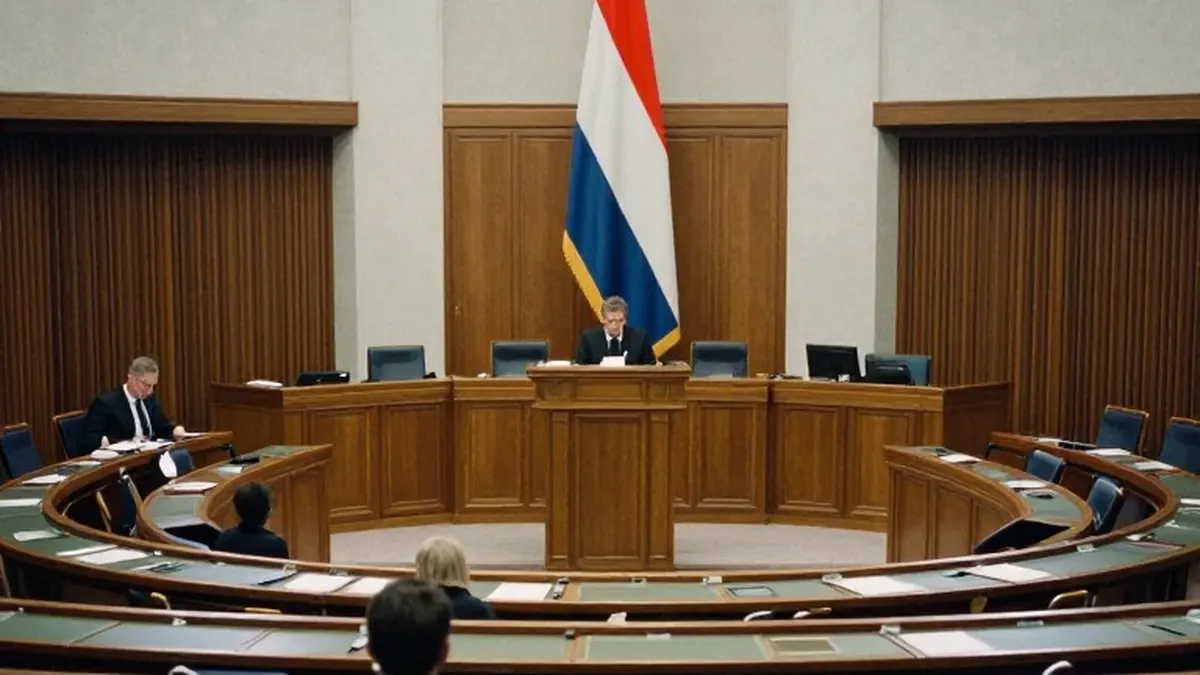
Israeli opposition lawmakers moved swiftly after the new Knesset was sworn in, utilizing their majority to take control of the legislative agenda from Prime Minister Benjamin Netanyahu and his allies. Although the opposition remains too divided to immediately form a government, they have requested a vote for a new speaker. This position sets the parliamentary agenda, and replacing Netanyahu loyalist Amir Ohana will allow the six opposition parties to advance key legislation even if they eventually broker a coalition.
The immediate priorities for the new leadership include establishing a state commission of inquiry into the attacks of 7 October 2023 and introducing term limits for prime ministers. Such term limits could prevent Netanyahu from returning to power, a possibility of concern given that he has ruled Israel for 19 of the last 30 years. Gadi Eisenkot, a former military chief, currently holds the presidential mandate to attempt to form a government. If he fails to reach a deal within six weeks, a second candidate, likely Netanyahu, will receive another chance. A subsequent failure would probably result in another election.
Netanyahu reacted to the swearing in ceremony on Tuesday with a critical address targeting two Palestinian-led opposition parties. He referred to their lawmakers as supporters of terror, a move he used to attack the voters who were instrumental in unseating his previous coalition. Gadi Eisenkot denounced the speech as a delusional, divisive, and shameful exploitation of a state occasion, arguing that it demonstrated the prime minister was unfit for office.
Protests broke out during the address when Yair Golan, leader of the centre-left Democrats, and Yoav Segalovich, a former police chief who ran on the slate of the Islamist Raam party, walked out. Palestinian citizens of Israel constitute approximately 20 percent of the country's population. Netanyahu had focused his campaign on these voters and, since polling day, has promoted accusations of fraud in their communities to undermine the results, despite election officials stating there was no evidence of irregularities that affected the outcome or compromised integrity.
A prolonged period of difficult coalition negotiations or a new round of elections would extend Netanyahu's hold on power as caretaker prime minister. However, if the fractured opposition can make progress on key legislation, his grip on the state would be weakened. The Yashar party, led by Eisenkot, submitted a series of bills to the Knesset moments after the swearing in, with backing from other opposition parties.
In addition to term limits and the inquiry into 7 October, the proposed legislation includes several bills designed to revoke the judicial overhaul pursued by Netanyahu. That overhaul weakened the power of Israel's judiciary and the attorney general. Ohana has scheduled the vote on a new speaker for next Tuesday, which is the latest possible date. The opposition has also nominated candidates to take over key defence and finance committees.
Eisenkot has admitted that the path to power is extraordinarily complex due to incompatible election promises made by different parties. Nevertheless, he described ousting Netanyahu as a national emergency that might require breaking those promises. At the ceremony, President Isaac Herzog warned lawmakers to do everything in their power to avoid a second election.
Herzog urged the new members to reach out a hand for compromise, even between rivals, and to look upon one another with generosity. He noted that there is much work to be done and that it requires the ability and experience found in every part of the House.