Iraq Denies Landing Rights to Iranian National Football Team Plane
A US sanctions dispute forced Iran's national football team to return to Tehran and travel by road to Basra for a regional tournament.
By Larissa Bell ·
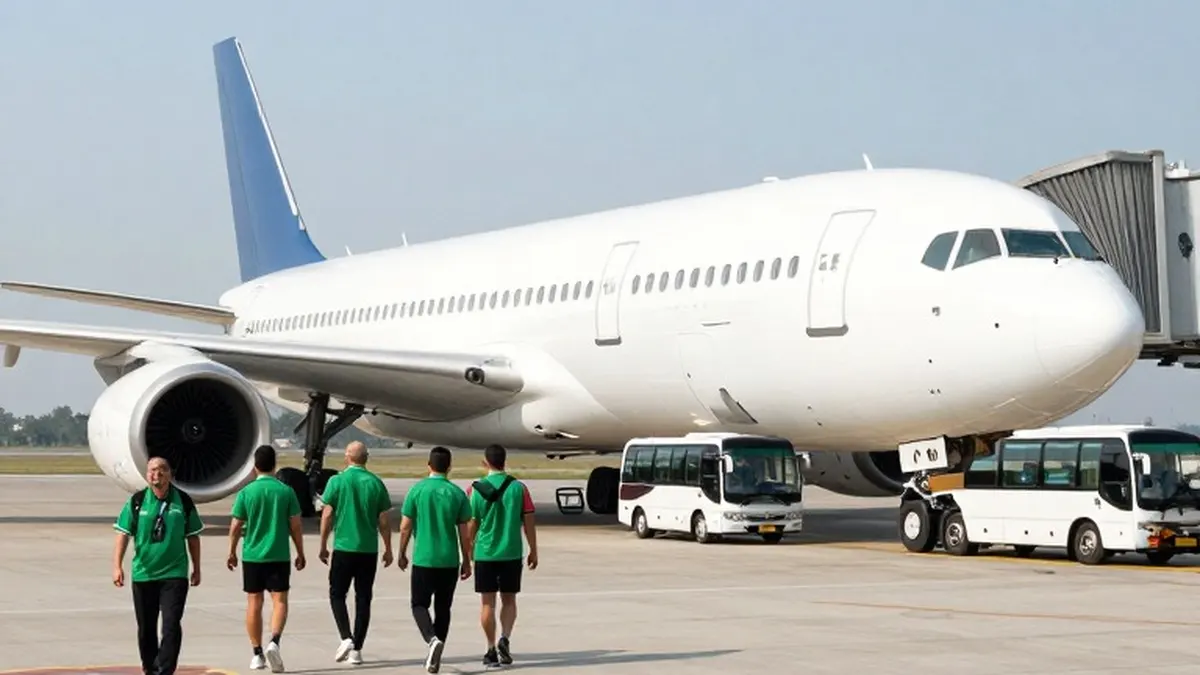
Iraqi authorities prevented a commercial aircraft carrying Iran's national football team from landing at Basra International Airport on Tuesday. The decision, which resulted in the plane turning back, was attributed to United States sanctions imposed on Iranian airlines. Two officials at the Basra airport confirmed the incident to the Reuters news agency, explaining that the Iraqi Civil Aviation Authority made the call to avoid potential violations of international trade restrictions.
Following the denial of landing rights, the aircraft returned to Iranian territory and touched down at Abadan airport. According to an official from the Iranian consulate in Basra, the football team will now complete their journey to the host city via road transport. The team had been en route to Iraq to compete in a four-nation tournament featuring national sides from Iraq, Lebanon, and Palestine alongside Iran.
The incident underscores the growing influence of American economic policy on aviation operations within Iraq. An official from the Iraqi civil aviation sector stated that the decision was driven by the desire to minimize the risk of violating US sanctions. Washington has recently announced measures targeting global companies that conduct business with Iranian carriers after September 23. The primary objective of these new sanctions is to ground Iran's entire civil aviation fleet worldwide by leveraging economic pressure on foreign partners.
This development follows a similar move in September when Iraq suspended Iranian flights to Baghdad airport. At that time, the US government issued threats of secondary sanctions against airports and service providers that continued to handle Iranian carriers. The suspension in Baghdad was a direct response to these warnings, signaling a tighter enforcement of economic restrictions on the region's airspace.
Scott Bessent, the US Treasury Secretary, previously warned that airports servicing Iranian airlines could face significant penalties. These penalties include the potential exclusion from the US dollar system, a critical component of global financial transactions. This warning was part of a broader strategic effort to tighten restrictions on Iran's transport sector and to penalize foreign entities that provide services to sanctioned Iranian airlines.
The intensification of these sanctions is viewed as part of a wider US bid to squeeze Iran economically. President Donald Trump is currently attempting to end the war that the United States and Israel launched against the country in February. The economic pressure aims to influence the outcome of the conflict by limiting Iran's ability to operate normally on the global stage, including in the aviation sector.
The disruption to the football team's travel plans highlights how geopolitical tensions and economic sanctions are increasingly affecting non-military activities in the region. While the team will still participate in the tournament, the change in logistics serves as a tangible example of the administrative hurdles now facing Iranian entities operating in Iraq. The road journey to Basra will be a longer and more complex process than the originally planned air travel.
The four-nation tournament in Basra was expected to draw attention to the host city and the regional sporting community. However, the arrival of the Iranian team by land rather than air has added a layer of diplomatic and economic context to the event. Officials from both countries have worked to ensure the team reaches the venue on schedule despite the initial setback at the airport.
The US Civil Aviation Authority's decision reflects a cautious approach to navigating the complex web of sanctions. By denying the landing, Iraq seeks to protect its own aviation sector from potential secondary penalties. This move aligns with the broader US strategy of using financial tools to limit Iran's connectivity and operational freedom in the Middle East.
As the team travels by road, the incident is likely to spark further discussion on the long-term impact of US sanctions on regional cooperation. The interplay between economic policy and cultural or sporting events continues to be a significant factor in US-Iran relations, with aviation serving as a key indicator of the tightening restrictions.