Iran removes self-imposed 2,000km limit on ballistic missile range
Tehran has lifted a decades-old restriction on missile distance, signaling a shift to an offensive doctrine and raising concerns about potential strikes on European soil.
By Hiroshi Ferrari ·
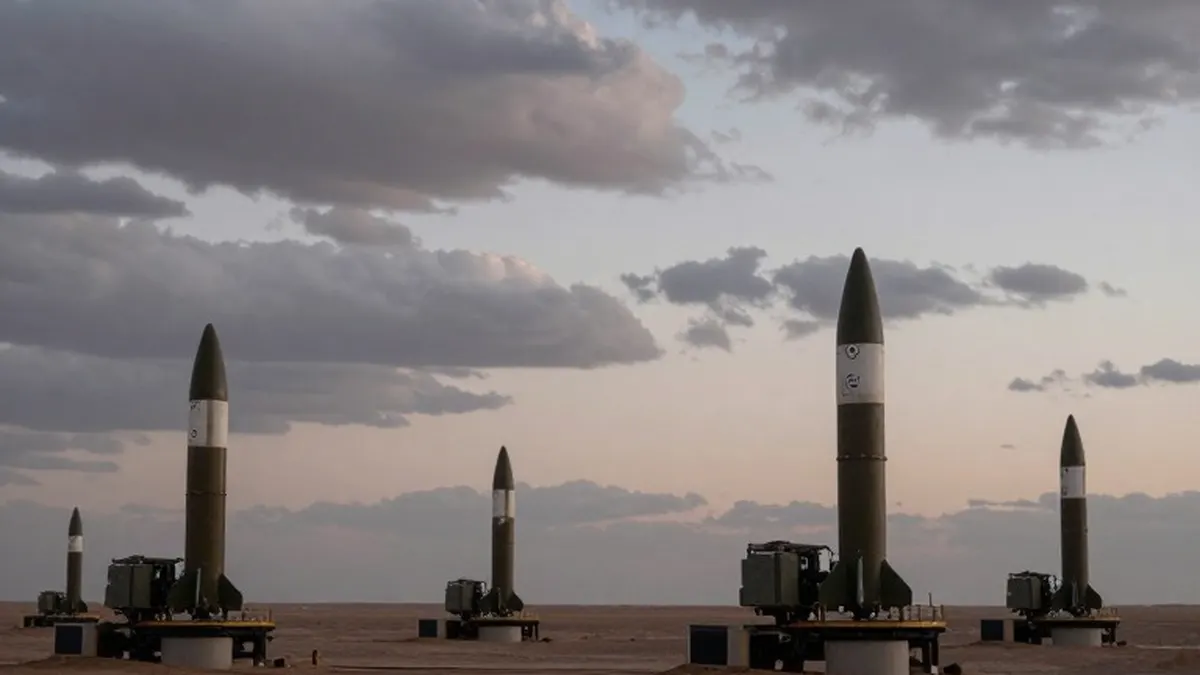
Iran has officially removed a self-imposed cap on the range of its ballistic missiles, ending a restriction that had kept its reach within 2,000 kilometers. The Islamic Revolutionary Guard Corps announced the change on Saturday in Tehran, a move that suggests the country is now preparing to target locations beyond the Middle East. This decision marks a significant shift in military posture as the nation adopts a more aggressive defensive strategy.
Brigadier-General Hossein Mohebbi, the spokesman for the IRGC, stated that the limitation has been lifted. He noted that Iran would demonstrate its capabilities through action rather than verbal statements. Mohebbi did not specify if the country currently possesses missiles that exceed the previous cap, but the announcement follows recent warnings from Supreme Leader Mojtaba Khamenei. The leader had cautioned that any threat from the United States or Israel would be met with a response unlimited by geography.
The timing of the announcement coincides with intensified diplomatic efforts to end the ongoing conflict between the US, Israel, and Iran. President Donald Trump recently indicated positive momentum toward a ceasefire after discussions with the Qatari Prime Minister in Washington. Despite these diplomatic overtures, the military landscape in the region remains volatile, particularly concerning the Strait of Hormuz and the naval blockade on Iranian ports.
For Gulf states, the change does not significantly alter the threat landscape, as they already fall well within the previous 2,000-kilometer range. However, the removal of the cap allows Iran to position launchers in its eastern regions, which would provide a better trajectory for striking Israel. This adjustment also addresses concerns from the US and its European allies regarding the potential targeting of bases in the Indian Ocean and Europe.
In March, the United Kingdom accused Iran of firing missiles toward Diego Garcia, a joint base located approximately 4,000 kilometers away in the Indian Ocean. While Tehran denied targeting the base, calling it an Israeli false flag operation, the incident highlighted the country's potential reach. Experts note that while Iran has the technical capacity to build longer-range missiles, such as those derived from its space program, it does not currently possess intercontinental ballistic missiles in its arsenal.
European nations have reacted with caution to the development. Relations between Europe and Iran have deteriorated due to the nuclear program and the EU's designation of the IRGC as a terrorist group. Iran has repeatedly warned Bulgaria over the use of its airports by US military aircraft. In July, Tehran issued a third diplomatic warning after Bulgaria approved the hosting of US refueling tankers at the Bezmer airbase.
The threat to Europe has become more tangible, with the UK spy chief recently stating that Iran is increasing its targeting of military bases on the continent. Following a suspected plot against RAF Fairford, the US withdrew jets from that facility. Additionally, the US military evacuated aircraft from RAF Mildenhall earlier this week, citing threats from Iran. While the UK Ministry of Defence did not confirm the specific reason, it noted that asset movements are routine based on operational requirements.
Analysts suggest that lifting the limit serves a dual purpose of deterrence and diplomatic leverage. By removing the cap, Tehran signals that it can strike back harder if US operations continue, potentially targeting the European hosts of American aircraft. Furthermore, the move provides Iran with a bargaining chip for negotiations, suggesting that future concessions on missile range will require a price at the table.
Muhanad Seloom, a professor at the Doha Institute for Graduate Studies, described the announcement as worrying but not alarming for Europe. He explained that the long distance to mainland Europe would provide NATO members with sufficient time to intercept incoming missiles. However, he warned that if Iran is framed as an existential threat to international security, it could lead to a broader European support for military action, similar to the dynamics seen during the 2003 invasion of Iraq.
The decision to drop the limit appears to be a strategic push to force the Trump administration into a deal before the new US Congress convenes in January. With the President threatening to strike critical infrastructure such as bridges and power grids, Iran is signaling that it is prepared to escalate its response. This move underscores a growing perception in Tehran that the conflict is now a matter of survival, potentially removing traditional red lines from the equation.