House Republicans Defeat Hegseth Impeachments Amidst Post-Midterm Tensions
House Republicans voted to block the impeachment of Defense Secretary Pete Hegseth, a move that underscored party loyalty to President Trump despite recent midterm election losses.
By Hiroshi Ferrari ·
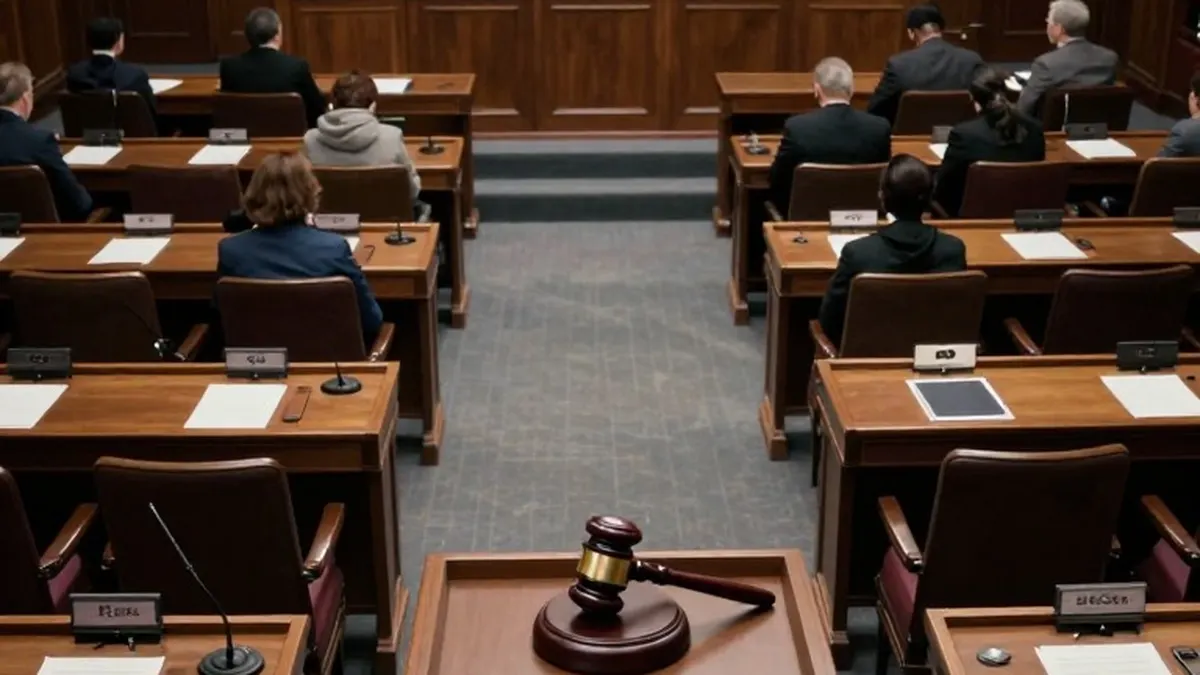
House members voted on Tuesday to block a proposal to impeach Pete Hegseth, the Secretary of Defense. The resolution, which alleged that Hegseth had repeatedly violated the U.S. Constitution during the Iran war and other global conflicts, was defeated by a vote of 211 to 204. The decision came just one week after Republicans suffered their worst midterm election results in over fifty years, losing control of both the Senate and the House of Representatives.
The vote highlighted the continued reluctance among Republican lawmakers to challenge President Donald Trump, who has publicly maintained his support for Hegseth. The impeachment effort was originally introduced in September by Thomas Massie, a Republican congressman who lost his primary race after breaking ranks with the president. Massie cited a series of alleged illegal acts, including the killing of civilians in Iran, unauthorized military operations in Venezuela and Yemen, and retaliation against a Democratic senator.
While top Democrats backed the resolution, Republicans moved to kill the measure by referring it to the judiciary committee. This procedural motion succeeded on Tuesday, with all Democrats and Massie voting in favor of the referral, while the rest of the Republican caucus voted against it. Trump, who has previously been impeached twice, celebrated the outcome on Truth Social, describing it as the exoneration of a great American patriot. He criticized the Democrats for weaponizing the nation and blamed Massie for forcing the vote.
Sean Parnell, a spokesperson for the Department of Defense, declared a total victory for Hegseth and the American warfighter. He stated that referring the baseless articles to the judiciary committee marked a decisive win. The Pentagon had held a defiant press conference hours before the vote, where Hegseth dismissed the impeachment as a political spectacle orchestrated by Massie. Hegseth called the effort a farce and a stunt that everyone recognized as such.
Despite the current defeat, the impeachment effort is expected to continue. Democrats won decisive majorities in the November midterm elections, and Hakeem Jeffries, who is expected to become the next Speaker of the House in January, has supported the push. Jeffries has accused Hegseth of undermining America’s national security. The conflict with Iran has become a divisive issue within the Republican party, with some members voting with Democrats on war powers resolutions to force the end of hostilities.
Warren Davidson, a House Republican who voted for war powers resolutions, explained his rejection of the impeachment on Tuesday. He described the move as an attempt to shift blame onto Hegseth for Congress's failures and the president's decisions. Davidson praised Hegseth for restoring morale and the warrior ethos to the active-duty force, noting that the military exists to fight and win wars.
Hegseth, a former Fox News host and army national guard officer, has been a prominent and often aggressive figure in Trump’s second term cabinet. He has taken a heavy-handed approach to managing the military, orchestrating the departure of top generals and blocking the promotions of many officers, including women and people of color. He also implemented new rules that led many members of the press corps to leave the Pentagon.
The resolution detailed eight alleged constitutional violations. These included attacking Iran without seeking congressional permission and ignoring a war powers resolution approved by both chambers in June. The articles also cited the U.S. strike on a school in Minab, Iran, which killed more than 168 people, and the extrajudicial killings of at least 221 people on boats suspected of carrying drugs. Additionally, the resolution accused Hegseth of suppressing free speech by retaliating against Senator Mark Kelly and involved in the capture of Venezuelan president Nicolás Maduro.
Had the resolution passed the House, it would have required approval from the Senate, which Republicans currently control by a 53-seat margin. It remained unclear whether the measure would have gathered enough votes to pass or if Senate leader John Thune would have even placed it on the floor for a vote.