European manufacturers may abandon competition with China by 2030, chamber chief warns
Jens Eskelund says mounting competitive pressure could push European manufacturers towards Chinese supply chains, with serious consequences for jobs and economic independence.
By Larissa Bell ·
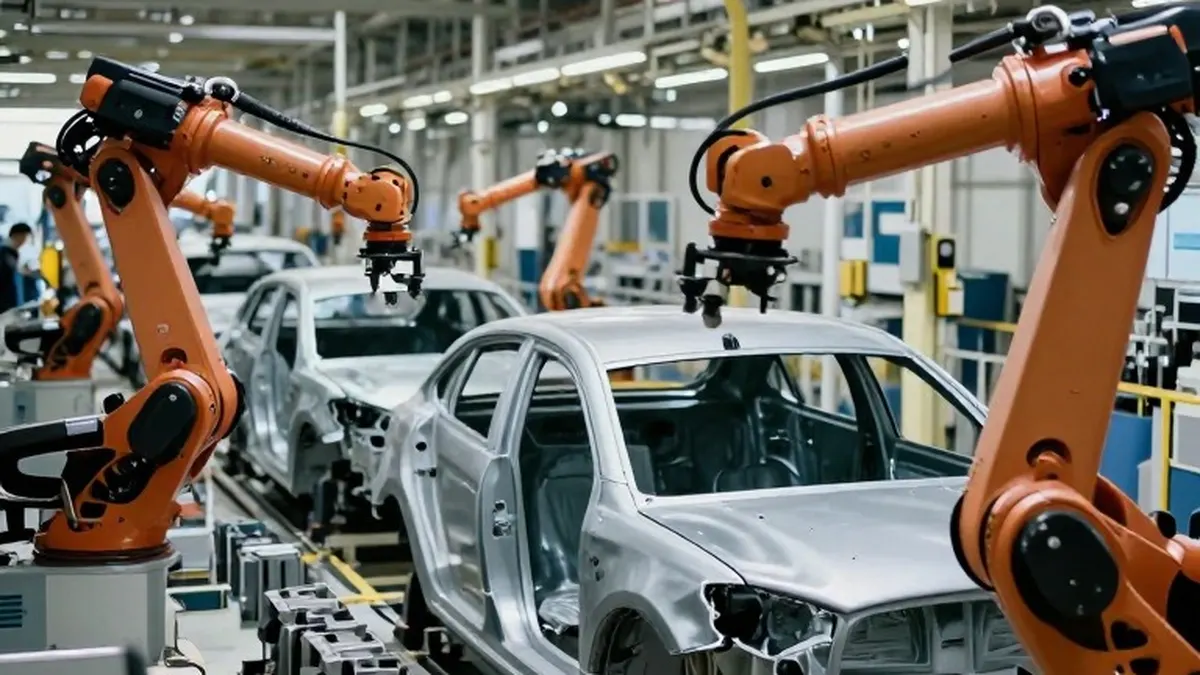
European manufacturers could stop trying to compete with Chinese rivals by the end of the decade if current trends persist, according to the head of the European Union Chamber of Commerce in China. Jens Eskelund warned that the pressure could threaten industrial employment and prompt companies to reconsider how they operate in the global market.
Speaking in Brussels during meetings with European Commission officials, Eskelund said European businesses in China were increasingly looking beyond serving domestic customers towards using Chinese production networks to supply markets worldwide. He suggested European governments might need to help their manufacturers participate in Chinese companies’ supply chains as competition becomes harder to sustain.
The warning comes as the EU takes a tougher approach to China, with its trade deficit reaching a record £1bn, or €1.18bn, a day and support for protectionism growing in Brussels, Berlin and Paris. Eskelund cited Goldman Sachs forecasts that Chinese exports would reduce EU gross domestic product by 0.5% by the decade’s end, with Germany facing a reduction of up to 0.9%.
Eskelund, who also serves as a managing director of Maersk’s Chinese operations, questioned how countries would respond if trade benefited one side while damaging the other. He described a possible scenario in which the loss of European manufacturing brought widespread unemployment, a shrinking tax base and rising social benefit costs. Greater dependence on China could also weaken Europe’s ability to determine its future, he said.
Europe’s automotive, chemicals and renewable energy industries are already feeling the strain. German carmakers face falling profits in China alongside cheaper Chinese competition in their home market from companies including BYD, Geely and SAIC Motor. Last week, BMW reported that sales in China fell 22% during the first nine months of the year and issued its second profit warning of 2026.
Eskelund argued that China’s industrial expansion should have been foreseeable because replacing imports has been a consistent priority in its planning since the Made in China strategy was agreed in 2015. A recent Centre for European Reform report similarly said Beijing’s 2026 to 2030 plan reinforced its pursuit of self-reliance. Its priorities include artificial intelligence, quantum computing, robotics, green technology, biomanufacturing, brain-computer interfaces and 6G communications.
European industries should prepare for Beijing to implement those ambitions, Eskelund said, explaining that national priorities are supported by incentives, tax breaks and subsidies reaching local governments. He urged EU leaders to pursue discussions with China aimed at ensuring trade produces benefits for both sides, alongside a broader reconsideration of Europe’s approach.
He dismissed the idea that higher exports alone could resolve the imbalance. China’s surplus with the rest of the world is expected this year to exceed the record $1.2tn recorded in 2025. Although many European companies remain profitable in China, Eskelund said intense supply-chain competition and a currency he described as about 30% undervalued made competing difficult.
For some chamber members, joining Chinese supply chains has improved confidence over the past year. Partnerships and production in China can help European companies compete internationally, while a saturated Chinese market encourages them to explore exports. Eskelund described this as a significant shift from producing in China for local customers towards using China as a base for global business.