New Israeli Parliament Opens in Tension as Eisenkot Seeks Unity and Netanyahu Targets Rivals
Gadi Eisenkot and Benjamin Netanyahu clashed in a tense new Israeli parliament session as Eisenkot pushed for an October 7 inquiry and a new government coalition.
By Hiroshi Ferrari ·
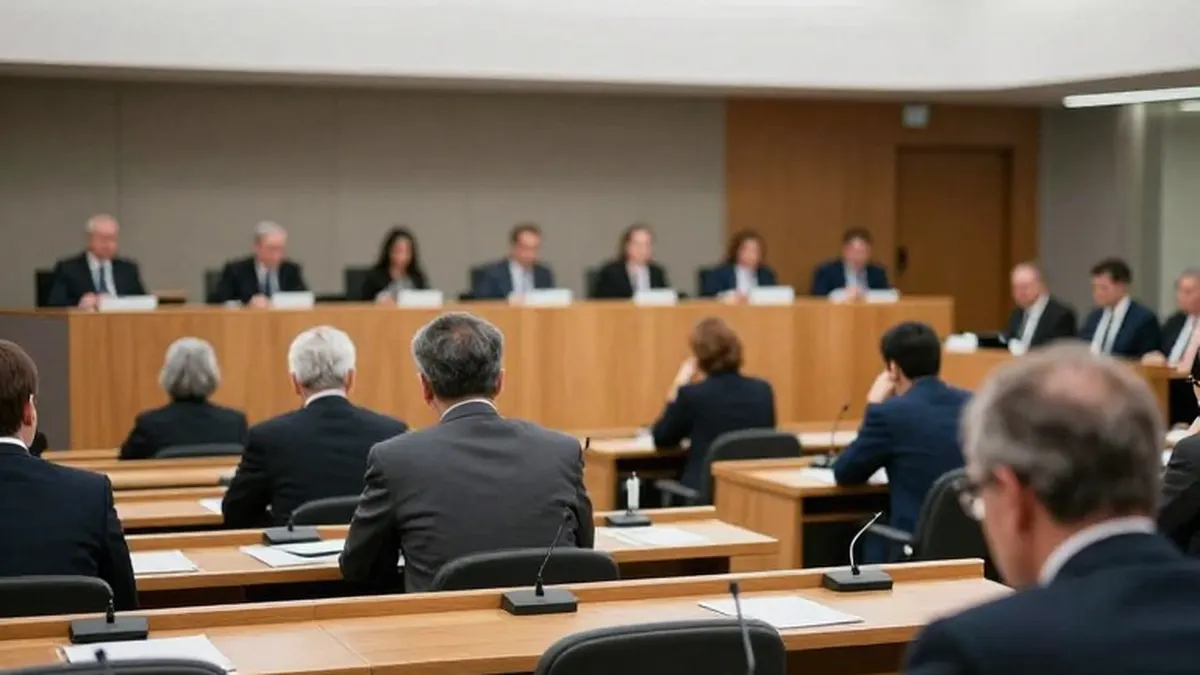
The new Israeli parliament convened on Tuesday in a heated opening session, marked by sharp exchanges between rival factions and uncertainty over the formation of a stable government. Gadi Eisenkot, the former army chief tasked with building a new cabinet, pledged to launch an independent inquiry into the security failures that allowed the Hamas attack on October 7, 2023. This move, long opposed by Prime Minister Benjamin Netanyahu, signals a significant shift in legislative priorities for the incoming bloc.
Eisenkot’s coalition, which spans the political spectrum from left to right, immediately moved to set the agenda with the support of Arab-Israeli lawmakers. This alliance has stirred intense opposition not only from Netanyahu’s base but also from some right-wing members of Eisenkot’s own camp. The new parliament, which holds 120 seats, is currently divided, with neither Eisenkot nor Netanyahu possessing the 61 votes required to form a government independently.
In the first major legislative maneuver, Eisenkot’s bloc secured enough votes to install Matan Kahana, another former senior military figure, as the new speaker of the Knesset. Current speaker Amir Ohana, an ally of Netanyahu, confirmed that a vote for his successor is scheduled for next Tuesday, despite his personal objections to the emerging coalition. Eisenkot’s party, Yashar, also submitted proposals to repeal the judicial overhaul implemented by Netanyahu’s government, a policy change that had previously triggered massive protests across the country.
Netanyahu, who is serving as caretaker prime minister and is Israel’s longest-serving leader, made a renewed push for a national unity government. He argued that Israel faces a critical threat from Iran’s clerical government, which has survived two major Israeli bombing campaigns conducted with support from US President Donald Trump. Netanyahu warned that the country would soon face international pressure to accept a nuclear-armed Iran, a claim that both Netanyahu and Trump have previously countered by stating that Iran’s nuclear program was devastated.
Eisenkot dismissed Netanyahu’s remarks as a shameful exploitation of the occasion, arguing that they proved the prime minister was unfit to remain in office. In a decisive move, Eisenkot cancelled a meeting with Netanyahu’s Likud party scheduled for Wednesday, accusing the premier of prioritizing his own political survival over national unity. This tension is heightened by Netanyahu’s potential legal troubles, as he faces possible jail time if convicted on corruption charges after leaving power.
The role of Arab-Israeli lawmakers has become a focal point of the political standoff. Their ranks have grown to historic levels due to widespread dissatisfaction with Netanyahu’s far-right government. However, Avigdor Liberman, a right-wing member of Eisenkot’s bloc, has refused to serve in a cabinet that relies on Arab-majority parties. During the opening session, several Arab lawmakers left the chamber during the national anthem, a protest action that Liberman highlighted on social media to question the viability of the new coalition.
Confrontations were not limited to procedural matters. Far-right caretaker national security minister Itamar Ben Gvir loudly heckled Yousef Jabareen, leader of the Arab-majority Joint List, during the session. Ben Gvir shouted that Jabareen was pledging allegiance to Hamas before order was restored. In response, Mansour Abbas, leader of the more moderate Arab-Israeli party Raam, promised to work toward replacing the Netanyahu government, stating that his party aspires to be part of the solution.
President Isaac Herzog, who tasked Eisenkot with forming the government, opened the session by urging lawmakers to prioritize compromise to avoid a repeat election. He encouraged legislators to reach out to rivals to build a stable administration. Despite these pleas, the tone remained volatile, with shouting breaking out between members as they debated the path forward for the nation.
As the political maneuvering continues, Liberman has proposed an alliance with ultra-Orthodox Jewish parties, a move that contrasts with his years of criticism of their exemption from military service. Eisenkot’s core bloc holds 48 seats and would achieve a majority if the 19 Arab-Israeli lawmakers support the government, either by joining or voting for it. Meanwhile, Netanyahu has publicly pleaded with the ultra-Orthodox parties to remain with him, warning that promises from a left-led government would vanish once in power.