Egypt and Libya to Discuss Maritime Disputes Following Diplomatic Reopening
Egyptian and Libyan officials have agreed to hold talks to address disputes over a 2019 maritime deal with Turkey, following the recent reopening of the Egyptian embassy in Tripoli.
By Larissa Bell ·
Egypt and Libya have agreed to initiate talks regarding a maritime memorandum of understanding that has raised significant concerns in Cairo. The agreement, originally signed in 2019 by the internationally recognized Libyan government based in Tripoli, was recently approved by the eastern Libyan parliament. This development has drawn criticism from several Mediterranean neighbors, including Cyprus, Greece, and Israel.
Ambassador Nader Zaki, the spokesman for the Egyptian Foreign Ministry, announced the decision during an interview with Alghad TV on Monday. He noted that the discussions aim to address how the treaty affects Egyptian maritime borders within the exclusive economic zone and the continental shelf. Zaki emphasized that Egypt maintains the position that the agreement between Turkey and Libya is not binding on other nations.
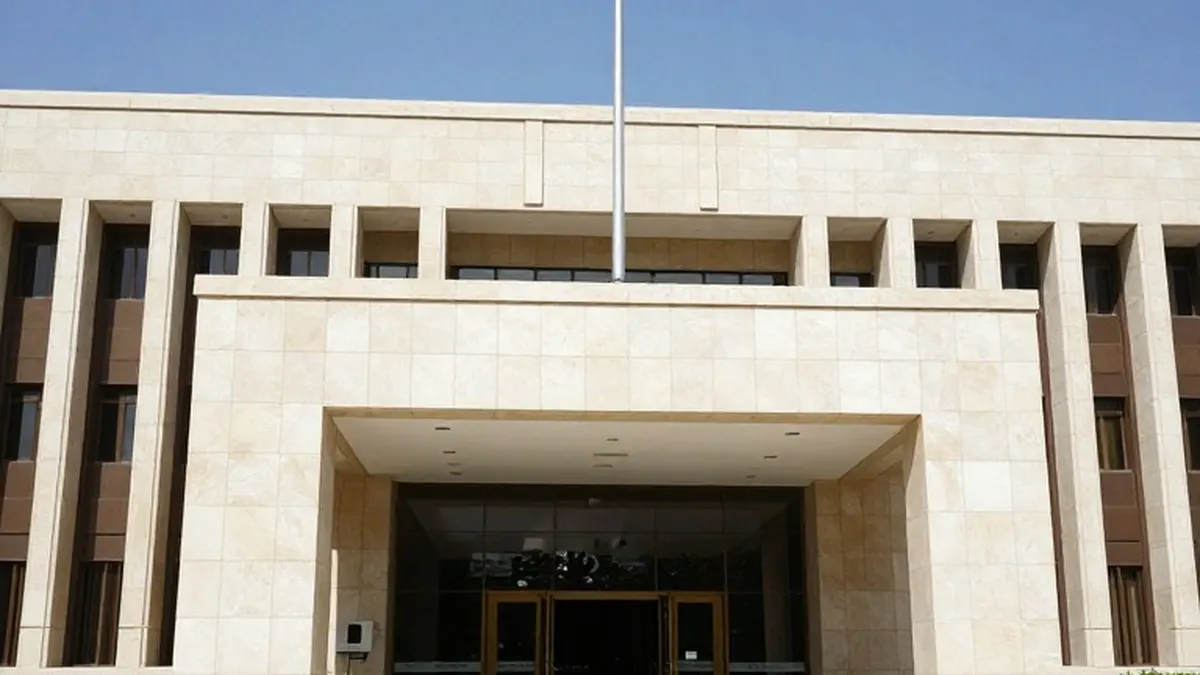
The diplomatic move comes shortly after Egypt reopened its embassy in Tripoli. The building had been closed for more than twelve years following the abduction of five Egyptian diplomats and staff. During a visit by Foreign Minister Badr Abdelatty, which concluded the closure, both sides engaged in significant discussions regarding trade and energy cooperation.
In a statement released on Saturday, Abdelatty outlined Egypt’s goal to accelerate joint energy projects with Libya. These initiatives include establishing gas pipeline links, refining Libyan crude oil in Egypt, and creating an electricity interconnection. The minister also called for expanded cooperation on petroleum products and the completion of projects designed to refine Libyan oil in Egypt for re-export.
Zaki described the upcoming dialogue as having a political component, noting that the specific format, whether a committee or another structure, will be determined and announced later. He stated that the discussions will take place under the framework of international law, specifically the 1982 United Nations Convention on the Law of the Sea. According to Zaki, Egypt’s position is fully consistent with this legal framework, which he believes ensures that each party receives its rightful claims.
Turkey, which is not a signatory to the UNCLOS, maintains a significant naval presence in the Mediterranean. Ankara has increasingly asserted maritime claims under the Mavi Vatan doctrine, a policy introduced in 2006 that seeks to assert sovereign rights over a vast maritime area spanning the Black Sea, Aegean Sea, and eastern Mediterranean. This approach often challenges boundaries claimed by other nations under international law.
While Zaki acknowledged that all concerned countries should be involved in broader dialogues, he specified that Cairo’s proposed discussions will currently involve Greece, Cyprus, Egypt, Libya, and Turkey. This focused group aims to address the immediate implications of the maritime deal without necessarily including every regional player in the initial talks.
Experts warn that the treaty poses substantial risks to Israeli national security and infrastructure. Colonel (res.) Eran Lerman, vice president of the Jerusalem Institute for Strategy and Security, explained last month that the agreement creates a major challenge for Israel. He noted that while Turkey may not directly intervene to disrupt the laying of electricity connectors, the situation is likely to be a source of growing tension in the coming years.
Israel has been working on an ambitious project to connect its electricity grid to Cyprus and Greece, with the ultimate goal of linking to mainland Europe. Ankara has strongly opposed this project, disputing the maritime boundaries claimed by Greece. The potential expansion of Turkey’s military presence in the region, as suggested by the maritime memorandum, adds another layer of complexity to these security dynamics.