Amersfoort Mayor Seeks to Save Canceled Synagogue Exhibition
A Dutch museum director canceled a planned exhibit honoring the 300-year-old Amersfoort Synagogue due to external pressure, prompting a rapid intervention from city officials and strong criticism from Jewish community leaders.
By Hassan Ellis ·
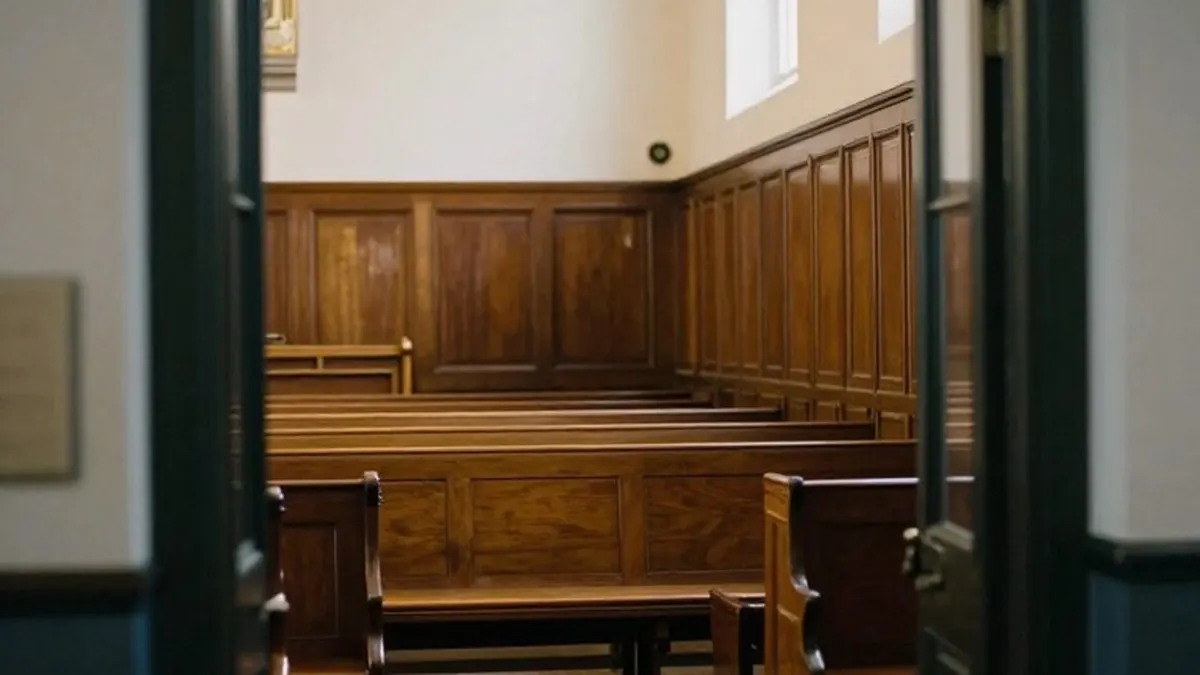
The Amersfoort Synagogue, one of the oldest Ashkenazi houses of worship in Western Europe still in active use, was set to be the centerpiece of a major cultural celebration. However, the planned exhibition marking the institution's 300th anniversary has been thrown into uncertainty after the local museum announced its cancellation. Jewish leaders in the Netherlands describe the move as a significant setback for Jewish life in the central Dutch city, viewing it as a casualty of current political tensions.
On November 4, Paul Baltus, the director of Amersfoort in C, the organization that manages the Museum Amersfoort and other local cultural sites, confirmed the cancellation of the exhibition. He cited external pressure as the primary reason, a reference that community members interpret as a precaution against potential confrontations by pro-Palestinian activists. Although the museum began planning the event five years ago, Baltus noted that the social climate has shifted dramatically since then, particularly following the October 7 Hamas attack.
Baltus explained in a statement that the heated public debate in the Netherlands regarding the Middle East conflict makes the current environment difficult to manage. He expressed concern that as a small and vulnerable organization, his staff would be exposed to significant stress. While he acknowledged that security measures such as guards and cameras could be implemented, he argued that volunteers would still have to navigate a range of reactions from visitors, a burden he found challenging to accept.
The Jewish community reacted with shock to the news. Mayor Lucas Bolsius addressed the City Council on November 4, stating that the decision caused considerable pain and reinforced a feeling among Jewish residents that they were not welcome. He announced that the municipality would immediately begin discussions with the museum and other stakeholders to ensure the exhibition could still proceed as planned in early 2027.
Following a meeting on November 5, Mayor Bolsius and Director Baltus jointly announced on November 6 that they would collaborate to find a solution. Bolsius reported that offers of assistance had come from the city, the central government, and organizations across the country to help with organizational matters. Baltus said this support had alleviated some of his initial concerns, and he expressed a willingness to explore possibilities with an open mind in consultation with the Jewish community.
Despite the mayor's intervention, community leaders argue that the incident highlights a broader pattern of hostility toward Jewish cultural events in the Netherlands. Hans Weijel, vice chairman of the Centraal Joods Overleg, the umbrella organization representing the country's 40,000 Jews, called the museum's decision ridiculous. He emphasized that the conflict is in the Middle East and not in Amersfoort, where the Jewish community has played a vital civic role since the mid-1600s. Weijel criticized Baltus for being afraid of potential issues, suggesting that if the director was that concerned, he should have stayed home.
Emile Schrijver, director-general of Amsterdam's Jewish Cultural Quarter, pointed out that the museum made its decision without consulting the Jewish community or the organizations involved in the exhibition. He rejected the argument that security concerns made the event unmanageable, noting that Jewish institutions in Amsterdam frequently host events despite similar demonstrations. Schrijver warned that treating Jewish culture as a potential security problem risks pushing the community to the fringes of society.
Schrijver argued that cultural institutions must distinguish between their views on Israeli government policy and the long history of Jewish communities in the Netherlands. He stated that by making Jewish history dependent on current events in the Middle East, the museum is making Jewish existence conditional. For him, the controversy is another attempt to marginalize Jews who have lived in the country for generations.
In his initial statement, Baltus acknowledged the community's disappointment and offered to contribute the museum's collection of Jewish historical artifacts to an exhibition held within the synagogue itself. He also proposed incorporating the synagogue's history into the museum's permanent exhibition on the history of Amersfoort. As the mayor and museum director continue their efforts to save the project, the Jewish community remains hopeful that the exhibition will open as originally intended.