Dominican Republic backs Salvadoran troops in Haiti with logistics and intelligence
President Luis Abinader confirmed support for Nayib Bukele's forces while a prime ministerial meeting is scheduled for next week.
By Hiroshi Ferrari ·
Dominican President Luis Abinader announced on Tuesday that his government is providing logistics and intelligence support to El Salvador's military operations in Haiti.
Abinader made the statement as scrutiny grows over the deployment of approximately 2,500 Salvadoran troops. These forces are battling gangs in the Caribbean nation largely outside the established framework of the United Nations-backed multinational gang suppression force.
The Salvadoran presence began after four aviation technicians were attacked and left missing in gang-controlled territory on October 18. Since then, the troops have engaged in direct combat alongside Haitian police. A recent joint operation on Sunday destroyed the home of Wilson Joseph, the leader of the 400 Mawozo gang, though Joseph survived the attack.
El Salvador's President Nayib Bukele celebrated the destruction of the gang leader's headquarters on Tuesday. He posted on X that the group fled without fighting, describing them as cowards while affirming that his government kept its promise.
Igor Rugwiza, the spokesperson for the multinational gang suppression force, said the group is coordinating closely with Haitian authorities and international partners. He stated that effective coordination among all security actors is essential for sustainable security outcomes. Rugwiza added that the force operates under its specific mandate and human rights law obligations.
Ana Piquer, Americas director for Amnesty International, called on both Bukele and Haitian Prime Minister Alix Didier Fils-Aimé to ensure compliance with international human rights law. She urged the governments to make public the agreement governing the deployment and to explain how they oversee the forces.
Experts noted the complexity of the current security environment. Sophie Rutenbar of the Global Initiative Against Transnational Organized Crime said Haiti is crowded with various security forces, including private firms and the multinational group. She described the situation as extremely complex but noted that Haitian sentiment toward the Salvadoran troops is largely positive.
Wolf Pamphile, founder of Haiti Policy House, suggested that Salvadoran troops may need to work within the existing multinational structure in the long term. He stated that it would have been better if the Haitian government had integrated the Salvadoran soldiers into that framework from the start.
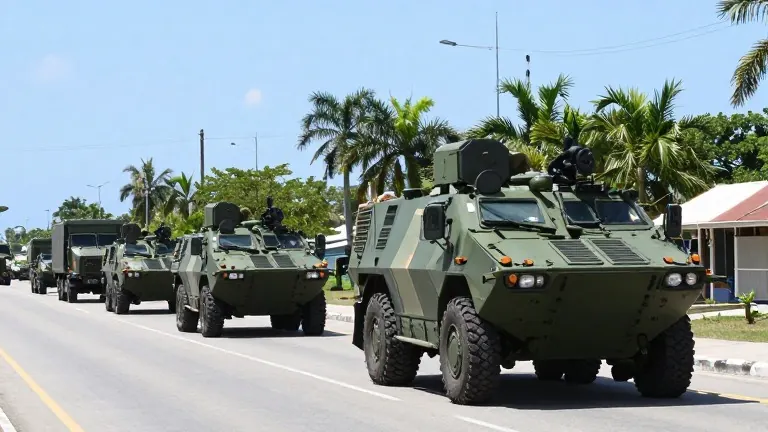
Abinader pledged to continue assisting Bukele, noting that the two nations' defense ministers speak almost daily. He also confirmed that the Dominican Republic will monitor its shared border with Haiti using drones, soldiers, and armored vehicles.
Haitian Prime Minister Alix Didier Fils-Aimé is scheduled to visit El Salvador next week. The meeting will focus on discussing the future role of Salvadoran troops in Haiti.