Defense Ministry Launches Billions in New Border Security and Development Plan
Israel is implementing a NIS 5.5 billion security barrier along the Jordan border while simultaneously expanding civilian infrastructure and population centers in the eastern region.
By Hiroshi Ferrari ·
Israel's Defense Ministry is currently advancing a comprehensive strategic initiative focused on the country's eastern border, with a particular emphasis on the Jordan Valley. As reported by Walla on Monday, the project aims to enhance national security while simultaneously expanding civilian communities and supporting infrastructure. The plan is coordinated by the Defense Ministry's Eastern Region Directorate, which is led by Brigadier General (res.) Mordechai Benita. The strategy is built upon lessons learned from the October 7 attacks, recognizing local residents and communities as essential components of Israel's national defense architecture.
The initiative operates through two primary channels under the direction of the defense minister and the ministry's director-general. Major General Eran Ofir, who heads the Seam Zone Directorate, is responsible for the construction of the physical border barrier. Meanwhile, Benita is tasked with advancing civilian projects and coordinating efforts across various government ministries to ensure the plan's successful implementation.
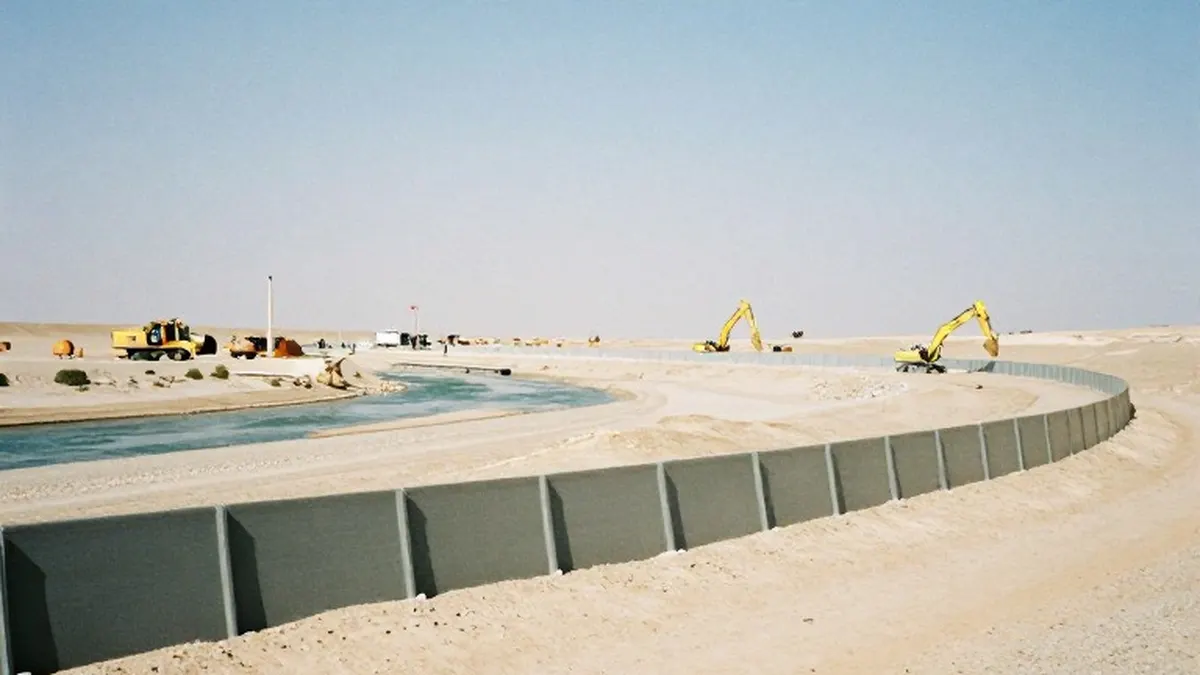
The central element of the security framework is a new border barrier spanning approximately 500 kilometers along the frontier with Jordan. The estimated cost for this project is NIS 5.5 billion. The barrier is specifically designed to prevent terrorist infiltrations as well as the smuggling of weapons and drugs. According to officials, the first several dozen kilometers have already been constructed by the Seam Zone Directorate. Estimates suggest that securing additional funding could allow for simultaneous construction on more sections, thereby accelerating the overall completion of the project.
In addition to the barrier, the ministry is pursuing extensive engineering work, including the clearing of old minefields to prepare land for infrastructure development. Officials are also evaluating the possibility of shifting the barrier's route eastward toward the Jordan River. This proposed relocation, valued at approximately NIS 2 billion, would facilitate the expansion of Route 90 and the development of new agricultural land and infrastructure.
On the civilian side, the Defense Ministry is promoting roughly 40 new settlement and civilian presence sites throughout the eastern region. These sites include pre-military preparatory academies, national service year programs, and youth leadership groups. The plan calls for the establishment of new communities, such as the agricultural moshav Batron in the Jordan Valley, alongside the restoration and expansion of historic settlement sites. Young people joining these new sites will undergo military training to serve as initial response forces during emergencies.
The broader development strategy focuses on strengthening existing communities by expanding water, electricity, and transportation infrastructure. Alongside construction efforts, the ministry is upgrading security arrangements in local communities. These measures include equipping and training local emergency response squads, establishing emergency operations rooms, and strengthening coordination with the newly established 96th Division, which is responsible for the eastern sector.
Defense officials state that the plan also includes developing new economic growth engines, such as data centers for the artificial intelligence industry and renewable energy facilities. Benita noted that the plan utilizes the region's available land reserves to support these developments. The initiative also seeks to address the current population imbalance along the eastern border. While approximately 250,000 people live on the Jordanian side, the Israeli side has just over 20,000 residents. For example, the Tamar Regional Council has approximately 1,600 residents, and some communities in the region have an average resident age exceeding 60.
The Defense Ministry, working with local authority leaders, aims to double the population of the eastern border region over the next decade. To support this growth, the Transportation Ministry has allocated NIS 35 million for planning the expansion of Route 90 into a major multilane road. This upgrade is intended to reduce congestion in central Israel by providing an alternative north-south transportation corridor and improving connectivity between communities along the eastern border.