Cortés Enters Tenochtitlán, Marking a Turning Point for the Aztec Empire
The arrival of Spanish forces in the Aztec capital in 1519 initiated a sequence of events that led to the collapse of Mesoamerican power.
By Hassan Ellis ·
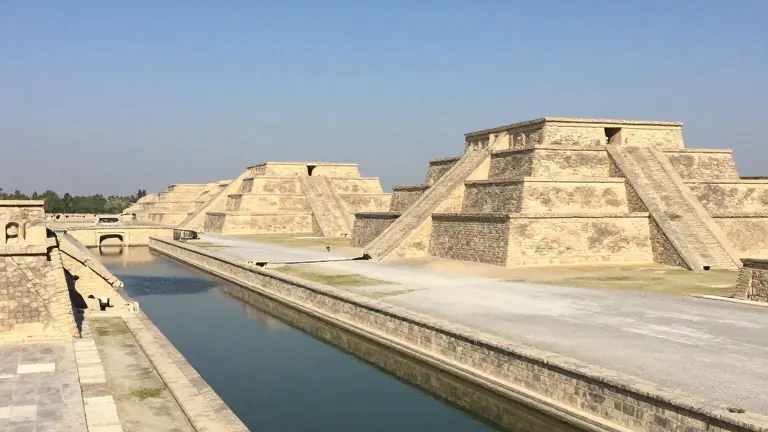
Hernán Cortés, the Spanish conquistador, led his soldiers into the Aztec capital of Tenochtitlán on November 8, 1519. The city, which is the site of present-day Mexico City, served as the political and economic center of the Aztec empire. The entry marked a definitive shift in power dynamics between the indigenous rulers of Mesoamerica and the European forces arriving from across the Atlantic.
According to historical records, the Aztec ruler Moctezuma II welcomed Cortés and his men upon their arrival. This initial reception has been analyzed by historians as a complex diplomatic maneuver. However, the expedition led by Cortés would eventually precipitate the downfall of the Aztec empire, a transformation that reshaped the demographic and political structure of the Americas.
The event occurred on the 312th day of the year 2026, leaving 53 days remaining in the calendar year. The date serves as a recurring point of reference for other major historical events that occurred on November 8. These incidents span five centuries and include military campaigns, political elections, and natural disasters.
In 1793, the Louvre museum in France began admitting the public on this day. Although the institution had been officially open since August of that year, the November date marked the start of regular public access. In 1864, President Abraham Lincoln secured reelection by defeating Democratic challenger George B. McClellan. Three decades later, in 1889, Montana was admitted to the Union as the 41st state.
The 20th century saw several pivotal moments on this date. In 1923, Adolf Hitler attempted to seize power in Germany through a failed coup in Munich, an event known as the Beer Hall Putsch. In 1942, Allied forces launched Operation Torch, involving U.S. and British landings in French North Africa during World War II. In 1950, U.S. Air Force Lt. Russell J. Brown engaged in the first air-to-air combat between jet warplanes during the Korean War, shooting down a North Korean MiG-15.
U.S. presidential elections have also hinged on this day. In 1960, Democrat John F. Kennedy defeated Republican Vice President Richard M. Nixon. In 2000, a statewide recount in Florida began, a process that ultimately delivered the presidency to Republican George W. Bush after the U.S. Supreme Court ordered the recount to end on December 12. In 2016, Donald Trump was elected the 45th president, defeating Hillary Rodham Clinton.
Recent history on November 8 includes the sentencing of Jared Lee Loughner to life in prison in 2012 for the 2011 Tucson shootings, which killed six people and wounded 13 others, including Rep. Gabrielle Giffords. In 2013, Typhoon Haiyan struck the central Philippines, leaving more than 7,300 people dead or missing and displacing over 5 million residents. In 2018, tens of thousands fled a wildfire in Northern California that killed 85 people and nearly destroyed the community of Paradise. In 2024, the restored north tower bells of Notre-Dame Cathedral in Paris rang together for the first time since the 2019 fire.
Notable figures born on this date include jockey Angel Cordero Jr., singer Bonnie Raitt, actor Alfre Woodard, and chef Gordon Ramsay. The list of individuals born on November 8 also includes Nobel Prize-winning author Kazuo Ishiguro, filmmaker Richard Curtis, and news anchor David Muir.