Egypt’s El-Quseir preserves a musical heritage shaped by the Red Sea
Community efforts to record traditional simsimiyya songs reflect the maritime and religious history of an Egyptian port once central to trade and pilgrimage.
By Hiroshi Ferrari ·
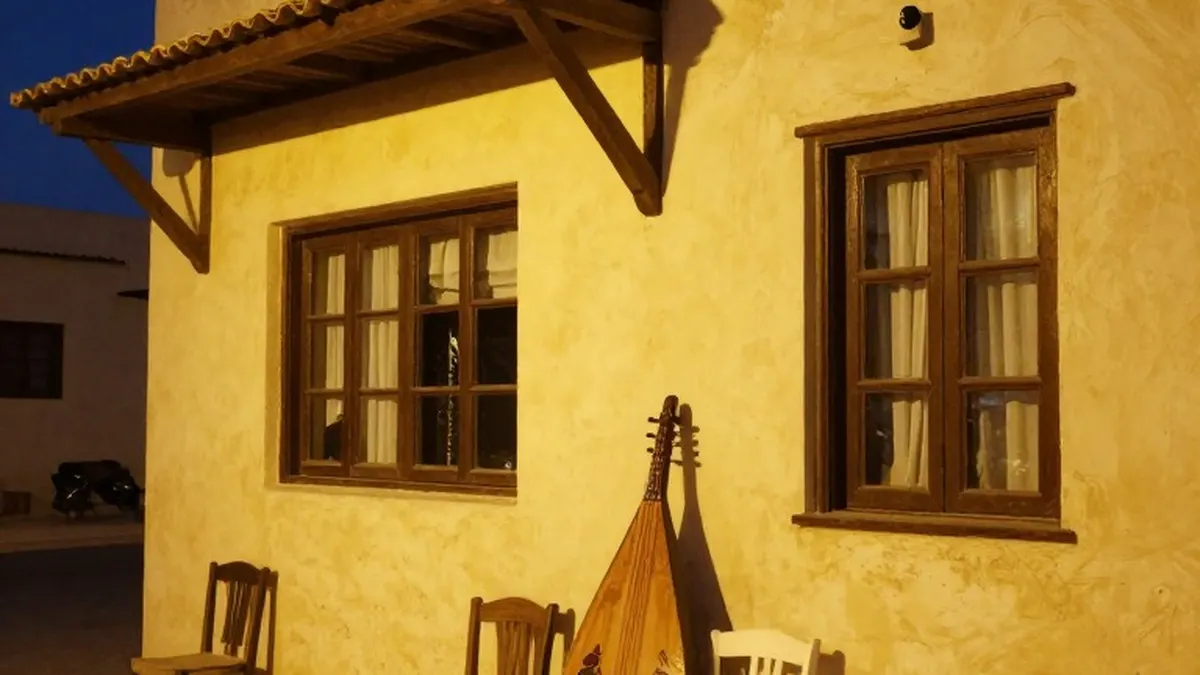
In the Egyptian port of El-Quseir, a former mayor’s house has become a gathering place for music rooted in the Red Sea’s seafaring past. On its veranda, audiences assemble for Hazz evenings, named after the Arabic word for luck, where a triangular lyre called the simsimiyya accompanies ballads about coastal towns, friendships and legendary sailors.
The butter-yellow house, built in 1888, now accommodates Bahar, a community organisation dedicated to protecting the city’s heritage and marine ecosystem. Its founder, Aly El-Sayed, and his team have spent months gathering and recording maritime songs. El-Sayed said sailors who spent four months at sea would reserve space aboard their wooden dhows for a simsimiyya musician to entertain them.
The instrument, which has five or six strings, connects El-Quseir to musical traditions across the region. Nizar Ghanem, a Yemeni physician turned ethnomusicologist living in Cairo, said its present form likely developed in Sudan and the Nile valley basin of Upper Egypt. Migrant workers constructing the Suez Canal carried it north to Suez by the mid-1860s. From 1967 to 1982, it also served as a symbol of resistance to Israel’s occupation of Egypt’s Sinai Peninsula.
“The simsimiyya belongs to the Red Sea,” Ghanem said. He described similarities between songs performed in different ports, including ballads about merchants from Yemen’s Hadhramaut region in Suakin, Sudan, and Yanbu, Saudi Arabia. The accompanying dances also reflect coastal life, with some representing the struggle between people and fish.
El-Quseir’s geography helped establish these wider connections. Known as Myos Hormos in the first century AD, the port stood at the eastern end of broad, flat valleys linking the Red Sea with the Nile Basin. Its relatively short route to the river made it an important outlet for Egyptian grain bound for Mecca and Medina, as well as a departure point for Hajj pilgrims.
Local historian Taha Elgohary credits Mohammed Ali Pasha with much of the city’s surviving urban legacy. After consolidating power in Egypt in the early nineteenth century, Mohammed Ali developed markets and housing, encouraged trade with Mecca and Medina and renovated an Ottoman fortress. At the port’s peak, 30,000 pilgrims passed through each year.
The opening of the Suez Canal redirected coastal trade and brought a period of sharp decline. Phosphate mining later revived the city. El-Quseir’s Heritage Preservation Association occupies a former hospital built by an Italian company that mined phosphate locally between 1910 and 1945. Elgohary’s family moved from Upper Egypt to work in the mines.
The old town still contains coral-stone buildings and weathered wooden balconies, alongside the religious legacy of its pilgrimage traffic. Travellers from across the Islamic world settled or left descendants there, and the city is home to 20 Sufi shrines. Bahar’s musical gatherings preserve another part of that history, keeping the songs of the port and its sailors in circulation.