UK Activates Titania Satellite for Military Earth Observation
The spacecraft joins its sister satellite Tyche in a four-unit constellation designed to enhance surveillance capabilities under the command of UK Space Command.
By Hassan Ellis ·
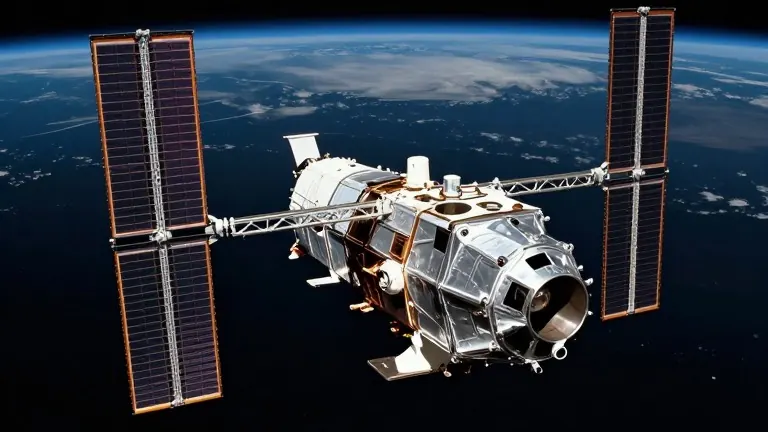
British armed forces have gained a new tool for observing the planet from orbit with the activation of the Titania satellite. The Ministry of Defence announced that the spacecraft has entered service, marking the second operational unit in a planned four-satellite programme. This development provides the military with additional visual data to monitor global events.
Titania was launched from California in October on a SpaceX rocket. The unit measures roughly the size of a washing machine and weighs approximately 100 kilograms. It travels at a speed of 27,000 kilometers per hour, completing one full orbit of the Earth every 90 minutes. UK Space Command, headquartered at RAF High Wycombe, will operate the entire constellation.
The satellite is part of a wider effort to monitor both Earth and space. The Ministry of Defence is testing a sensor network known as Inaros, which utilizes three sites around the world. Air Chief Marshal Sir Harv Smyth stated that technology including these sensors would support military operations by monitoring the satellites. He described observing Earth from space as essential to national resilience.
Smyth noted that Tyche and Titania will demonstrate this capability before Juno and Oberon join the fleet in coming years. Defence Secretary Wes Streeting said the satellites would allow British forces to identify threats earlier. He linked the projects to highly skilled employment and a stronger industrial base across the country.
Titania was designed and built in Hampshire through a partnership between the Defence Science and Technology Laboratory and BAE Systems. Streeting said the projects were supported by more than £3 billion of investment in space capabilities. The announcement follows the unveiling of the UK’s first space squadron in September.
Concerns about potential conflict in orbit have increased recently. In October, a Russian military satellite passed dangerously close to a commercial satellite. Some experts believed the manoeuvre could have been a rehearsal for an attack. The United States also acknowledged for the first time that it had deployed weapons in space to protect against hostile action.
President Trump wants to develop a missile defence system called Golden Dome. This proposed system would combine equipment on the ground with sensors and interceptors based in space.