The 2001 Device That Put a Thousand Songs in Your Pocket
On October 23, 2001, Apple launched a small gadget to solve the growing problem of digital music storage.
By Xiaoyu Wang ·
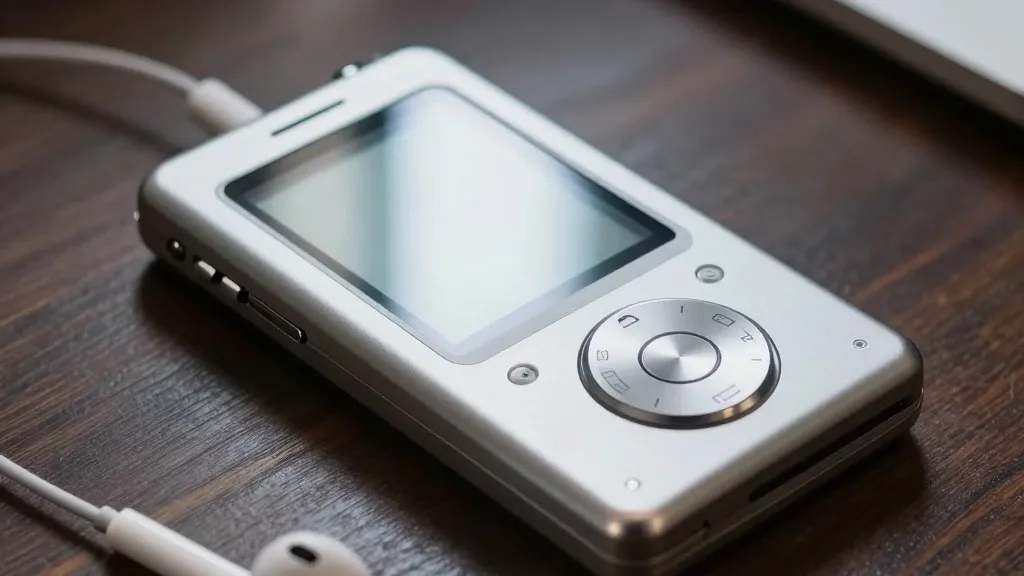
Apple CEO Steve Jobs unveiled the first iPod on October 23, 2001. The presentation began with a tease for a 'breakthrough digital device that’s not a Mac.' The product that followed was a portable music player. It became a favorite gadget for many fans before smartphones were ready to replace it. The core promise was simple. Apple could fit your entire music library into a pocket for $399.
At that time, Apple was moving past beige computers and into the Mac OS X era. The company had released iBooks and iMacs. These devices were doing well with consumers. This happened shortly after the dot-com bubble burst. Jobs argued that the 'Mac could become the center of your digital lifestyle.' He envisioned the computer as a hub for digital cameras, camcorders, DVD players, and music players. Apple chose music because everyone loves it. He also noted there was no single market leader.
Jobs knew other companies were already selling portable music players. He mentioned Creative, Sonic Blue, and Sony. He told the crowd, 'none of them has really found the recipe yet, for digital music.' Apple saw a gap in the market. There were four main options for users then: CD players, MP3 CD players, flash players, and hard disk-based jukebox players. Apple decided to enter the market with the latter.
The device was built to play MP3, WAV, and AIFF files. It also offered CD-quality sound. The iPod came with 5GB of storage. Jobs stated that this allowed for 1,000 songs. He added, 'For most people it’s their entire music library.' Apple claimed three main advantages for the product. The first was its small size. The design relied on a Toshiba hard drive that was 1.8 inches in diameter and 0.2 inches thick.
The physical device was the size of a deck of cards. Its dimensions were 2.4 x 4 x 0.78 inches. It weighed 6.5 ounces, which Apple called 'lighter than most cell phones.' Despite the size, it included features like 20-minute skip protection. It charged via a single FireWire 400 cable. Apple called it the 'first and only music player with FireWire.' Jobs claimed the connection could move a CD to the device in five to 10 seconds. By comparison, USB connections of that era required about five minutes.
Apple estimated that filling the iPod with 1,000 songs would take only 10 minutes. A USB device would need five hours for the same task. The battery was a rechargeable lithium-polymer type. It provided 10 hours of playback. Apple said the battery could reach 80% charge in one hour.
The second claim involved the design. Jobs called it an 'amazing Apple design' with durable materials. He said it offered 'Apple’s legendary ease of use.' The controls were built for one hand. The scroll wheel included a piezoelectric clicker for feedback. This allowed users to find songs by playlist, artist, or song. The first song played at the event was 'Building a Mystery' by Sarah MacLachlan.
The third point was Auto-Sync. This feature connected the iPod to iTunes digital music libraries. iTunes 2 launched that same day. It included features for burning MP3 CDs and syncing with the player. Auto-Sync kept libraries created on a Mac in sync with the pocket player when connected. The iPod also worked as a FireWire HDD.
The first iPhone launched over five years later in early 2007. Both products stayed in the Apple lineup together for more than a decade. The iPod’s popularity eventually declined. Apple released the 7th-generation iPod Touch in May 2019. The company did not maintain that model after it was released. Apple officially discontinued the line in May 2022.
Source: Tom's Hardware