US Federal Agencies Unite to Launch New Counter-Drone Strategy
The US government has launched a multi-agency strategy to enhance counter-drone defenses, including the deployment of high-energy lasers and temporary flight restrictions.
By Larissa Bell ·
The Trump administration announced a comprehensive new strategy on Monday aimed at developing advanced countermeasures against drone threats within the United States. This initiative represents a significant interagency effort, bringing together the Departments of Transportation, Defense, Homeland Security, Energy, and Justice to coordinate their response to aerial security challenges.
US Transportation Secretary Sean P. Duffy emphasized the collaborative nature of the plan, stating that by uniting federal partners, the government can strengthen its capacity to combat rogue drone threats. He noted that this cooperation is essential for keeping the flying public safe as drone technology becomes more prevalent in civilian airspace.
Federal Aviation Administrator Bryan Bedford highlighted that the new agreement builds upon existing work with federal partners. The primary goal is to establish a consistent process that allows for the deployment of counter-drone technologies without compromising the safety of aviation operations. This framework seeks to balance security needs with the continuity of air traffic management.
Key components of the strategy include the implementation of temporary flight restrictions along the southern US border. Additionally, the plan prioritizes the completion of safety assessments for the Department of Defense's high-energy laser counter-drone system. These measures are designed to create a more robust defense layer in areas where drone activity is frequently observed.
Secretary of Defense Pete Hegseth expressed confidence in the rapid deployment capabilities of next-generation defenses. He stated that high-energy lasers have been successfully deployed alongside civilian aviation on the Southern Border. Hegseth described the interagency partnership as a step toward ensuring that American airspace remains sovereign, secure, and impenetrable to unauthorized aerial threats.
This announcement follows recent developments in executive security. Just one day prior, security sources confirmed that a military-grade laser weapon system had been deployed as part of the air defense network protecting President Donald Trump's Mar-a-Lago estate. The deployment was requested by the US Secret Service in response to a heightened security environment.
Officials from the North American Aerospace Defense Command and US Northern Command verified to The War Zone on Sunday that counter-drone and air defense capabilities were positioned in and around the estate. While they declined to disclose specific operational details, the agencies noted that these assets add a complementary layer of technology to enhance overall protection for the president.
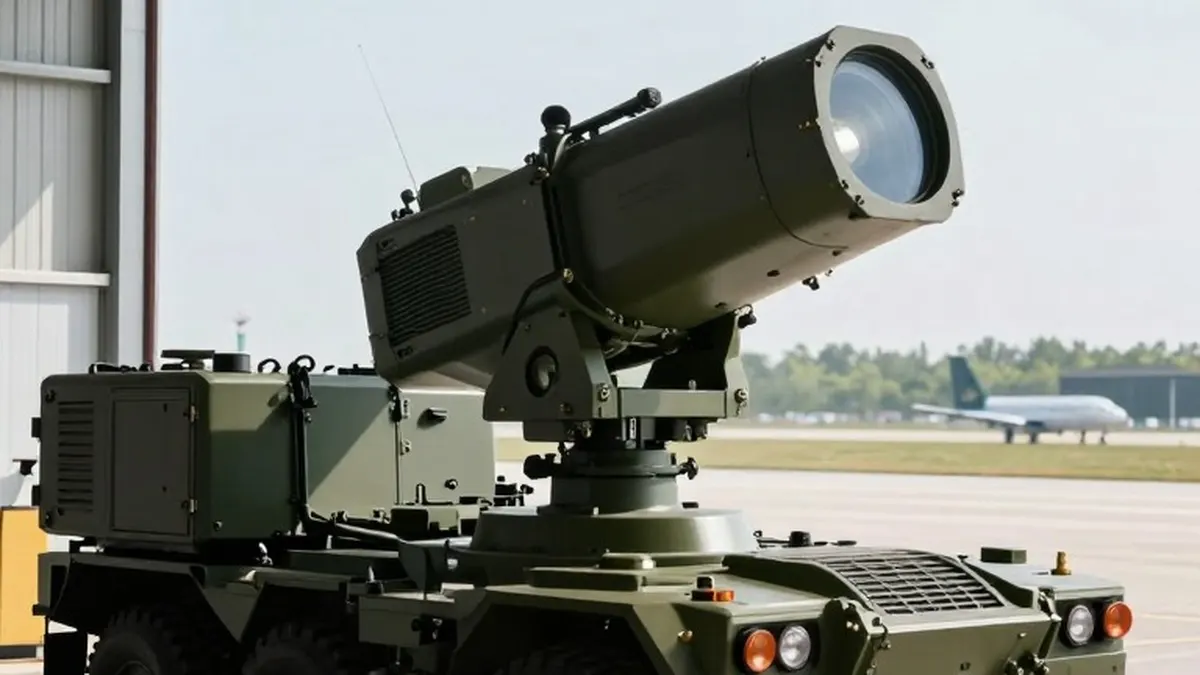
The specific system utilized at Mar-a-Lago is AeroVironment's LOCUST. This high-energy laser is designed to detect, track, and disable Group 1 through Group 3 aerial threats using directed-energy technology. Its versatility allows it to be deployed in a fixed or mobile configuration, moved on a pallet, or mounted on a vehicle, making it adaptable to various security scenarios.
The integration of such advanced technology into both national border security and executive protection marks a shift in how the United States approaches drone defense. By standardizing these efforts across multiple federal departments, the administration aims to create a unified front against emerging aerial threats.
As the strategy moves forward, the focus will remain on refining these technologies and ensuring they operate seamlessly within the existing aviation framework. The collaboration between the Department of Defense, the FAA, and other agencies will be critical in maintaining the balance between security and safety in US airspace.